
Career Center
Trending on CancerNetwork
Acid Reducers, Drug-Drug Interactions, and Setting Expectations for Response
Meaning-Centered Therapy, Psychiatry Referrals, and Humanistic Cancer Care
How Psycho-Oncology Addresses Existential Distress, Body Image, and Intimacy
How to Work With a Patient Who Declines Cancer Treatment
Screening for Depression and Starting Antidepressants in Oncology Care
Latest News





Shorts












Videos


September ONCOLOGY Publication
The September issue of ONCOLOGY features a rare case study on glioblastoma, discussions on end-of-life care, and insights into the field of pediatric oncology.

ONCOLOGY On The Go Podcast
Listen to our latest episode of ONCOLOGY on The Go with insights from expert multidisciplinary professionals across the oncology space.

Find Us On YouTube
CancerNetwork in now on YouTube! We'll be discussing in-depth topics, and speaking with top leaders in the oncology space.

CancerNetwork® Oncology Career Center
Your next job in oncology is just a click away! Explore positions across the cancer care industry with CancerNetwork® Oncology Career Center.

Subscribe to Our eNewsletter Today!
Get comprehensive coverage for the multidisciplinary oncology community with accurate, credible, and timely news and expert insights.




























































All News
Leah Katz, MD, MPH, discusses long-term IDEA trial data on omitting radiation and why endocrine therapy tolerance matters in this decision.

Erik Bengtsen, MD, described what sets psycho-oncology apart and how clinicians can open conversations on body image and sexual health.

Ursula A. Matulonis, MD, discussed how biomarkers, adverse effects, and patient preference guide choices among recent platinum-resistant ovarian cancer approvals.

Alexandra Dreyfuss, MD, MS, explains why CAR T and bispecific populations are her priority for prospective radiotherapy studies in multiple myeloma.

Dr. Andrew Pecora on leading the first IV oncolytic virus trial, building a top-50 cancer center, and using AI to fix the cost of cancer care.
Ralph V. Boccia, MD, FACP, explained how community practices can build the workflow and capacity to deliver bispecific step-up dosing in an outpatient setting.

There is a gap in prospective data for radiation use in multiple myeloma, according to Alexandra Dreyfuss, MD, MS.
Erik Bengtsen, MD, explained how antidepressants may improve quality of life and how he typically works with patients who decline favorable treatment.
Nikolai Strusberg, MD, discussed how proton therapy and thyroid dose affect clinical hypothyroidism risk after supraclavicular breast radiation.
Ralph V. Boccia, MD, FACP, compared MRD data with Tec-Dara and Tal-Dara and explained how sustained MRD negativity is reshaping myeloma care.

Alexandra Dreyfuss, MD, MS, weighs bridging vs consolidative radiotherapy strategies around CAR T-cell infusion in myeloma.

In a phase 1 trial of patients with platinum-sensitive high-grade ovarian cancer, a personalized neoantigen vaccine plus nivolumab caused no unexpected safety signals.
The new guidelines include 10 recommendations spanning extended molecular testing, JAK inhibitor use, anemia management, and other areas in myelofibrosis.
Erik Bengtsen, MD, shares a key depression screening question and explains when oncologists can start a low-dose antidepressant.

Heath Skinner, MD, PhD, discussed the 4 focus areas of the 2026 Radiation Oncology Conference and what it takes to implement new radiation service lines.
The FDA has assigned a Prescription Drug User Fee Act date of March 31, 2027, for tabelecleucel in this indication.
Al-Ola A. Abdallah, MD, highlights the data on etentamig, teclistamab/daratumumab, and iberdomide he found most impactful at IMS 2026.
Ralph V. Boccia, MD, FACP, discussed stopping therapy in patients with deep, sustained responses and the move toward fixed-duration multiple myeloma care.

Data from the phase 2/3 QUILT-3.032 trial support the expanded indication for nogapendekin alfa in BCG-unresponsive non-muscle invasive bladder cancer.
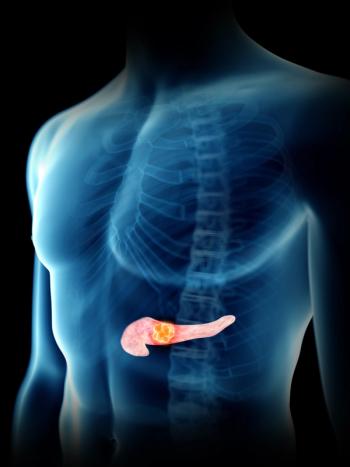
The oral KRAS G12D inhibitor VS-7375 produced responses in pancreatic, colorectal, and lung cancers in the phase 1/2 TARGET-D 101 trial.

Brandon Mancini, MD, MBA, FACRO, discusses the presentations from ASTRO 2026 that may impact the future of prostate cancer, lung cancer, and other diseases.

"We thought there might be a preventive effect towards the development from CHIP to CCUS to MDS, so it’s a sort of a continuum," said Kirsten Grønbæk, MD, PhD.
Ralph V. Boccia, MD, FACP, discussed how time since CAR T-cell therapy and toxicity profiles guide bispecific selection in relapsed multiple myeloma.
Al-Ola A. Abdallah, MD, explains a possible biological reason IMiD holding therapy benefited ide-cel but not cilta-cel recipients.

Industry payments to oncologists were associated with greater use of the promoted treatment, whether or not it was guideline-preferred for the patient’s cancer.

The phase 2/3 AHEAD-MERIT trial will continue to assess overall survival among patients who received BNT113 plus pembrolizumab for head and neck cancer.
Ralph V. Boccia, MD, FACP, discusses payer models, prior authorization, cost recovery, and patient assistance for bispecifics like teclistamab/daratumumab.

Robot-assisted radical hysterectomy reduced mostly low-grade intraoperative complications vs open surgery in early-stage cervical cancer.

Ralph V. Boccia, MD, FACP, explained why CAR T-cell therapy followed by bispecific antibodies may be the preferred sequence at first relapse in multiple myeloma.

The NCCN published its first guidelines for pediatric bone sarcoma, centering on Ewing sarcoma and other undifferentiated round cell sarcomas in youth for pediatric patients.

Investigators of the phase 3 ACTION-1 trial will continue to follow up with patients to assess overall survival outcomes with RYZ101.
Ralph V. Boccia, MD, FACP, details remote monitoring, ICE scoring, CRS prophylaxis, and IVIG strategies for patients receiving bispecifics.

An expert panel discusses the case for de-escalating antibiotic therapy for pediatric patients who undergo hematopoietic cell transplantation.