

Career Center
Trending on CancerNetwork
1
EC Approves Daraxonrasib for Previously Treated Metastatic Pancreatic Cancer
2
Copper Cu 64 PSMA I&T Receives FDA Fast Track Designation in Prostate Cancer
3
FDA Approves Bezuclastinib Plus Sunitinib for Imatinib-Pretreated GIST
4
Weighing GLP-1 Drugs and Lifestyle Changes for Metabolic HCC Prevention
5
PSA Response After Radiation May Guide Adjuvant Chemo in Prostate Cancer
Latest News





Advertisement
Shorts

1:29
Why Multidisciplinary Care Should Be Standard for Every New HCC Diagnosis
a day ago
by
Amit G. Singal, MD, MS, FAASLD

1:20
HCC Surveillance Gains From 2 Decades of Progress Were Set Back by COVID
2 days ago
by
Amit G. Singal, MD, MS, FAASLD

1:08
Deferring Radiotherapy After Prostatectomy to Protect Functional Recovery
6 days ago
by
Martin Gleave, CM, MD, FRCSC, FACS

1:40
Can AI Predict Breast Cancer Risk From a Pathology Slide?
7 days ago
by
Arturo Loaiza-Bonilla, MD, MSEd, FACP
1:17
ALLIANCE Trial: Can ChatGPT Help Manage Chemotherapy Adverse Effects?
8 days ago
by
Arturo Loaiza-Bonilla, MD, MSEd, FACP

0:39
Why Multiple Myeloma’s Standard of Care Could Change Again Within a Year
11 days ago
by
Saad Z. Usmani, MD, MBA, FACP, FASCO
0:59
Can AI Bridge the Gap in Cancer Screening for Liver Disease?
14 days ago
by
Hashem B. El-Serag, MD, MPH

1:04
What a 100-Attendee Symposium Offers That a National Meeting Doesn't
19 days ago
by
Bhanu Prasad Venkatesulu, MBBS, MD
1:10
The Training Bottleneck Behind Brachytherapy’s Decline
20 days ago
by
Adam C. Olson, MD, MSc-GH
1:07
From 1 Patient to More Than 1000 With Low-Dose Radiation for Arthritis
21 days ago
by
Tyler J. Wilhite, MD









Videos

September ONCOLOGY Publication
The September issue of ONCOLOGY features a rare case study on glioblastoma, discussions on end-of-life care, and insights into the field of pediatric oncology.

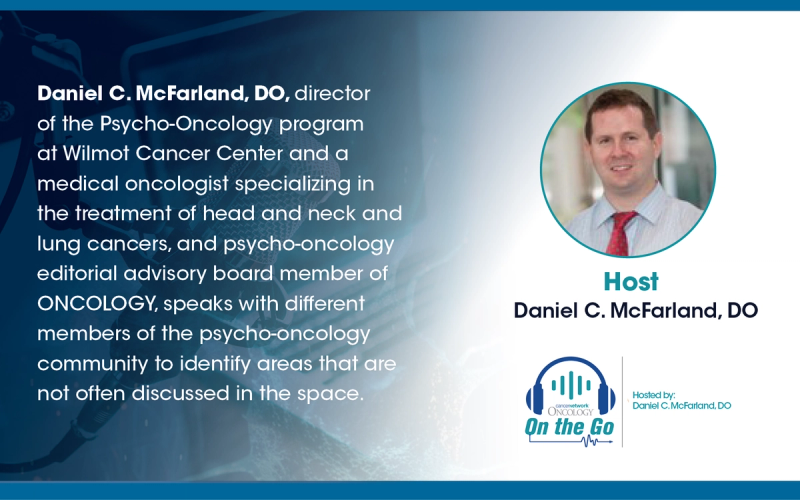
ONCOLOGY On The Go Podcast
Listen to our latest episode of ONCOLOGY on The Go with insights from expert multidisciplinary professionals across the oncology space.

Find Us On YouTube
CancerNetwork in now on YouTube! We'll be discussing in-depth topics, and speaking with top leaders in the oncology space.

CancerNetwork® Oncology Career Center
Your next job in oncology is just a click away! Explore positions across the cancer care industry with CancerNetwork® Oncology Career Center.

Subscribe to Our eNewsletter Today!
Get comprehensive coverage for the multidisciplinary oncology community with accurate, credible, and timely news and expert insights.

Continuing Medical Education


























Advertisement
All News
Advertisement

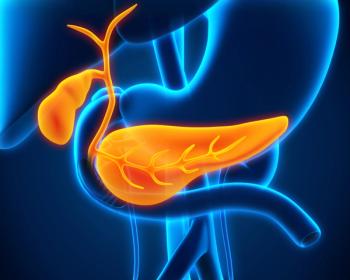
In honor of Pancreatic Cancer Awareness Month, experts discuss how advances in SBRT, MRI-guided adaptive radiation, and systemic therapy are reshaping care.
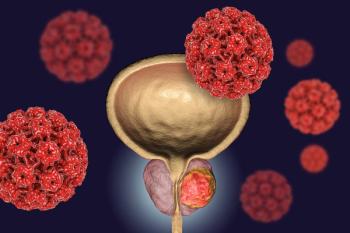
Copper Cu 64 PSMA I&T is under evaluation in 2 phase 3 prostate cancer trials, SOLAR-STAGE and SOLAR-RECUR.

Yujin Hoshida, MD, PhD, discussed the evidence for GLP-1 drugs, diet, and exercise as ways to prevent liver cancer caused by metabolic disease.

The EC has approved daraxonrasib monotherapy for adults with previously treated metastatic pancreatic adenocarcinoma, with or without an identified RAS mutation.

“We still do not have convincing evidence that these agents serve as HCC chemopreventive drugs,” said Yujin Hoshida, MD, PhD, of GLP-1 receptor agonists.

A post hoc RTOG 9902 analysis tied adjuvant chemotherapy to better disease-free survival in high-risk prostate cancer with a post-radiation PSA above 0.2 ng/mL.
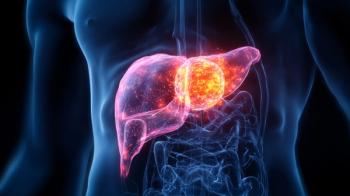
The IDMC recommended stopping the PRISM-1 trial after quemliclustat plus chemotherapy did not reach the overall survival efficacy boundary in metastatic pancreatic cancer.
In the phase 1 AURORAS-1 trial, the pan-RAS molecular glue ERAS-0015 produced confirmed responses across KRAS-mutant solid tumors.

Presenters at the 44th Annual CFS discuss key trends across multiple myeloma, B-cell malignancies, and small cell lung cancer.
Anne Chiang, MD, PhD, discusses how community practices can deliver bispecifics, monitor for CRS, and offer trials for patients with SCLC.
Advertisement

“This is the closest we have been to biomarkers replacing ultrasound,” said Amit G. Singal, MD, MS, FAASLD.
ADCs directed toward B7-H3, SEZ, DLL3, and TROP2 appear to be “super exciting,” according to Anne Chiang, MD, PhD.

Neoadjuvant eftilagimod alfa, pembrolizumab, and radiotherapy produced an 81.1% 12-month DFS rate in high-risk, resectable soft tissue sarcoma.

Rezatapopt monotherapy yielded an ORR of 48% in TP53 Y220C-mutated platinum-resistant/refractory ovarian cancer.
Anne Chiang, MD, PhD, discusses DeLLphi-305 and other leaps forward in small cell lung cancer, along with a setback regarding lurbinectedin.

The FDA granted RMAT designation to inzitagene plasmivec for advanced melanoma ahead of a phase 3 trial expected to start in December 2026.
Variation in the mitochondrial genome carries prognostic information about graft-versus-host disease that current clinical risk scores do not capture.
Testosterone therapy was not associated with disease progression in a retrospective 3324-patient active surveillance prostate cancer cohort.

Sacituzumab tirumotecan significantly improved overall survival in third-line or later locally advanced unresectable or metastatic gastroesophageal adenocarcinoma.
Amir T. Fathi, MD, explains which assumptions about frontline AML treatment are ready to be challenged in the field.

The FDA granted priority review to sonesitatug vedotin in second- and later-line CLDN18.2-positive gastric, GEJ, or esophageal adenocarcinoma, with a decision expected in the second quarter of 2027.
An external data monitoring committee noted that nemtabrutinib’s benefits in first-line CLL/SLL may not outweigh its risks in the phase 3 BELLWAVE-011 trial.

Five-year AI adherence was tied to more hypertension, dyslipidemia, and diabetes in HR+ breast cancer, yet adherence also lowered all-cause mortality.

Partial responses occurred in 6 of 10 evaluable patients with FGFR3-altered tumors treated with BHV-1530, an FGFR3-directed antibody-drug conjugate, in a phase 1 study.
Amir T. Fathi, MD, outlines what menin inhibitors must show for frontline approval and how to manage differentiation syndrome.

Safusidenib showed durable responses in IDH1-mutant glioma, and ongoing trials will test the agent in oligodendroglioma, after vorasidenib, and as maintenance.
Ajai Chari, MD, discussed sequencing CAR T and bispecifics, fixed-duration therapy, emerging targets, and academic partnership in multiple myeloma.

At the 2026 Chemotherapy Foundation Symposium, Ajai Chari, MD, explained how disease pace and BCMA sequencing guide choosing CAR T or bispecifics.

In the phase 1/2 TRANSCEND CLL 004 trial, liso-cel plus ibrutinib produced a 45% CR/CRi rate in a heavily pretreated relapsed/refractory CLL/SLL population.

The FDA has assigned a target action date of June 28, 2027, for selinexor plus ruxolitinib as a therapeutic regimen for patients with myelofibrosis.

In the phase 2 TRAP trial, the median PFS after SBRT was 3.0 months with detectable ctDNA vs 7.8 months without it in oligoprogressive CRPC.
In the pivotal phase 3 REGAL trial, galinpepimut-S was generally well tolerated among patients with acute myeloid leukemia.
Amir T. Fathi, MD, discusses where venetoclax/azacitidine fits in fit patients with AML and why a phase 3 trial may be unlikely.
Advertisement
Advertisement