

The addition of SBRT to an immunotherapy doublet did not significantly impact safety outcomes among patients with de novo metastatic RCC.

Your AI-Trained Oncology Knowledge Connection!
The addition of SBRT to an immunotherapy doublet did not significantly impact safety outcomes among patients with de novo metastatic RCC.
Julia E. McGuiness, MD, discussed the timeline for mammographic density changes following significant weight loss.
Scott Tagawa, MD, MS, FACP, FASCO evaluated how the rPFS improvement with lutetium-177 could help integrate the treatment into the frontline metastatic HSPC setting.
Treatment with rusfertide appears to reliably control hematocrit among those with polycythemia vera, according to Andrew Kuykendall, MD.
The adoption of bispecific antibodies in the community setting remains a great unmet need in multiple myeloma, according to Rajshekhar Chakraborty, MD.

Oliver Sartor, MD highlighted SBRT, hormonal therapy, and the PSMA-DC regimen for patients with biochemical recurrence and PSMA-PET–positive disease.
Yan Leyfman, MD, discussed the factors that may ultimately define the next era of transplant medicine across hematologic malignancies.
Among patients who discontinued enfortumab vedotin due to an ongoing response or toxicity, 57% were treatment-free and alive 1 year later.
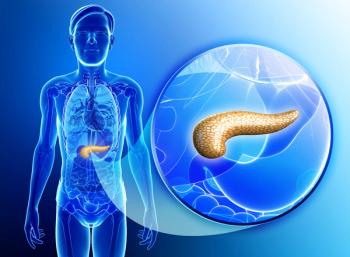
Integrating a medically supervised ketogenic diet with gemcitabine, nab-paclitaxel, and cisplatin significantly extends OS in those with metastatic PDAC.

Acalabrutinib/venetoclax may offer less toxicity compared with other therapies in chronic lymphocytic leukemia, said Nicole Lamanna, MD.

Key takeaways from the 43rd Miami Breast Cancer Conference focused on managing oligometastatic and oligoprogressive breast cancer with metastasis-directed therapy.

Gary L. Clayman, DMD, MD, FACS, discussed evaluating the link between GLP-1 receptor agonists and thyroid cancer.

According to Sebnem Ece Eksi, PhD, sympathetic signals led to shifts in cancer-associated fibroblasts to a more inflammatory state.

The future of radiation oncology will be largely impacted by artificial intelligence and genomics, according to Sheila D. Rege, MD, FACRO.

By harnessing investigator-generated data, companion diagnostics, and biomarker-directed treatment selection, clinicians can optimize care for HSPC.

Zolucatetide yielded a DCR of 100% and ORR of 80% among patients with secretase-naïve and secretase-treated desmoid tumors.
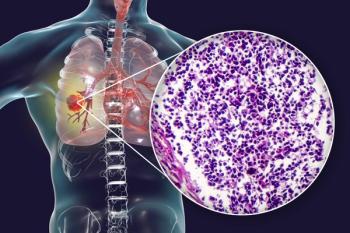
According to Brian Henick, MD, understanding why certain patients experience specific AEs will be key for giving more precise lung cancer therapy.

Bridget Koontz, MD, discussed evaluating the role of concurrent hormone therapy and brachytherapy for prostate cancer that she presented at ASCO GU.
Findings from a study published by Sebnem Ece Eksi, PhD, and coauthors found that sympathetic nerves affect cancer-associated fibroblasts in a way that remodels the tissue environment.

DecisionDx-Melanoma’s i31-SLNB accurately predicted low nodal positivity and high recurrence-free survival in patients with cutaneous melanoma.
No patients with frontline acute myeloid leukemia experienced cytokine release syndrome following treatment with mipletamig plus venetoclax/azacitidine.

Host Brandon Mancini, MD, MBA, FACRO, discusses presentations from ASCO GU 2026 featuring potential advances in the use of radiotherapeutic regimens.
Brian Henick, MD, discussed plans to investigate agents targeting ULBP2/5/6, antibody-drug conjugates, and other novel therapies in lung cancer research.

Tousimis explored the feasibility, complications, and surgical strategies for nipple-sparing mastectomy in patients with a history of radiation therapy.

Data from the REZILIENT1 trial support the NDA for zipalertinib for patients with advanced or metastatic NSCLC harboring EGFR exon 20 insertion mutations.

Sebnem Ece Eksi, PhD, discussed how sympathetic signaling drives CAF activation and tissue remodeling to support tumor progression in pancreatic cancer.

Denileukin diftitox plus pembrolizumab achieved an ORR of 24% among patients with relapsed or refractory gynecologic cancers.

The agency highlighted regulatory compliance issues associated with a third-party facility referenced in the application for retifanlimab.

SkinCure Oncology filed a federal lawsuit against CMS and HHS to challenge the elimination of reimbursement for image-guided radiation therapy for nonmelanoma skin cancer.

The VIKTORIA-1 trial findings showed that gedatolisib plus fulvestrant with or without palbociclib significantly improved PFS in PIK3CA wild-type advanced breast cancer.