
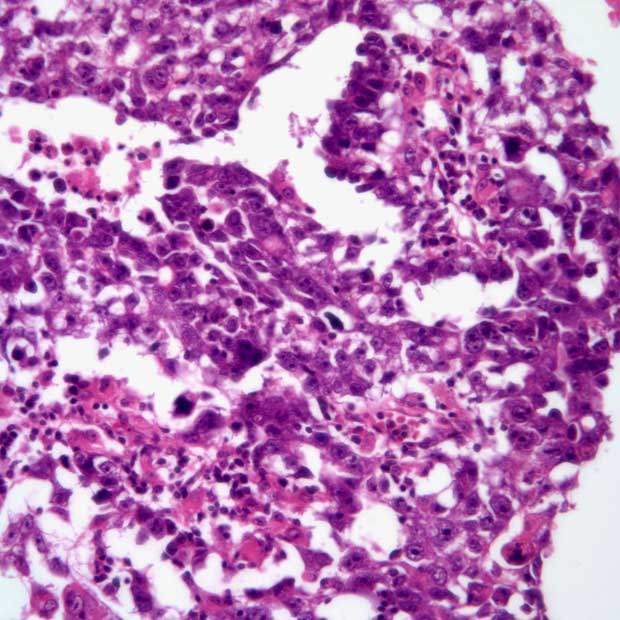
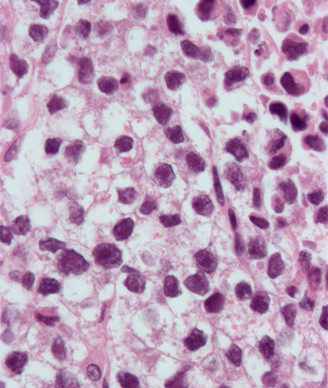


Testicular Cancer
Latest News
Advertisement
Latest Videos

Podcasts


































































Advertisement
More News
Patients with testicular cancer who are treated with platinum-based chemotherapy or radiotherapy have an increased risk of mortality unrealted to their disease.
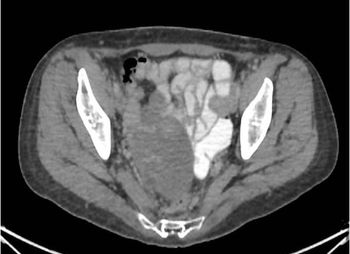
The risk of developing testicular cancer may increase with early and repeated exposure to diagnostic imaging, according to a recent study.

Results of this phase III trial could change the current standard of care for treating nonseminomatous or combined germ cell tumors of the testis.
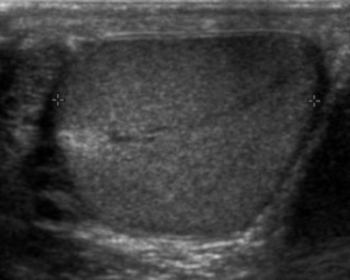
Investigators report on long-term results of sentinel node (SN) approach in patients with clinical stage I testicular tumors.

Although rare, is breast cancer in males genetic? Researchers provide details.
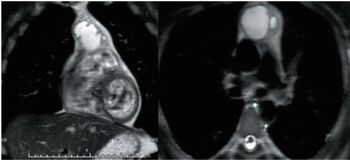
A 39-year-old man is diagnosed with pure post-pubertal teratoma of the testis. What are the best steps of management?
Researchers identified two germline pathogenic variants in CHEK2 that may account for a minority of men diagnosed with testicular germ cell tumors.

A registry study suggests that there may be a familial association between ovarian and testicular cancers.
Fewer patients diagnosed with testicular cancer were uninsured, and fewer were diagnosed with late-stage disease, following the Affordable Care Act’s Medicaid enrollment expansion.
Researchers have discovered that testicular cancer’s responsiveness to conventional chemotherapy is likely determined during prenatal development.
Researchers found that combining palonosetron, aprepitant, and dexamethasone represents an effective and well-tolerated treatment to prevent CINV in testicular cancer patients receiving cisplatin.
A post-hoc analysis found that brain metastases are more frequent in patients with advanced germ cell tumors who have received dose-dense chemotherapy compared with those administered the BEP regimen.
In a small phase II study of 12 men with nonseminoma germ cell tumors refractory to cisplatin, pembrolizumab did not demonstrate clinical activity.
Researchers analyzed a large population-based sample of men from Sweden and discovered an association between heavy cannabis use and testicular cancer incidence.
Newly analyzed data revealed eight gene loci associated with testicular cancer risk that were not previously known.
A new study is suggesting that a high percentage of testicular cancer survivors may suffer from hypogonadism.
Event-free survival was not maintained in children and adolescents with intermediate-risk malignant germ cell tumors when cisplatin-based chemotherapy was reduced from four to three cycles and compressed from 5 to 3 days per cycles.
A single cycle of adjuvant bleomycin, etoposide, and cisplatin (BEP) chemotherapy might reduce recurrence rates for nonseminomatous or combined germ cell tumors of the testis.
Investigators at the Dana-Farber Cancer Institute in Boston for the first time have identified unique genomic changes that may be integral to testicular cancer.
Patients with glioblastoma who were uninsured or who had Medicaid at the time of diagnosis were more likely to be diagnosed with a larger tumor and had shorter survival times.
In this paper, we review the use of serum tumor markers in risk assignment and response evaluation; the treatment of previously untreated and relapsing patients; the role of surgical resection of residual disease, including retroperitoneal node dissection; and the importance of clinical trials for addressing unanswered questions and testing new therapies.
A study found that about half of advanced germ cell tumor patients with platinum-resistant or -refractory disease harbor potentially actionable mutations.
A case series of three individuals suggests that there may be a causal relationship between chemotherapeutic treatments for germ cell tumors and the subsequent development of chronic myeloid leukemia.
A recent study highlights factors that predict worse prognosis for patients with germ cell tumors whose cancer has spread to the brain, including the presence of liver or bone metastases, multiple brain metastases, and others.
Patients who have undergone chemotherapy for nonseminoma testicular cancer are at an increased risk for cardiovascular disease, especially in the first year after treatment.
Advertisement
Advertisement
Trending on CancerNetwork
1
Radiation Oncology Trials You May Have Missed at ASCO 2026
2
Durvalumab Shows Similar Outcomes Across NSCLC PD-L1 Expression Groups
3
Navigating the RCC Adjuvant Landscape: Examining the Phase 3 RAMPART Trial
4
Unraveling Key Hematologic Oncology Developments at ASCO 2026
5