


Thyroid Cancer
Latest News


FDA Drops REMS Requirement for Vandetanib in Medullary Thyroid Cancer
By Tim Cortese
How Does Plixorafenib Compare With Other BRAF-Mutant Thyroid Cancer Agents?
By Tim Cortese
Advertisement
Video Series
Latest Videos





Podcasts


CME Content
































Advertisement
More News
For patients with head and neck squamous cell carcinoma and contraindications to cisplatin, durvalumab yielded worse PFS vs cetuximab.
Patients with anaplastic thyroid cancer had a significant boost to overall survival with atezolizumab and targeted therapy.

While cisplatin was in shortage, clinicians were forced to prescribe costlier alternatives for patients with head and neck cancer.
Data also show an improvement in major pathological response in the perioperative pembrolizumab arm of the KEYNOTE-689 trial.

The FDA granted traditional approval to selpercatinib for patients with advanced or metastatic medullary thyroid cancer with a RET mutation.

“We are now able to increase the lifespan in some of these most deadly forms of thyroid cancer solely due to gene profiling and targeted medicine,” said Geoffrey David Young, MD, PhD, FACS.
Patients with radioiodine-refractory differentiated thyroid cancer appear to derive benefit from lenvatinib in community and academic settings.

Investigators are evaluating the efficacy and safety of APG-157 for patients with head and neck cancer in a phase 2 clinical trial.
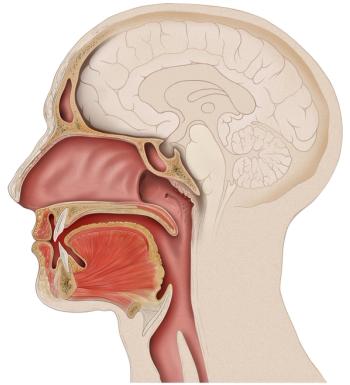
Multiple confirmed responses in a phase 2 trial support the FDA designation for the experimental therapy in squamous cell carcinoma of the head and neck.
Results from a phase 1 trial evaluating the CAR T-cell therapy, AIC100, in relapsed/refractory thyroid cancer support the FDA’s RMAT designation.
An observed extension in progression-free survival with nintedanib vs placebo did not warrant continued development of the therapy for thyroid cancer.
Phase 1 data show that EMI-137 enabled MFGI and spectroscopy differentiation between papillary thyroid cancer–afflicted tissue and healthy thyroid tissue.
Retrospective results found considering conservative initial surgery options can reduce overtreatment for patients with thyroid cancer.

Phase 3 results show that treatment with vandetanib had no statistically significant improvement in PFS and more adverse effects than placebo.

Results from the phase 2b TACTI-003 trial show that eftilagimod alfa plus pembrolizumab achieved high objective response and disease control rates.

As the practice of radiation therapy evolves in HPV-associated OPSCC, updated evidence-based ASTRO guidelines may help inform clinical practices.
Data from the phase 1/2 LIBRETTO-001 trial support the FDA approval of selpercatinib in patients with RET fusion-positive thyroid cancer.
Data from the phase 1/2 LIBRETTO-121 trial led to the approval of selpercatinib in pediatric RET-mutant thyroid cancer.

Data from a phase 1/2 trial support the FDA breakthrough therapy designation for petosemtamab in recurrent head and neck squamous cell carcinoma.
Phase 2 data also highlight an improvement in disease control rate with setanaxib/pembrolizumab in squamous cell carcinoma of the head and neck.
The phase 2b findings support the capability of eftilagimod alpha to enhance the potential of immune checkpoint inhibitors in metastatic HNSCC.
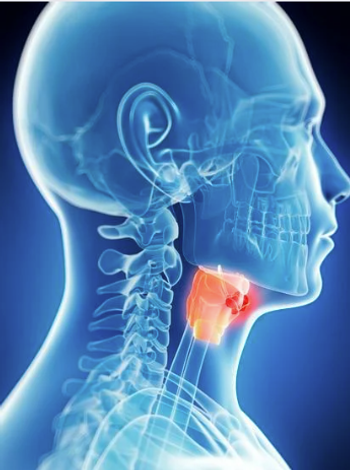
Patients who are predisposed to medullary thyroid cancer should be advised against the use of GLP1 agents.
Microwave ablation may be a go-to treatment option instead of surgery for patients with multifocal T1N0M0 papillary thyroid cancer.
The characteristics of rare earth ceramics may yield more consistent microwave energy penetration during the treatment of those with thyroid nodules.

“Ultimately, we’re going to be able to see more patients, offer more precise surgery more efficiently, and that means just better outcomes for our patients here in the Intermountain West,” said Hilary McCrary, MD, MPH
Advertisement
Advertisement
Trending on CancerNetwork
1
Modifiable Risk Factors Suggest Potential for Improving Cancer Prevention
2
2026 Tandem Meetings: What’s the Latest Research in Multiple Myeloma?
3
Dato-DXd Receives Priority Review in Unresectable/Metastatic TNBC
4
Barriers to CAR T-Cell Referral and Center Access in Multiple Myeloma
5