


Lung Cancer
Latest News

Advertisement
Video Series
Latest Videos





Shorts

0:59
WCLC 2026: The Big Sessions to Watch Across SCLC and NSCLC
a month ago
by
Benjamin Herzberg, MD

0:34
Can Lung Cancer Become a Chronic Disease?
4 months ago
by
Chinmay Jani, MD

1:11
AI in Cross-Trial Comparison: Optimizing Meta-Analyses in Oncology
5 months ago
by
Chinmay Jani, MD

1:22
Keep 3, Cut 3: Essential Oncology Journals
5 months ago
by
Balazs Halmos, MD, MS
1:15
The Ultimate Oncology Conference Bracket
5 months ago
by
Balazs Halmos, MD, MS
2:15
Blind Ranking Practice-Changing Lung Cancer Trials
5 months ago
by
Balazs Halmos, MD, MS
1:39
The Mount Rushmore of Oncology
5 months ago
by
Balazs Halmos, MD, MS

0:53
Addressing Steroid-Related Toxicities During Immunotherapy for Lung Cancer
7 months ago
by
Brian Henick, MD
0:50
Key Advances Across Oncology Research and Care at Columbia University
7 months ago
by
Russ Conroy

0:46
How Has Hypofractionation Made Lung Cancer Radiotherapy More Convenient?
8 months ago
by
Pranshu Mohindra, MD
Podcasts





















































Advertisement
More News
Medical oncologists, clinical pharmacists, and oncologic nurse practitioners share the presentation topics to look out for at WCLC 2026.

The interim 3-year OS rates were 71.2% with OST-HER2 vs 45.8% in historical controls in a phase 2b trial of fully resected, pulmonary metastatic osteosarcoma.
Sunil Singhal, MD, discussed how fluorescence imaging via abenacianine helps surgeons visualize tumors missed during lung cancer surgery.

Data presented at the 2026 AACR Annual Meeting demonstrated the promise of blood-based lung cancer detection via SimpleScreen Lung.
Data from a first-in-human phase 1 trial assessing ISM6331 in mesothelioma and other solid tumors will be presented at the ESMO Congress 2026.
Efficacy findings from the phase 1/2 LIBRETTO-001 and LIBRETTO-021 trials supported the regulatory approval of selpercatinib in RET gene fusion-positive solid tumors.

The RASolute 302 study of daraxonrasib was “the single biggest study presentation” at ASCO 2026, according to Sivraj Muralikrishnan, MD.

The FLAME trial showed osimertinib plus carboplatin/pemetrexed significantly improved PFS vs osimertinib monotherapy in ctDNA-persistent EGFR-mutant NSCLC.

The phase 3 HARMONi-6 trial showed ivonescimab plus chemotherapy significantly improved OS vs tislelizumab plus chemotherapy in advanced squamous NSCLC.

About 50% to 60% of Lambert-Eaton myasthenic syndrome cases occur secondary to a malignancy, most commonly small cell lung cancer, and 3% of patients with SCLC have LEMS.
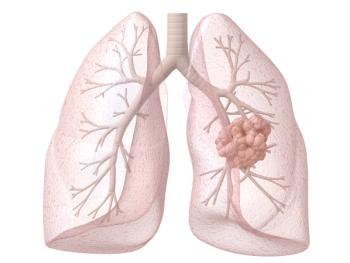
Data from the Lung-Care Project showed that non–high-risk patients experienced better survival and curative potential through early detection.
According to Brian Henick, MD, understanding why certain patients experience specific AEs will be key for giving more precise lung cancer therapy.

Brian Henick, MD, discussed plans to investigate agents targeting ULBP2/5/6, antibody-drug conjugates, and other novel therapies in lung cancer research.
The FDA approved zongertinib in HER2-mutated NSCLC as part of its Commissioner's National Priority Voucher pilot program.

Read this discussion to spot LEMS red flags tied to small cell lung cancer, avoid misdiagnosis, and follow antibody/EMG testing and screening steps.
The willingness-to-pay metric is a tool that varies by individual country, which is used to determine how much a patient might pay for their treatment.
Though durvalumab was priced higher than most willingness-to-pay thresholds, an initiative out of Singapore demonstrated that difference can be managed.

In a presentation at the 2026 ACRO Summit, Pranshu Mohindra, MD, reviewed the treatment planning process for hypofractionated radiation in lung cancer.
Olvimulogene nanivacirepvec yielded 3 partial responses among 9 evaluable patients with SCLC who had progression or recurrence on prior therapy.

OncoPrism-NSCLC was found to be a predictive biomarker of immune checkpoint inhibitor benefit vs a general prognostic tool in patients with NSCLC.
Expert teams debate cutting-edge lung cancer treatments, exploring trial data and innovative strategies for improving patient outcomes in NSCLC and SCLC.

With many treatments emerging in the EGFR-mutated lung cancer landscape, sequencing therapy has emerged as a key consideration for these patients.

An oncologist at the Georgia Cancer Center discussed the evolution of treatment strategies and emerging therapies for patients with EGFR-mutated disease.
Patients with lung cancer who achieve a complete response with neoadjuvant therapy may not experience additional benefit with adjuvant immunotherapy.
Numerous trials have displayed the evolution of EGFR inhibition alone or with chemotherapy/radiation in the EGFR-mutated lung cancer space.
Advertisement
Advertisement
Trending on CancerNetwork
1
The Gynecologic Oncology Data to Watch at ESMO 2026: De-Escalation and ADCs
2
Cancer Vaccine Combinations Improve 1-Year Survival in Second-Line NSCLC
3
Monitoring Anemia and Optimizing Regimen Selection in Resectable NSCLC
4
The Usefulness of Indocyanine Green in Cytoreductive Ovarian Cancer Surgery
5