






Multiple Myeloma
Latest News
Advertisement
Video Series

Latest Videos






Shorts

0:48
Translating Cytogenetic Data Into Next-Generation Therapies in NDMM
a day ago
by
Manoj Bhasin, PhD, MS

0:40
NIH Funding May Be Instrumental to Developing Multiple Myeloma Research
21 days ago
by
Surbhi Sidana, MD

1:04
Daratumumab/Teclistamab Multiple Myeloma Approval Could Expand Treatment Options
22 days ago
by
Surbhi Sidana, MD

0:46
Maximizing CAR T-cell Efficiency in Multiple Myeloma Through the D-Domain
2 months ago
by
Krina K. Patel, MD, MSc
0:59
Including "Cure" in the Multiple Myeloma Treatment Dialogue
4 months ago
by
Sundar Jagannath, MD
Podcasts




CME Content































Advertisement
More News

Investigators are currently assessing IBI3003 among patients with relapsed/refractory multiple myeloma in a phase 1/2 trial.
Findings show that age also represents an important driver for select pathologic genomic events differing at the presentation of disease by sex.

According to the FDA, randomized trials are preferred when assessing MRD to support accelerated approvals in multiple myeloma.

Safety data from the phase 1 LUMMICAR study 1 show no high-grade CRS or any-grade ICANS among patients with myeloma who received zevorcabtagene autoleucel.

Data from CARTITUDE-4 show that cilta-cel can improve outcomes for patients with lenalidomide-refractory multiple myeloma as early as first relapse.
Data from the phase 3 MajesTEC-9 trial support teclistamab as an essential therapy for patients with multiple myeloma as early as first relapse.
Clearance of the investigational new drug application allows investigators to expand their assessment of KLN-1010 as part of the phase 1 inMMyCAR trial.

Data from the IZALCO trial support the use of subcutaneous on-body injector administration of an isatuximab-based regimen in relapsed/refractory multiple myeloma.
C. Ola Landgren, MD, PhD, and Noopur Raje, MD, discussed results from the ADVANCE trial of DKRd in patients with newly diagnosed multiple myeloma.

Data from a phase 1 trial may support additional clinical studies of CT0596 in relapsed/refractory multiple myeloma.

Patients 70 years and older with newly diagnosed multiple myeloma experienced higher response rates and prolonged survival with Isa-Rd vs Rd alone.
Based on phase 1 data, GC012F/AZD0120 may broaden therapeutic options for patients with newly diagnosed multiple myeloma.
The decision is based on results from the phase 3 MajesTEC-3 trial, which showed a PFS benefit with the teclistamab combination in patients with pretreated multiple myeloma.
Alan Pliskin and Mary Kay Yamamoto discuss their journey through multiple myeloma treatment, emphasizing the importance of knowledge, positivity, and quality of life.

The median OS among patients with triple-class–exposed relapsed/refractory multiple myeloma with or without EMD was 12.6 months vs 36.4 months.
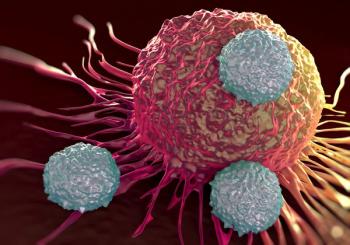
The 6- and 12-month PFS rates were 76.4% and 68.2%, respectively, in patients with relapsed/refractory multiple myeloma who discontinued treatment with teclistamab early.

Most CRS events were low grade with elranatamab plus daratumumab and lenalidomide without prophylactic tocilizumab in patients with multiple myeloma.
Data from the phase 1b MonumenTAL-2 study support continued investigation of talquetamab/pomalidomide in the phase 3 MonumenTAL-6 trial.
Belantamab mafodotin plus pomalidomide and dexamethasone led to a median PFS of 32.6 months in patients with relapsed/refractory multiple myeloma.
Of the 4 patients with relapsed/refractory multiple myeloma who received KLN-1010, 1 complete response and 3 partial responses were achieved at varying levels of MRD sensitivity.
Phase 2 data support further evaluation of frontline BCMA/CD3 bispecific antibody combinations in phase 3 trials.
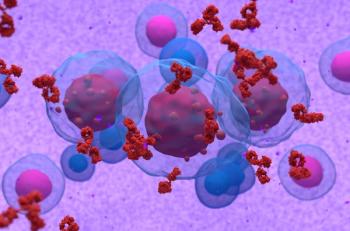
After a median follow-up of 3.9 months, AZD0120 elicited an overall response rate of 96% among 23 patients with relapsed/refractory multiple myeloma.
Linvoseltamab monotherapy achieved minimal residual disease negativity in 95% of patients with newly diagnosed multiple myeloma.
Talquetamab plus teclistamab led to an ORR and CR or better rate of 79% and 53%, respectively, in multiple myeloma with true extramedullary disease.
Results from the CAMMA 3 trial showed that subcutaneous cevostamab achieved a 52.0% ORR in BCMA-naive relapsed or refractory multiple myeloma.
Advertisement
Advertisement
Trending on CancerNetwork
1
Modifiable Risk Factors Suggest Potential for Improving Cancer Prevention
2
2026 Tandem Meetings: What’s the Latest Research in Multiple Myeloma?
3
Dato-DXd Receives Priority Review in Unresectable/Metastatic TNBC
4
Barriers to CAR T-Cell Referral and Center Access in Multiple Myeloma
5