






Multiple Myeloma
Latest News
Advertisement
Latest Videos

CME Content























Advertisement
More News

During the 66th American Society of Hematology Annual Meeting and Exposition, experts in multiple myeloma gathered to discuss the impact of maintenance therapy and minimal residual disease (MRD) in patients with newly diagnosed transplant-eligible or -ineligible multiple myeloma.
Updated CARTITUDE-4 trial data show cilta-cel induces deep MRD negativity in patients with lenalidomide-refractory multiple myeloma.
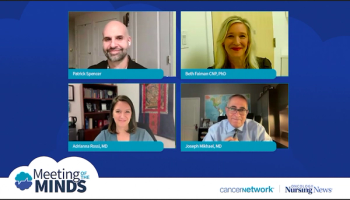
This segment explores Dr. Rossi's clinical experience with cilta-cel as a second-line therapy, focusing on its efficacy and quality-of-life benefits across diverse patient populations.
This segment examines the evidence supporting cilta-cel in second-line therapy, highlighting key outcomes from the CARTITUDE trials and comparing them to other available second-line treatment options for multiple myeloma.

Panelists discuss how the treatment landscape for patients with transplant-ineligible/deferred newly diagnosed multiple myeloma (NDMM) is expected to evolve, with considerations for optimizing therapeutic approaches based on emerging data from novel drug combinations and treatment strategies.
Panelists discuss how frailty assessment influences treatment decisions in patients with transplant-ineligible newly diagnosed multiple myeloma (NDMM), particularly examining the IFM2017-03 study’s evaluation of a dexamethasone-sparing approach using daratumumab plus lenalidomide in frail patients.
Efficacy results from the phase 1/2 LINKER-MM1 trial evaluating linvoseltamab in relapsed or refractory multiple myeloma support the decision.

Hematologists gathered to discuss recent updates on bispecific antibodies surrounding patients with relapsed/refractory multiple myeloma.
A retrospective systemic literature review showed that increased lines of therapy led to decreased HRQOL in patients with relapsed/refractory myeloma.

This segment highlights the treatment journey of a 68-year-old IT professional with high-risk multiple myeloma, detailing progression after initial D-RVd therapy, refusal of ASCT, and successful transition to cilta-cel CAR-T therapy with manageable adverse events.
This segment discusses the process and critical importance of bridging strategies for patients awaiting CAR T-cell therapy.
Panelists discuss how isatuximab- and daratumumab-based quadruplet regimens compare in patients with transplant-ineligible/deferred newly diagnosed multiple myeloma (NDMM), with a particular focus on minimal residual disease (MRD) negativity data from the IMROZ and CEPHEUS trials, presented at the 2024 American Society of Hematology (ASH) Annual Meeting and Exposition.
Panelists discuss how treatment strategies and sequencing decisions for patients with multiple myeloma who decline transplantation despite eligibility must be carefully tailored, considering both immediate therapeutic goals and potential future treatment options.
Findings from RedirecTT-1 show responses across different dose levels of talquetamab/teclistamab among those with multiple myeloma.
Clonal hematopoiesis may be associated with the early development of toxic events in patients with newly diagnosed multiple myeloma.

Real-world data show that closer monitoring may be necessary for patients with relapsed/refractory multiple myeloma and baseline renal impairment.
This segment examines the decision-making process between CAR-T therapy and other innovative treatments, exploring scenarios where alternative therapies may be more appropriate.
This segment highlights clinical experiences with ide-cel in the second-line setting, focusing on observed improvements in efficacy and quality of life, as well as challenges in administration
Panelists discuss how the CEPHEUS study comparing subcutaneous daratumumab plus VRd vs VRd alone in patients with transplant-ineligible newly diagnosed multiple myeloma (NDMM) provides important insights into the role of quadruplet therapy in this specific population.

Panelists discuss how UCSF Health has learned that successful integration of CAR T-cell therapy in multiple myeloma requires multidisciplinary collaboration, patient selection optimization, and management of toxicities. Future research includes exploring CAR T-cell therapy in earlier treatment lines and combining it with novel agents to enhance efficacy.
Having extramedullary disease correlated with worse PFS and OS among patients who received belantamab mafodotin for relapsed/refractory multiple myeloma.
Complete response rate strongly correlated with lower SLiM-CRAB incidence and biochemical progression in those with high-risk smoldering multiple myeloma.
Patients who received the isatuximab combination in the IMROZ trial experienced prolonged MRD-negativity, which correlated with improved PFS.
Panelists discuss how the typical CAR T-cell therapy referral process begins with community physicians contacting the treatment center. The patient undergoes a thorough evaluation, including medical history, eligibility criteria, and pretreatment assessments before final selection for therapy.

Additionally, the Chinese Society of Clinical Oncology and Chinese Anti-Cancer Association guidelines recommend the isatuximab regimen for this population.
Advertisement
Advertisement
Trending on CancerNetwork
1
Modifiable Risk Factors Suggest Potential for Improving Cancer Prevention
2
Dato-DXd Receives Priority Review in Unresectable/Metastatic TNBC
3
2026 Tandem Meetings: What’s the Latest Research in Multiple Myeloma?
4
Outlining Advances in AI For Breast Cancer Screening/Radiomics
5