

An expert highlights OrigAMI-4, iza-bren plus pembrolizumab, GORTEC IDEAL, and HexAgon-HN ahead of the ESMO Congress 2026.
An expert highlights OrigAMI-4, iza-bren plus pembrolizumab, GORTEC IDEAL, and HexAgon-HN ahead of the ESMO Congress 2026.

Lisa Carter-Bawa, PhD, APRN, discusses policy barriers, arts-based outreach, AI, and stigma in lung cancer screening.

Experts highlight updated findings from CARTITUDE-2, how to mitigate late toxicities, and other key considerations in the modern multiple myeloma landscape.

Immune checkpoint inhibitors have reshaped treatment for extensive-stage small cell lung cancer, though their role in limited-stage disease remains uncertain.

Cosibelimab is now a preferred, category 2A NCCN option for locally advanced CSCC when curative surgery or radiation is not feasible.

Sofetabart mipitecan produced responses in heavily pretreated high-grade ovarian cancer regardless of folate receptor α expression or prior mirvetuximab soravtansine.

The European Commission approved the pembrolizumab-based regimen for resectable MIBC regardless of cisplatin eligibility based on the KEYNOTE-B15 data.

Training AI on data without good representation of underserved populations may unintentionally widen disparities in lung cancer care.

At the BIG10 CRC Summit, Mingjia Li, MD, outlined how pre-operative hemoglobin may signal treatment response in resectable NSCLC.

Experts highlight KEYNOTE-C93, TroFuse-005, and antibody-drug conjugate data in platinum-resistant ovarian cancer at the ESMO Congress 2026.

Nikolai Strusberg, MD, discussed other toxicities of proton vs photon breast RT, practice implications, and next steps in capsular contracture research.

Indocyanine green may be highly sensitive in the identification of ovarian cancer metastases, though with low specificity.

The therapeutic cancer vaccine OSE2101 combined with either docetaxel or nivolumab met the primary end point of 1-year overall survival in the Combi-TED trial.
In a phase 1 trial, CD19/CD20/CD22 CAR T cells produced complete responses in 83% of patients with relapsed/refractory B-cell non-Hodgkin lymphoma.
Nikolai Strusberg, MD, explained the clinical hypothyroidism endpoint and how thyroid dose should guide proton vs photon choice in breast cancer.

Leah Katz, MD, MPH, discusses IDEA, TARGIT-B, NeoORB, and other breast radiation data from ASTRO 2026, and why patient selection is the unifying theme.

Frederick Howard, MD, explored the evolving intersection of artificial intelligence (AI), computational pathology, and precision breast oncology.

“Vitamin C is a powerful epigenetic drug, which is not generally realized,” said Peter A. Jones, PhD, DSc (hon).

Findings from the AZUR-1 trial support the FDA approval of dostarlimab for patients with stage II/III locally advanced rectal cancer.

Investigators will share detailed findings from the phase 1a/b EMBOLD PanTumour-101 study at the European Society for Medical Oncology Congress 2026.

The anti–IL-1α antibody vilamakitug added to trifluridine/tipiracil met its prespecified 12-month overall survival threshold in refractory metastatic colorectal cancer.
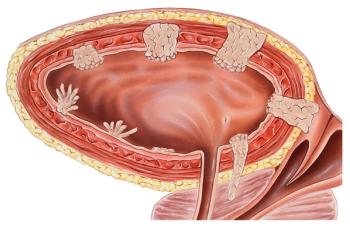
Long-term QUILT-3.032 data showed a 71% CR rate, with a median duration of 26.6 months with nogapendekin alfa inbakicept/BCG in BCG-unresponsive NMIBC.
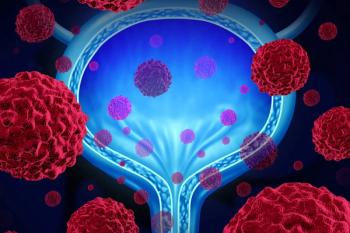
The FDA assigned a PDUFA date of June 14, 2027, to UGN-103 for the treatment of recurrent low-grade, intermediate-risk, non–muscle-invasive bladder cancer.

Leah Katz, MD, MPH, discussesed NeoORB data on neoadjuvant radiotherapy and why radiation timing may open new treatment paradigms in breast cancer.

Daniel C. McFarland, DO, and Ramy Sedhom, MD, discussed co-located psycho-oncology and palliative care, warm handoffs, and proactive distress screening.
Leah Katz, MD, MPH, explained how an intraoperative tumor bed boost in TARGIT-B may reduce distant relapse in young patients with breast cancer.

Erik Bengtsen, MD, discussed meaning-centered therapy at the bedside, framing psychiatry referrals, and a more humanistic approach to care.
Ursula A. Matulonis, MD, surveyed the exploitable genetic changes driving the next wave of ovarian cancer trials, from CDK2 and WEE1 inhibitors to PARG inhibitors.

Ponatinib plus blinatumomab may help “a meaningful subset of patients” forego transplant for Ph-positive acute lymphoblastic leukemia.

Ursula A. Matulonis, MD, broke down the trial design, backbone regimen, and preclinical rationale that she believes made KEYNOTE-B96 a positive study.