
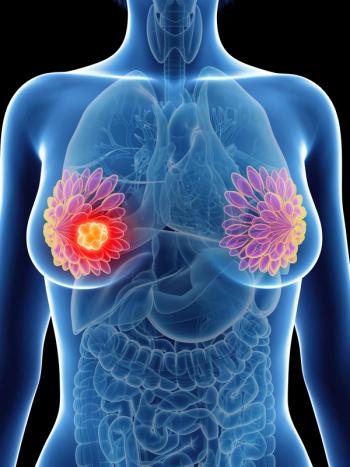
10-year CHN HYPOPMRT data show 3-week postmastectomy RT with nodal irradiation maintains locoregional control without added severe late toxicity.
10-year CHN HYPOPMRT data show 3-week postmastectomy RT with nodal irradiation maintains locoregional control without added severe late toxicity.
Ayal Aizer, MD, MHS, explains why fractionated SRS outperformed single-fraction SRS for surgical bed control in Alliance A071801.

Andy Liao, MD, discusses KRAS-targeted strategies, molecular profiling, multidisciplinary care, and FGFR2 inhibitor sequencing in cholangiocarcinoma.
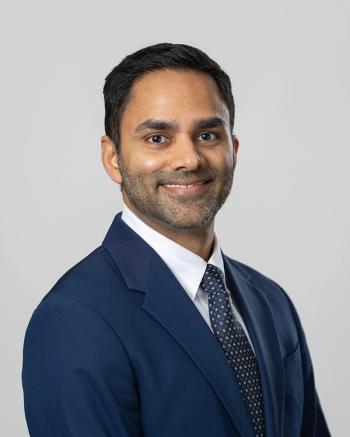
“To me, the biggest differentiator might be how the patient wants to experience care,” said Krish Patel, MD, on treatment options for patients with lymphoma.
Ayal Aizer, MD, MHS, says Alliance A071801 supports fractionated SRS as standard after resection, with comparable radiation necrosis rates.

Jyoti Malhotra, MD, MPH on first-in-human clinical trials, lung cancer precision medicine in 2026, the disparities tension in drug development, and her move to Yale Cancer Center.
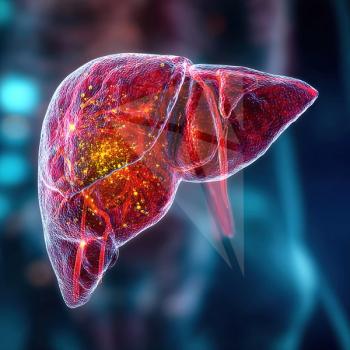
A personalized ctDNA assay demonstrated 100% specificity but limited sensitivity for detecting recurrence after liver transplantation in HCC and CCA.
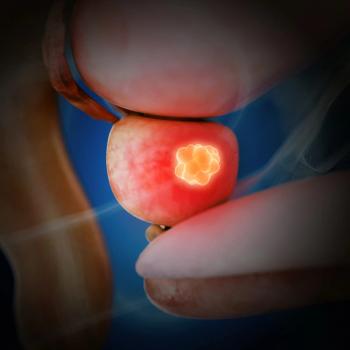
The FDA cleared the SpaceOAR Flex System, a hydrogel spacer used during prostate cancer radiotherapy, in a 510(k) supported by the HYDROSPACE trial.
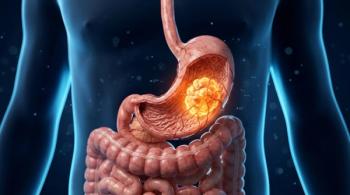
Phase 2 ASPEN-06 data showed higher response rates with evorpacept added to trastuzumab, ramucirumab, and paclitaxel in HER2-positive gastric cancer.
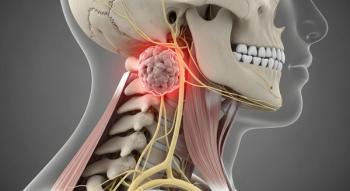
In 62 patients with ICI-naive HPV16-Positive HNSCC, 17.7% experienced grade 3 or 4 treatment-related adverse events.
Ethan B. Ludmir, MD, details which cholangiocarcinoma subsets, by tumor location, may benefit most from neoadjuvant radiation before surgery.
Data from the phase BRUIN CLL-313 and BRUIN CLL-314 trials support the approval of pirtobrutinib for patients with CLL or SLL in China.

Clinicians must think a lot about how to make testing and novel treatment advances available for patients globally, according to Chul Kim, MD, MPH.

Daniel C. McFarland, DO, and Yesne Alici, MD, discussed medical aid in dying in cancer care, New York’s safeguards, and the role of psycho-oncology.
Ethan B. Ludmir, MD, explains the rationale for moving radiation into the neoadjuvant setting for borderline resectable cholangiocarcinoma.

An analysis of the BENEFIT trial supports isatuximab plus bortezomib, lenalidomide, and dexamethasone as a new standard of care in transplant-ineligible NDMM.

C. Ola Landgren, MD, PhD, discusses how MRD-driven strategies may eliminate the transplant-eligible vs transplant-ineligible framework in multiple myeloma.

Hans C. Lee, MD, discussed how community oncologists with limited access to MRD testing can think about the new IMS/IMWG definition of cure in myeloma.
A patient-reported outcomes analysis from the phase 3 IRAKLIA trial showed higher satisfaction with subcutaneous isatuximab via on-body injector.

The phase 3 EXCALIBER-RRMM trial supports iberdomide plus daratumumab and dexamethasone as a new standard of care in relapsed/refractory multiple myeloma.

C. Ola Landgren, MD, PhD, discusses disparities in myeloma care access between academic and community practices and how his center works to bridge that gap.
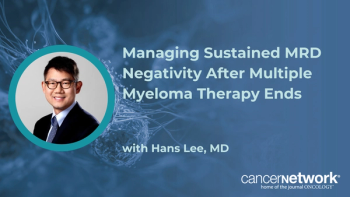
Hans C. Lee, MD, discussed how he monitors patients with multiple myeloma who achieve deep, sustained MRD negativity after coming off therapy.

No new safety signals were observed with the daratumumab regimen after an additional 3 years of follow-up in the phase 3 PERSEUS study.
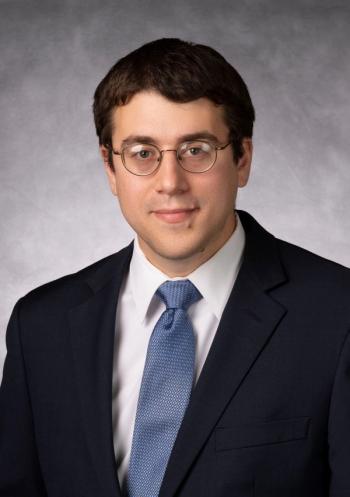
Ethan B. Ludmir, MD, discussed neoadjuvant radiation, advanced treatment techniques, the HYPERION CCA trial, and lirafugratinib in cholangiocarcinoma.
In the phase 3 CERVINO trial, etentamig showed an early overall survival signal in patients with triple-class exposed relapsed/refractory multiple myeloma.

In the phase 2 IBEX trial, iberdomide plus subcutaneous daratumumab post-transplant maintenance improved MRD status in patients with multiple myeloma.

Three nurses discuss the differences in the care and education required for patients with first-line EGFR-mutated non–small cell lung cancer.

Elizabeth Thompson, MD, discusses pediatric cancer, proton therapy, and her work as a peer reviewer for CURiE.
![“[W]e should strive to increase the [number] of patients…who enjoy long-term disease-free survival and possibly cure,” said Meletios Dimopoulos, MD.](https://cdn.sanity.io/images/0vv8moc6/cancernetwork/c7abebf9344f9b1be9aee80d9879d139c1655bcc-1200x1197.jpg?w=350&fit=crop&auto=format)
“[W]e should strive to increase the [number] of patients…who enjoy long-term disease-free survival and possibly cure,” said Meletios Dimopoulos, MD.
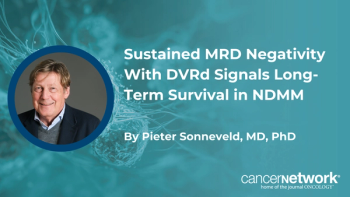
Pieter Sonneveld, MD, PhD, explained how sustained MRD negativity with DVRd in the PERSEUS trial may guide long-term outcome counseling in multiple myeloma.