
Discover the latest FDA-approved therapy for high-risk smoldering myeloma, enhancing early intervention strategies and patient care discussions.

Your AI-Trained Oncology Knowledge Connection!
Discover the latest FDA-approved therapy for high-risk smoldering myeloma, enhancing early intervention strategies and patient care discussions.
Explore the evolving landscape of smoldering myeloma treatment, focusing on fixed-duration therapy and patient-provider communication strategies.
Explore the latest findings on smoldering myeloma treatments, including lenalidomide's effectiveness and the importance of patient monitoring in clinical trials.
Daratumumab shows promise in managing smoldering myeloma, balancing infection risks and adverse effects while offering a preferable alternative to lenalidomide.
Experts discuss the impact of daratumumab on smoldering myeloma, exploring survival rates, treatment options, and the importance of clinical trials.
Explore the AKELA trial's findings on patient characteristics and the impact of daratumumab on progression-free survival in myeloma treatment.
The AQUILA trial explores a fixed-duration therapy for myeloma, aiming to balance effective treatment with reduced long-term toxicity for patients.
Early intervention in myeloma treatment addresses critical patient needs, highlighting new trial data and the importance of tailored therapies for better outcomes.
Explore the evolving landscape of high-risk smoldering myeloma treatment options and the challenges in patient management and risk assessment.
Explore the evolving treatment strategies for high-risk smoldering multiple myeloma, emphasizing early intervention and recent clinical advancements.
Panelists discuss how patients relapsing shortly after BCMA CAR T-cell therapy should receive GPRC5D-targeted bispecifics rather than repeat BCMA therapies, given the evidence that prior BCMA exposure reduces efficacy of subsequent BCMA-directed treatments.
Panelists discuss how a triple class–exposed patient with comorbidities like COPD represents an ideal candidate for BCMA-directed bispecific therapy over CAR T-cell therapy due to the ability to titrate dosing and manage respiratory infection risks.
Panelists discuss how community practices need clear protocols for after-hours fever management, adequate caregiver support assessment, and standardized algorithms for cytokine release syndrome treatment across multiple bispecific products.
Panelists discuss how step-up dosing has successfully transitioned from inpatient-only to hybrid and outpatient models using prophylactic tocilizumab and standardized protocols for managing cytokine release syndrome.
Panelists discuss how talquetamab’s unique skin and taste toxicities are manageable through dose modifications and supportive care, with IVIG prophylaxis being crucial for BCMA-targeted but not necessarily GPRC5D-targeted therapies.
Panelists discuss how real-world data consistently show bispecific efficacy matching clinical trial results despite treating higher-risk patients, and how prophylactic interventions have reduced cytokine release syndrome severity.
Panelists discuss how CAR T-cell therapy should generally precede bispecifics when possible due to T-cell exhaustion concerns, though they agree there are virtually no absolute contraindications to bispecific therapy.
Panelists discuss how bispecifics are reversing the historical paradigm of diminishing returns in relapsed/refractory multiple myeloma, achieving 60% to 70% response rates lasting over a year in heavily pretreated patients.
Panelists discuss how patient preferences for treatment-free intervals are increasingly important in therapy selection, with bispecifics offering potential for response-adapted dosing and early discontinuation while maintaining remissions.
Patients with high-risk markers may especially benefit from the addition of daratumumab to lenalidomide as maintenance therapy for NDMM.
Experts dive into the complexities of defining and treating high-risk Multiple Myeloma (MM) and discuss the role of ASCT in newly diagnosed MM and weigh the considerations for recommending transplants, including insights on the selection criteria for tandem transplantations.
Philippe Moreau, MD, discusses recent data from the IFM 2018 trial which evaluated Dara-KRd induction and consolidation plus double transplants in high risk, TE NDMM.
Three medical oncologists explore the influence of MRD negativity rates on treatment decisions and discover the ideal patient profile for quadruplet regimen.
Larry Anderson, MD, goes over the recent data from the IsKia trial which investigated IsaKRd in pre-transplant induction and post-transplant consolidation in TE NDMM.
Three physicians explore the criteria for determining an adequate or successful response during the induction phase in patients with TE NDMM and uncover the intricate considerations shaping the choice of maintenance regimens.
Luciano Costa, MD, reviews recent data from the PERSEUS trial investigating the combination of daratumumab, bortezomib, lenalidomide and dexamethasone in newly diagnosed multiple myeloma patients.
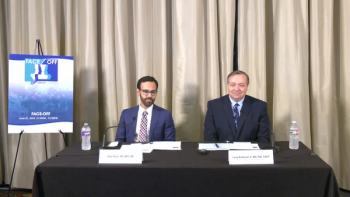
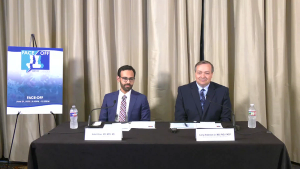
In the final cross Q&A session from the multiple myeloma module, panelists discuss implications of IKEMA and consider the importance of biochemical versus clinical progression.
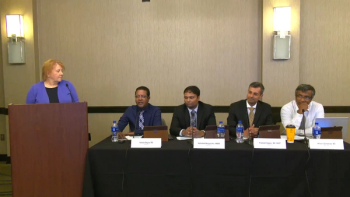
Expert Wilson Gonsalves, MD, shares clinical data in multiple myeloma centered on the distinction between biochemical versus clinical progression.
Following a review of data with low-dose dasatinib in chronic myeloid leukemia, key opinion leaders from the Mayo Clinic and UT Southwestern consider its role in real-world practice.
In the last presentation of the session, Abhishek Mangaonkar, MBBS, details clinical trial data with low-dose dasatinib in patients with chronic myeloid leukemia.
Published: July 28th 2023 | Updated:
Published: July 28th 2023 | Updated:
Published: January 12th 2024 | Updated:
Published: August 18th 2023 | Updated:
Published: August 4th 2023 | Updated:
Published: January 5th 2026 | Updated: