




Pancreatic Cancer
Latest News
Advertisement
Latest Videos




CME Content































Advertisement
More News

Results from a phase 1b/2 trial indicated that niraparib plus nivolumab yielded superior progression-free survival at 6 months vs niraparib and ipilimumab for patients with platinum-sensitive advanced pancreatic cancer.

Patients with borderline resectable pancreatic ductal adenocarcinoma experienced favorable overall survival following treatment with mFOLFIRINOX alone, with additional hypofractionated radiotherapy showing little benefit.

Kim A. Reiss Binder, MD, spoke about the use of niraparib plus either nivolumab or ipilimumab for patients with platinum-sensitive advanced pancreatic adenocarcinoma.

Patients with pancreatic and extrapancreatic neuroendocrine tumors treated with atezolizumab plus bevacizumab experienced consistent clinical responses and a progression-free survival consistent with other therapies.

Biosignatures data from the PRINCE trial show sophisticated precision approaches may be necessary to optimize chemoimmunotherapy use in pancreatic ductal adenocarcinoma.

At the 2022 American Society of Clinical Oncology Annual meeting, Robert H. Vonderheide, MD, DPhil, and colleagues from the Parker Institute for Cancer Immunotherapy present research into biosignatures of survival with different chemoimmunotherapy regimens for pancreatic ductal adenocarcinoma.

Shubham Pant, MD, highlights the importance of tailoring treatment in patients with pancreatic cancer by exploring biomarkers.
Nimotuzumab plus gemcitabine improved overall survival in patients with KRAS wild-type advanced pancreatic cancer, especially in those who did not need surgery for obstruction of a pancreatic bile duct.

Stereotactic body radiotherapy plus pembrolizumab and trametinib could potentially become a novel treatment strategy for patients with locally recurrent pancreatic cancer following surgery.

Christine Chung, DO, spoke with CancerNetwork® about the latest research from the journal ONCOLOGY® about implications of blood-based molecular markers in pancreatic adenocarcinoma.

Surufatinib, a treatment for patients with pancreatic and extra-pancreatic neuroendocrine tumors, received a complete response letter from the FDA.
By analyzing CT scans with artificial intelligence, the development of pancreatic ductal adenocarcinoma may be predicted years before actual diagnosis.

Patients with KRAS G12C–mutated locally advanced or metastatic pancreatic cancer experienced clinically meaningful benefit from treatment with sotorasib .

Although sintilimab improved overall response rates and maintained a tolerable safety profile for patients with metastatic or recurrent pancreatic adenocarcinoma, it did not improve overall or progression-free survival.

Updated results from a cohort of the KRYSTAL-1 trial spotlight the potential of adagrasib for patients with previously treated KRAS G12C¬–mutant gastrointestinal tumors.
Patients undergoing pancreaticoduodenectomy for pancreatic ductal adenocarcinoma experienced a better overall survival when treated with adjuvant chemotherapy.
Molecular profiling is being explored in pancreatic adenocarcinoma as a tool to assist with early detection, prognosis, and patient selection in targeted therapy clinical trials.

CancerNetwork® spoke with Allyson J. Ocean, MD, Diane M. Simeone, MD, Manuel Hidalgo Medina, MD, PhD, and Andrew E. Hendifar, MD, about their recent research into the treatment of pancreatic cancer.

Diane Simeone, MD, spoke to the need to determine which patients are at risk of developing pancreatic cancer, the importance of early detection, and challenges that need to be addressed in order to improve survival.
For Pancretic Cancer Awareness month, CancerNetwork® spoke with Manuel Hidalgo Medina, MD, PhD, about the importance of the phase 2 COMBAT/KEYNOTE-202 trial examining motixafortide and pembrolizumab plus nanoliposomal irinotecan, fluorouracil, and folinic acid in metastatic pancreatic ductal adenocarcinoma.

In an interview with CancerNetwork®, Andrew Hendifar, MD discusses a case series analysis focused on real-world outcomes with targeted and standard therapies in a subset of patients with pancreatic cancer and RAF alterations.
For Pancreatic Cancer Awareness Month, CancerNetwork® spoke with Allyson Ocean, MD, about how family members of patients with pancreatic cancer should seek genetic testing to determine if they are predisposed to pancreatic cancer.
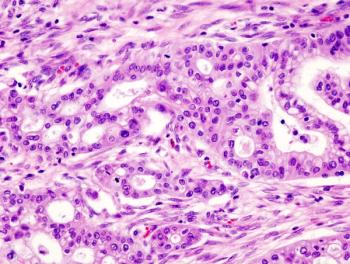
Patients treated with eryaspase for second line advanced pancreatic cancer did not meet the primary end point of overall survival in the TRYbeCA-1 trial.
Research of family registries found that individuals with a germline pathogenic ATM variant gene had greater lifetime risk of developing pancreatic cancer than individuals without the gene.

FDA Grants New 510(k) Clearance to RenovoCath Delivery System for Targeted Treatment of Solid Tumors
RenovoCath, which was granted a new 510(k) clearance by the FDA, distributes chemotherapy directly to solid tumors via the arteries, opening avenues for a more targeted treatment.
Advertisement
Advertisement
Trending on CancerNetwork
1
Modifiable Risk Factors Suggest Potential for Improving Cancer Prevention
2
2026 Tandem Meetings: What’s the Latest Research in Multiple Myeloma?
3
Barriers to CAR T-Cell Referral and Center Access in Multiple Myeloma
4
Dato-DXd Receives Priority Review in Unresectable/Metastatic TNBC
5