



Radiation Oncology
Latest News

Advertisement
Latest Videos




CME Content































Advertisement
More News
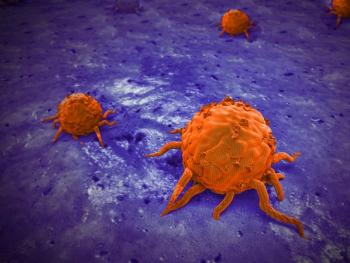
Results from a pooled case control study indicate that meninges are very radiosensitive in pediatric patients who were treated at prior to age 10 years, supporting reduced dose whole brain irradiation in this population.

From shortening treatment duration without compromising efficacy in breast and prostate cancer to improving quality of life, experts share the main takeaways from the 2022 ASTRO Annual Meeting.
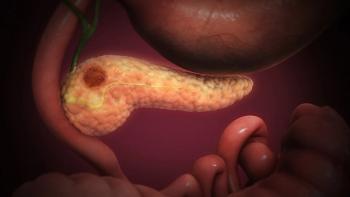
By analyzing CT scans with artificial intelligence, the development of pancreatic ductal adenocarcinoma may be predicted years before actual diagnosis.
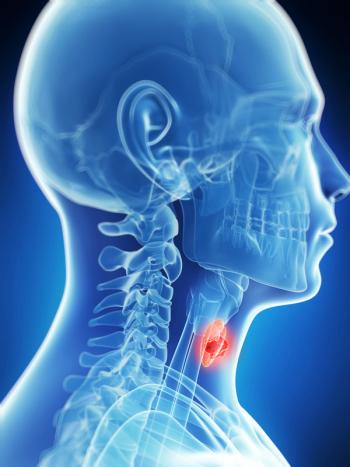
A presentation from the 2022 ASTRO Multidisciplinary Head and Neck Cancers Symposium showed a de-escalated radiotherapy dose to 54 Gy vs 70 Gy led to better measures of toxicity in those with p16+ oropharyngeal squamous cell carcinoma.
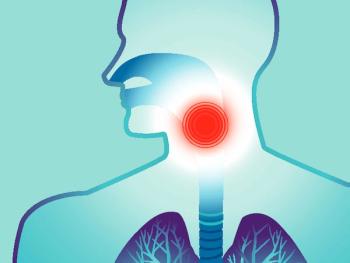
In a pre-planned pooled analysis of data from the MC1273 and MC1675 trials presented at the 2022 ASTRO Multidisciplinary Head and Neck Cancers Symposium, de-escalated adjuvant radiation therapy met criteria for efficacy in human papillomavirus–related oropharyngeal squamous cell carcinoma.

Findings from the SqeDCIS trial indicated that DCISionRT was predictive of radiotherapy benefit in patients with ductal carcinoma in situ of the breast.

Patients with human papillomavirus–associated oropharyngeal squamous cell carcinoma experienced good quality of life and promising survival benefit after being treated with de-escalated adjuvant radiation therapy.

Patients with up to 5 oligometastases tolerated stereotactic body radiation therapy well, with investigators identifying a relatively safe toxicity profile of grade 2 or higher adverse effects.

Patients with human papillomavirus–associated oropharyngeal squamous cell carcinoma experienced efficacious survival benefits from treatment with primary radiotherapy.

Patients receiving trastuzumab for HER2-positive breast cancer on the phase 3 HERA trial did not have an increased risk of cardiotoxicity from radiation therapy.

Patients who were treated with extreme hypofractionation after breast conserving surgery saw no increase in ill-treatment effects compared with those receiving moderate hypofractionation.

A retrospective review found that external-beam radiation therapy has been underutilized as a bridging therapy in patients with hepatocellular carcinoma seeking transplant, although its prevalence has increased over the past decade.

Stereotactic body radiotherapy added to standard of care treatment resulted in better progression-free survival for those with oligoprogressive non–small cell lung cancer.

The use of hypofractionated image-guide radiotherapy was not found to improve overall survival for patients with non–small cell lung cancer and poor performance status versus conventional fractionated radiation techniques.

Hippocampal avoidance–prophylactic cranial irradiation was associated with better cognitive function preservation versus standard prophylactic cranial irradiation for small cell lung cancer.

PET-negative patients who are treated with radiotherapy had a slightly increased absolute cardiovascular disease risk, although magnitude of these effects varied widely.
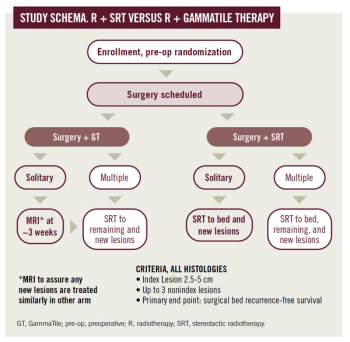
Phase 3 Randomized Controlled Trial of Post-Surgical Stereotactic Radiotherapy (SRT) versus Surgically Targeted Radiation Therapy (STaRT) with GammaTile for Treatment of Newly Diagnosed Metastatic Brain Tumors (ROADS; NCT04365374)

Technetium Tc 99m tilmanocept may now be used to enhance identification of lymph nodes in pediatric patients with certain tumors.

The results from a retrospective trial that found stereotactic radiosurgery produced comparable results for both brainstem metastases and nonbrainstem brain metastases suggest both groups of patients should be eligible for stereotactic radiosurgery clinical trials.
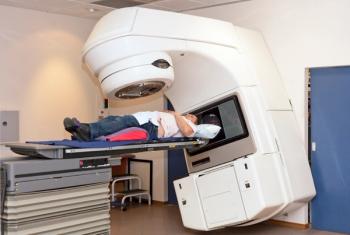
A clinical trial examining the safety of stereotactic body radiotherapy for patients with oligometastases indicated that the modality was safe for patients with multiple metastatic sites.

The 2 pilot multidisciplinary care teams reported positive feedback with the collaboration, explaining that the meetings were valuable to the quality care of their patients.

Thomas J. Eichler, MD, FASTRO, presented data during a media briefing from surveys of radiation oncologists treating patients with cancer through the COVID-19 pandemic.
Data published in The Lancet Oncology found that a hypofractionated radiation schedule of 55 Gy in 20 fractions is noninferior to a schedule of 64 Gy in 32 fractions for patients with this disease.
A recent trial investigating the potential for stereotactic ablative body radiotherapy to treat patients with extracranial oligometastatic cancer found improved survival and a manageable safety profile.

Data published in Cancer found adjuvant radiotherapy after distal cholangiocarcinoma resection was associated with a survival benefit for patients, regardless of margin or nodal status.
Advertisement
Advertisement
Trending on CancerNetwork
1
Modifiable Risk Factors Suggest Potential for Improving Cancer Prevention
2
Dato-DXd Receives Priority Review in Unresectable/Metastatic TNBC
3
2026 Tandem Meetings: What’s the Latest Research in Multiple Myeloma?
4
Outlining Advances in AI For Breast Cancer Screening/Radiomics
5