


Breast Cancer
Latest News
Advertisement
Latest Videos


CME Content































Advertisement
More News

Aditya Bardia, MD, discusses the FDA approval of T-DXd for HER2-low or ultralow metastatic breast cancer and its potential impact on treatment paradigms.

Findings from DESTINY-Breast06 showed a PFS of 13.2 months for patients given T-DXd for HER2-low or ultralow breast cancer.
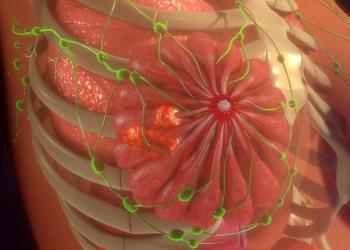
Data from the CheckMate 7FL trial may inform treatment decisions regarding preoperative immunotherapy for patients with breast cancer.

Pertuzumab retreatment modestly improved progression-free survival and meaningfully improved overall survival in advanced nHER2–positive breast cancer.
Aditya Bardia, MD, MPH, FASCO, spoke about how the FDA approval of T-DXd in HER2-low or ultralow breast cancer will allow for a broader treatment range.
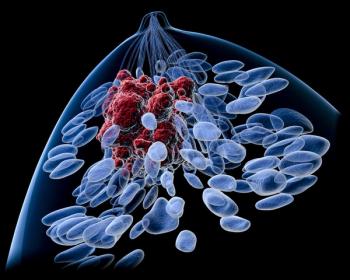
Findings from the ICE3 trial revealed that no serious adverse effects were experienced related to the use of cryoablation in ipsilateral breast tumors.

The panel discussed the different ways to treat patients with HER2-positive metastatic breast cancer who also have brain metastases.

Risk model data may provide reassurance for individuals undergoing hormone therapy with an already heightened breast cancer risk due to family history.
The safety profile of pembrolizumab plus neoadjuvant chemotherapy was consistent with the known profiles for each treatment.

Data from analytical similarity studies and comparative clinical trials support the application of HLX11 in HER2-positive breast cancer.
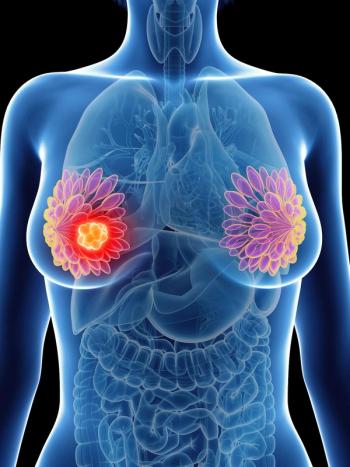
The PATHWAY HER2 test has been approved to identify patients with HER2-ultralow metastatic breast cancer who may benefit from treatment with T-DXd.

Anant Madabhushi, PhD, and Farzad Fereidouni, PhD, are developing the MarginCall technology to reduce time lag and improve tumor margin assessment accuracy in breast and ovarian cancer surgery.
The PFS benefit with lerociclib plus fulvestrant was observed across all patient subgroups for those with HR–positive/HER2–negative advanced breast cancer.

“Frozen section is destructive. It ruins the tissue, it consumes the tissue, and it affects downstream molecular analysis,” according to Farzad Fereidouni, PhD.

Tucatinib plus trastuzumab was well tolerated in patients with metastatic breast cancer and consistent with the combination’s established safety profile.
Anant Madabhushi, PhD, stated that MarginCall, a surgery tool he is developing can improve patient outcomes in breast and ovarian cancer surgeries.

The FIBI technology, created by Farzad Fereidouni, PhD, when combined with AI eliminates the need for frozen sections and other labor-intensive oncology surgery practices.

The phase 3 INAVO120 trial reported statistically significant OS results in patients with PIK3CA-mutant, locally advanced or metastatic breast cancer.

Regardless of disease burden or disease progression speed on front-line therapy, trastuzumab deruxtecan appears effective in HER2-low breast cancer.

Results from the DESTINY-Breast06 trial led to the approval of T-DXd for patients with unresectable or metastatic HER2-low or HER2-ultralow breast cancer.
Data show a trend towards a reduced risk of death with fulvestrant vs anastrozole among patients with nonvisceral disease in the phase 3 FALCON trial.

Acalabrutinib improves efficacy in high-risk patients like those with TP53 mutations, those with complex cytogenetics, and those with high proliferative rates in MCL.
The DCISionRT test has shown to be a significant factor in a clinician’s recommendation on whether a patient with DCIS should receive radiotherapy.
Data from the TROPION-Breast01 trial support the FDA approval of datopotamab deruxtecan for those with metastatic HR–positive, HER2-negative breast cancer.
Data support the IGG signature, especially its key gene subset, as a potential marker of sustained antitumor activity in breast cancer.
Advertisement
Advertisement
Trending on CancerNetwork
1
Modifiable Risk Factors Suggest Potential for Improving Cancer Prevention
2
2026 Tandem Meetings: What’s the Latest Research in Multiple Myeloma?
3
Dato-DXd Receives Priority Review in Unresectable/Metastatic TNBC
4
Barriers to CAR T-Cell Referral and Center Access in Multiple Myeloma
5