Andy Liao, MD, discusses the distribution of KRAS mutations in biliary tract cancer and the different classes of KRAS inhibitors in development.
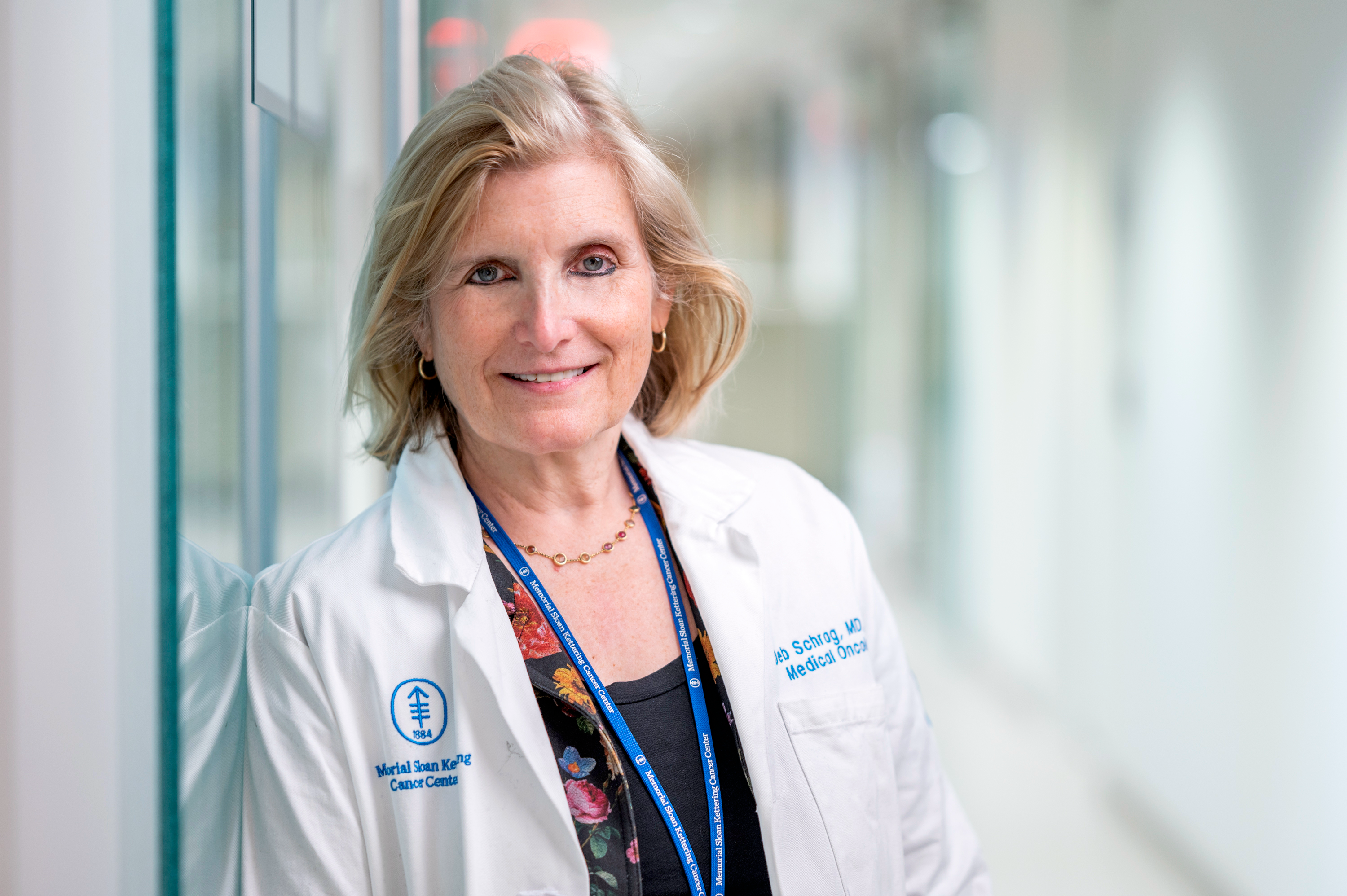
Deb Schrag, MD, MPH, discusses her journey into GI oncology, the development of patient-reported outcome systems, and her vision for the upcoming ASCO presidency.
Oncology has transitioned from a generalist field to one of immense sub-specialization, expanding to nearly 1000 different therapeutic options. For Deb Schrag, MD, MPH, the incoming president of the American Society of Clinical Oncology (ASCO) for the 2027-2028 term, this evolution highlights a shift from simply memorizing data to mastering the application and communication of accessible knowledge.1
A gastrointestinal (GI) oncologist and population scientist, Schrag’s career has been defined by a commitment to the “science of care delivery”. Her early medical training in New York City during the height of the human immunodeficiency virus (HIV) and multidrug-resistant tuberculosis epidemics provided a front row seat to how social determinants of health dictate patient outcomes. This experience launched a career-long dedication to public health and multidisciplinary collaboration—a "team sport" approach she likens more to soccer than tennis.
In an interview with CancerNetwork®, Schrag reflects on the following:
Through it all, Schrag remains guided by a simple yet profound piece of advice: "Stay curious". By maintaining sharp observational skills and directing attention toward meaningful insights, she believes the oncology community can move beyond helping patients survive to helping them truly thrive.
Schrag: I’m from New York City, went to Boston for college, and came home for medical school. I did my undergraduate medical training at Columbia Presbyterian at the height of the HIV epidemic. It was a triple epidemic of HIV, multidrug-resistant tuberculosis, and cocaine. I had a front row seat to how social determinants of health influenced patient outcomes. I had an opportunity to see all the multiple dimensions and components of the complexity of patients’ lives and how that influenced the health care that they were able to access and receive, and how that determined outcomes. It launched my interest in public health and population science.
My interest in GI oncology emerged later…. Like so many people, I was influenced by some terrific mentors. What I liked about GI oncology was the variety of diseases some caused by genetic risk, others by lifestyle, behavioral factors and others by environmental exposure. Right now we are struggling to understand the epidemic of early onset cancers, particularly colorectal cancer.GI oncology is a team sport, and I found collaborating and working with surgeons, radiation oncologists, radiologists and pathologists to achieve the best possible outcomes for patients immensely rewarding. The joy of working as part of a multidisciplinary team and seeing team care enables us to push boundaries and achieve amazing things for our patients.
Oncology started out as a generalist field, and it’s become more sub-specialized. When I started training in the 1990s, there were fewer than 50 drugs.. Now there are nearly 1000, so it is no longer possible for a human being to retain all that knowledge. It used to be that we memorized all the drugs and their [adverse] effects. Now knowledge is at our fingertips available in an instant on our phones, but the skill we need is the application of that knowledge and the ability to navigate complexity. How we access information and knowledge has changed, and how we do our work has changed.. It’s not so much knowing facts and information as knowing how to retrieve information, how to select the best information, and how to communicate that information in an impactful way that matters now. Information is also democratized because our patients and their families also have access to information. For example, we have to communicate with our patients and help them understand why trials are important and why a trial is right, or why a particular treatment is right, even if it has some challenging [adverse] effects. Early on, oncology was about what you knew. . Now what matters is how you apply the existing body of knowledge and how you convey and communicate it to achieve maximum impact. As we enter the era of machine learning and AI, how we obtain, discover and apply knowledge is undergoing further change—and for cancer care professionals the stakes are high.
I worked with a close colleague, and a team to develop a system to capture toxicity and the[adverse] effects of cancer treatment from the patient perspective. Many oncologists know about the CTCAE system that oncologists use to grade how severe [adverse] effects like nausea are.
We developed a system to elicit from patients, the severity of [adverse] effects, the frequency of [adverse] effects, and how much they’re interfering with patients’ daily lives. When we developed that system, we figured out how to ask patients the right questions. The patient reported outcomes version of the CTCAE or PRO-CTCAE is now out in the public domain and available in over 30 different languages. It’s maintained by the National Cancer Institute, and it’s been integrated into no longer hundreds, but 1000s of clinical trials for patients around the world. It’s completely free, open, and available. It of empowers patient engagement and generates outcome data that’ don’t just reflect how long survival is but how people feel on treatment. When new drugs are approved by the FDA having these outcomes ensure that we understand the effects of new agents on survival as well as how people function and feel--- from both patient and clinician perspective. I believe that is a significant step forwards in how we make therapeutic advances in cancer medicine.
I’m proud of that work all accomplished as part of incredible teams, and I do think that, as we have more and more cancer treatments and patients are living longer and longer, we can pivot some of our attention to not just helping people survive, but helping them survive well. More than survive, we want people to thrive. After cancer treatment, we want to ask our patients, are you back on track, to whatever your previous track and life trajectory was? It is going to be different for a college student with Hodgkin’s disease vs an 80-year-old who may have bladder cancer. They have very different life trajectories. Whatever your thriving is, did we get you back there with our treatments? Did we manage to get you to where you were before the cancer diagnosis veered you off course for a bit? We have ways to measure that now that can help the next patient make a better decision. That work, to me, is fundamental, and I’m proud of it.
I’m looking forward to advancing ASCO's mission. The global cancer community is powerful, particularly when we join forces and are aligned for what I would call the best values that transcend political, geographic, and economic boundaries. That’s the big picture answer. Specifically, I’m excited about advancing the discovery and translation agenda, and in particular, figuring out how we take all this amazing discovery and integrate it more quickly into care and scale it so that it reaches more people more quickly. What you might call the “science of care delivery”.
I wish there were an easy answer or one word. [If there were], the one word would probably be AI, but that’s not so simple. AI is a piece of it. We can use AI to eliminate some of the drudgery or tasks related to approvals and various layers of administrative work that have just become a part of modern medicine, but we have to hold the line and minimize that, and work on leveraging these powerful new tools to help automate or reduce the burden of some of the work that may be necessary. But that doesn’t bring joy. What brings joy to most physicians are the interpersonal connections, the judgment, the insight, and the relationships and critically, the opportunity to make new discoveries that change lives. Filling out forms and documentation doesn’t add a lot of joy. We have to figure out how AI can help us eliminate some of the tedious drudgery so we can focus on the humanistic and creative aspects of our roles which are meaningful
Harnessing the power of AI and teaching the global workforce how to use AI [is imperative]. The oncology workforce skews senior, but the senior members of the workforce need to be trained, and the next generation is going to kick it up a notch and take it to the next level. We have to engage the next generation and help them understanding how rewarding careers in oncology are despite the challenges. In the future, new professionals will partner with us and play a greater role in helping us make impactful discoveries. For example, we’re going to have more engineers partnering with us. We’ve had nurse practitioners for a couple of decades now. We’ll see that continue to grow, but we have to engage them and integrate them into our practice and ensure that we partner together effectively. We also need to understand the science of teamwork and how we work together. High-functioning teams are probably one of the best antidotes to burnout. When people feel like they’re part of a high-functioning team and they feel known and understood and that their roles matter, they feel more joy in their work, and they’re less prone to burnout. Burnout can be associated with loneliness and isolation, and loneliness and isolation are not good for anyone. They are especially devastating for people in helping professions like medicine. Nurturing the joy in medicine and tapping into what motivated people to enter the profession in the first place are critical tasks.
It’s so simple, but don’t forget to read. Keep reading. Which is a simple way of saying, stay curious. Stay engaged. Keep paying attention. These days it may be listening to a podcast or audiobook, but that is just another form of reading. What it means, is try to learn something new. Read something not just in your comfort zone. For me, that may be reading a study in the field of infectious disease or in the field of informatics, or something that’s not directly in my field, maybe something from the cardiovascular field. And count something is a succinct way of saying, “Stay curious, Keep those observational skills open.” Observe. Pay attention. Your attention is a precious gift, and it is a powerful tool. What you’re paying attention to, what you’re counting, and what you’re noting do matter and will lead to insights and spark new ideas. These days, I do think we often talk about the data economy, but I also think we have an attention economy. There is so much information, so much knowledge, and so many opportunities that where we direct our attention is critically important.