



Multiple Myeloma
Latest News
Advertisement
Video Series

Latest Videos



Shorts
0:53
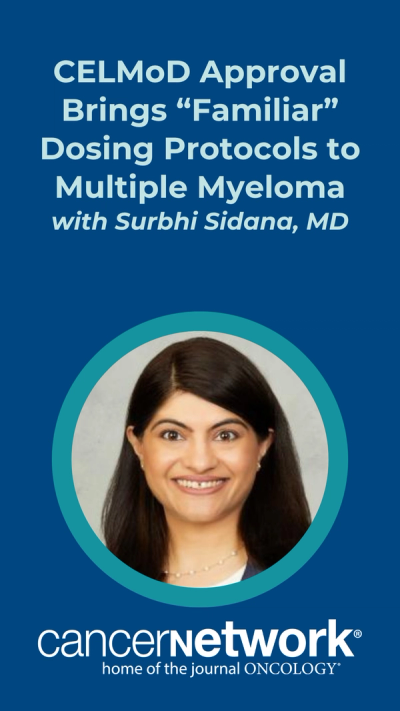
CELMoD Approval Brings “Familiar” Dosing Protocols to Multiple Myeloma
4 days ago
by
Surbhi Sidana, MD
1:07
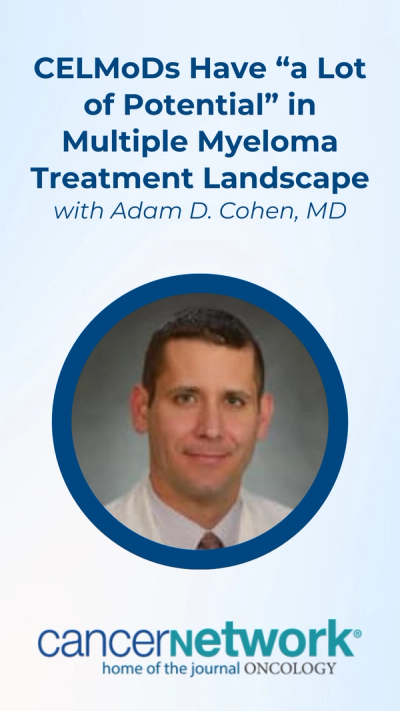
CELMoDs Have “a Lot of Potential” in Multiple Myeloma Treatment Landscape
a month ago
by
Adam D. Cohen, MD

0:48
Using Bispecific Antibodies as Definitive Therapy in Multiple Myeloma
a month ago
by
Benjamin Diamond, MD
0:58
Investigating the Evolution of Cellular Therapy in Multiple Myeloma
3 months ago
by
Yan Leyfman, MD
1:03
How is CAR T-Cell Therapy Transforming Expectations in Multiple Myeloma?
3 months ago
by
Yan Leyfman, MD
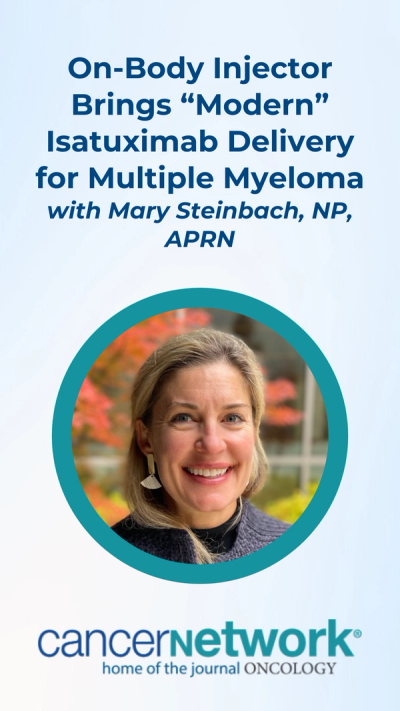
0:51
On-Body Injector Brings “Modern” Isatuximab Delivery for Multiple Myeloma
3 months ago
by
Mary Steinbach, NP, APRN

0:47
Examining the Impact of the WETT Tool on Talquetamab-Related Oral AEs
3 months ago
by
Beth Faiman, PhD, MSN, APN-BC

0:46
Finding a “Sweet Spot” for Fixed-Duration Multiple Myeloma Therapy
4 months ago
by
Barry Paul, MD

0:33
Therapy is Only as Good as Its Access in Multiple Myeloma Care
4 months ago
by
Prerna Mewawalla, MD
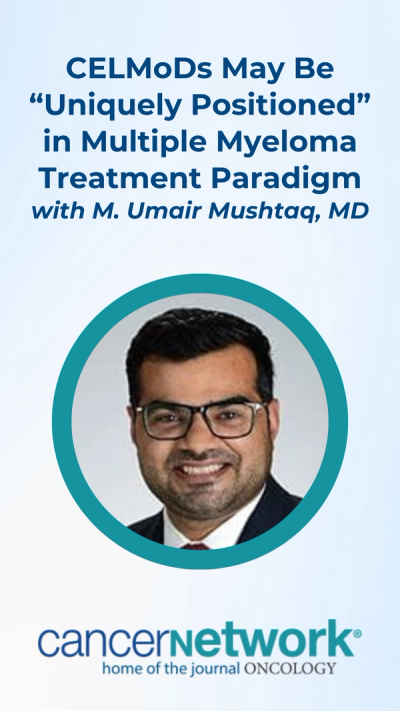
0:50
CELMoDs May Be “Uniquely Positioned” in Multiple Myeloma Treatment Paradigm
4 months ago
by
Muhammad Umair Mushtaq, MD
Podcasts



CME Content





































Advertisement
More News
Experts gathered to discuss various facets of early-relapse multiple myeloma treatment, such as exposure vs refractoriness and CAR T vs bispecifics.

Data from the phase 3 EXCALIBER-RRMM trial support the FDA accelerated approval of iberdomide plus daratumumab and hyaluronidase and dexamethasone in this multiple myeloma population.

Ajay K. Nooka, MD, MPH, FACP, discusses how results from the MonumenTAL-6 trial build upon prior studies assessing bispecific antibodies in multiple myeloma.
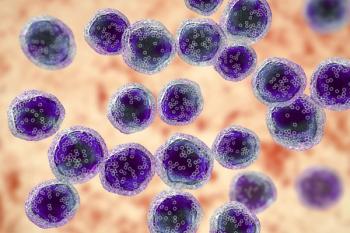
Phase 1 trial data for cevostamab in multiple myeloma validate fixed-duration therapy as a “good concept,” according to Adam D. Cohen, MD.
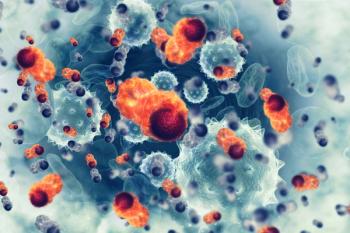
Data from a phase 1 trial validate FcRH5 as a “good target” in multiple myeloma therapy, according to Adam D. Cohen, MD.

Data from the phase 3 MonumenTAL-6 trial demonstrate the potential to target BCMA and GPRC5D simultaneously in multiple myeloma care.
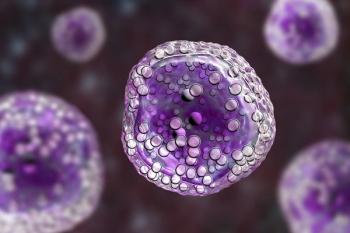
Patients with a multiple myeloma relapse within 36 months of up-front quadruplet therapy and transplantation should be prioritized for immunotherapy, said Gayathri Ravi, MD.
Data from the phase 3 ENDURANCE trial challenge the assumption that a longer duration of therapy is likely to better multiple myeloma care.
The FDA has assigned a Prescription Drug User Fee Act date of May 13, 2027, for the mezigdomide regimen in relapsed/refractory multiple myeloma.
Data from studies including the IRAKLIA trial support the approval of subcutaneous isatuximab plus standard of care in multiple myeloma.
Paul G. Richardson, MD; and Muhamed Baljevic, MD, FACP, discussed the mechanism, synergy, tolerability, and sequencing of CELMoDs in multiple myeloma.
Muhamed Baljevic, MD, FACP, and Paul Richardson, MD, discuss using CELMoDs to debulk tumor or restore T-cell fitness between T-cell–redirecting therapies in relapsed/refractory multiple myeloma.

Muhamed Baljevic, MD, FACP, and Paul Richardson, MD, discuss how sparing patients from IMiD-related GI toxicity and neutropenic infections with CELMoDs may extend treatment duration and progression-free survival.
Paul Richardson, MD, and Muhamed Baljevic, MD, FACP, discuss the immunologic and mechanistic synergy between CELMoDs and standard myeloma backbone therapies.
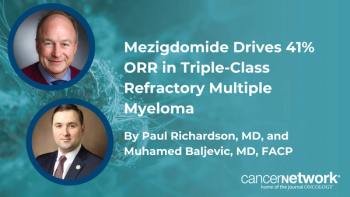
Paul Richardson, MD, and Muhamed Baljevic, MD, FACP, explain how mezigdomide’s complete cereblon E3 ligase engagement overcomes IMiD resistance in heavily pretreated multiple myeloma.
In this retrospective cohort study, it was shown that acute pancreatitis hospitalizations occurred more frequently in patients with multiple myeloma who were older and more medically complex.
Teclistamab-based induction yielded a 100% overall response rate in transplant-eligible newly diagnosed multiple myeloma in the phase 2 MajesTEC-5 trial.
The CHMP’s recommendation for approving teclistamab plus daratumumab in this multiple myeloma population is based on data from the phase 3 MajesTEC-3 study.
Joshua Richter, MD, joins The Moonlight Shift to discuss "cure" in relation to myeloma treatment, the linvoseltamab pipeline journey, and myths surrounding myeloma care.
The 2025 ICE-T Symposium highlighted expansion beyond BCMA to additional targets such as GPRC5D and FcRH5.
This year’s EHA Congress saw potential advances across multiple myeloma, leukemia, lymphoma, and other hematologic malignancy populations.
Data from a phase 1/2 trial show durable disease control with belantamab mafodotin plus daratumumab, lenalidomide, and dexamethasone.
Phase 1 data support arlo-cel as a potentially effective early-line treatment option for those with relapsed/refractory multiple myeloma.
In MonumenTAL-3, talquetamab plus daratumumab with or without pomalidomide significantly improved PFS vs DPd in relapsed/refractory myeloma.

High rates of MRD negativity were observed with a combination of carfilzomib, lenalidomide, daratumumab, and dexamethasone in the ASCENT trial.
Advertisement
Advertisement
Trending on CancerNetwork
1
Novel Agent Earns FDA Breakthrough Therapy Designation for HPV+ Oropharyngeal Cancer
2
Debating Camizestrant, ctDNA Monitoring, and SERENA-6 in HR+ Breast Cancer
3
Signatera ctDNA Test Shows Superior MRD Assessment in Lymphoma
4
Saturated Fat Intake Linked to Greater Mortality in Nonmetastatic Prostate Cancer
5