


Multiple Myeloma
Latest News
Advertisement
Video Series

Latest Videos



Shorts

0:56
How to Sequence CAR T-Cell Therapy, Bispecifics in Multiple Myeloma
5 months ago
by
Shebli Atrash, MD
0:45
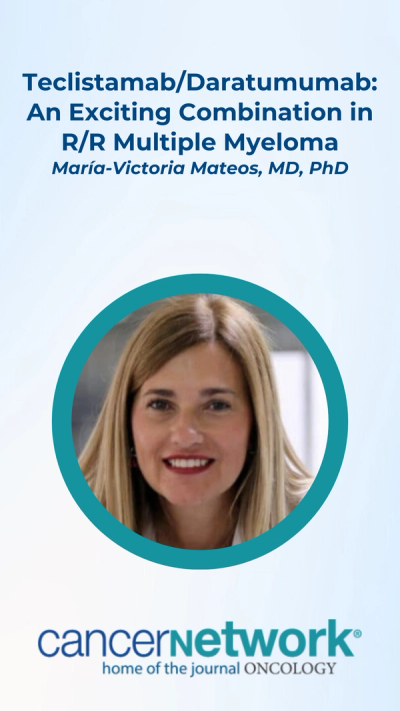
Teclistamab/Daratumumab: An Exciting Combination in R/R Multiple Myeloma
6 months ago
by
Maria-Victoria Mateos, MD, PhD

0:48
Is a Functional Cure Possible in Multiple Myeloma Therapy?
6 months ago
by
Guenther Koehne, MD

0:40
MRD is ‘Exceedingly Helpful’ in Assessing Multiple Myeloma Disease Course
6 months ago
by
Natalia Neparidze, MD

0:44
MajesTEC-3 Trial Shows ‘Remarkable’ Outcomes in R/R Multiple Myeloma
6 months ago
by
Rajshekhar Chakraborty, MD
0:50
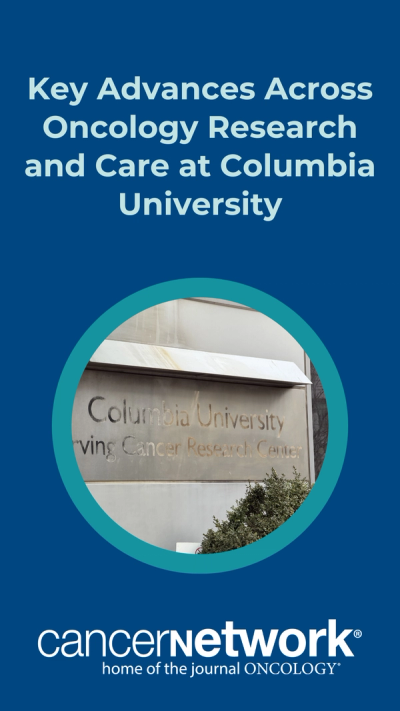
Key Advances Across Oncology Research and Care at Columbia University
6 months ago
by
Russ Conroy

0:46
Iberdomide Might Expand Tool Belt for Finding a Multiple Myeloma Cure
7 months ago
by
Sagar Lonial, MD, FACP, FASCO

0:32
How Does KTX-1001 Target Genetic Abnormalities in Multiple Myeloma?
7 months ago
by
Saad Z. Usmani, MD, MBA, FACP

0:39
AZD0120 Shows “Excellent” Response Rates in R/R Multiple Myeloma
7 months ago
by
Shambavi Richard, MD

0:48
Translating Cytogenetic Data Into Next-Generation Therapies in NDMM
7 months ago
by
Manoj Bhasin, PhD, MS
Podcasts

































































Advertisement
More News
This year’s EHA Congress saw potential advances across multiple myeloma, leukemia, lymphoma, and other hematologic malignancy populations.
Data from a phase 1/2 trial show durable disease control with belantamab mafodotin plus daratumumab, lenalidomide, and dexamethasone.

Phase 1 data support arlo-cel as a potentially effective early-line treatment option for those with relapsed/refractory multiple myeloma.
In MonumenTAL-3, talquetamab plus daratumumab with or without pomalidomide significantly improved PFS vs DPd in relapsed/refractory myeloma.

High rates of MRD negativity were observed with a combination of carfilzomib, lenalidomide, daratumumab, and dexamethasone in the ASCENT trial.

The approval of the on-body injector in multiple myeloma follows a positive opinion from the EMA’s Committee for Medicinal Products for Human Use.
Retrospective data also showed that immune-related toxicities were more common with BCMA CAR T-cell therapy compared with teclistamab.
A matching-adjusted indirect comparison highlighted linvoseltamab as a potentially effective treatment option for those with triple-class–exposed disease.
Patients in this multiple myeloma population who received DVRd achieved an overall MRD-negativity rate at 10–5 sensitivity of 61.1% vs 40.0% with VRd.

No grade 3 or higher CRS or ICANS events occurred among patients who received prophylactic tocilizumab before outpatient bispecific antibody treatment.
Teclistamab monotherapy significantly improved PFS and OS vs investigator's choice in the phase 3 MajesTEC-9 trial in RRMM.
Results from the phase 3 SUCCESSOR-2 trial showed MeziKd reduced the risk of progression or death by 52% vs Kd in anti–CD38- and LEN-exposed RRMM.
Belantamab mafodotin plus triplet induction and maintenance yields responses in transplant-ineligible newly diagnosed multiple myeloma population.

Data from the phase 2 ERASMM trial support further evaluation of elranatamab among patients with high-risk smoldering multiple myeloma.
Presentations at the 2026 ASCO Annual Meeting may reveal key advances in the use of different bispecific antibodies and CELMoDs in multiple myeloma care.
Researchers have shown that a single infusion of BCMA-directed CAR T cell therapy with cilta-cel produced rapid, sustained MRD-negative remissions in 20 patients with high-risk smoldering multiple myeloma.
Investigators evaluated how subcutaneous isatuximab affected workflow and safety for patients with multiple myeloma.
CAR T-cell therapies and bispecific antibodies are still in their infancy, according to Barry Paul, MD.

Experts highlight advances in cellular therapies that were discussed at the 2026 National ICE-T Conference in Charlotte, North Carolina.
A panel of experts discussed the implications of the AQUILA trial and the FDA approval of subcutaneous daratumumab in high-risk smoldering multiple myeloma.
The MagnetisMM-5 study remains ongoing to assess the key secondary end point of overall survival among those with relapsed/refractory multiple myeloma.

A panel of experts gathered to discuss the landscape of care in early-relapse multiple myeloma, new phase 3 data, and select patient cases.
The FDA has set a new Prescription Drug User Fee Act date of July 23, 2026, for subcutaneous isatuximab plus standard of care in multiple myeloma.

All patients who received cilta-cel in the phase 2 CAR-PRISM trial achieved MRD negativity per next-generation sequencing.
The panel discussed key considerations in the relapsed/refractory setting, including toxicity management and sequencing strategies for targeted agents.
Advertisement
Advertisement
Trending on CancerNetwork
1
Pembrolizumab/Enfortumab Vedotin Earns Positive CHMP Opinion in MIBC
2
Screening for CHIP Mutations to Guide CAR T Cell Candidacy in Lymphoma
3
FDA Approves Imlunestrant Combo in ESR1-Mutated Breast Cancer
4
FDA Approves sNDA for Taletrectinib in TKI-Naive Advanced ROS1+ NSCLC
5