Experts discuss data from the MonumenTAL-3 trial and the evolving roles of talquetamab and other bispecific antibodies in relapsed/refractory multiple myeloma.

Russ Conroy is an Associate Editor for CancerNetwork. He grew up in Hillsborough, New Jersey, and graduated from Rutgers University-New Brunswick in 2022.
On the weekends, he likes to unwind by playing video games with friends, tailgating at Rutgers football games with his family, or building his music collection with a visit to Princeton Record Exchange.
Experts discuss data from the MonumenTAL-3 trial and the evolving roles of talquetamab and other bispecific antibodies in relapsed/refractory multiple myeloma.

Data from the phase 3 HER2CLIMB-05 study support the FDA approval of tucatinib-based maintenance treatment in HER2-positive metastatic breast cancer.
The approval expands the indication of pirtobrutinib to patients with previously untreated chronic lymphocytic leukemia/small lymphocytic lymphoma with no known 17p deletion.

Patient enrollment of the phase 3 IDeate-Lung02 trial assessing I-DXd vs chemotherapy in relapsed ES-SCLC will continue following the withdrawal.
Data from the phase BRUIN CLL-313 and BRUIN CLL-314 trials support the approval of pirtobrutinib for patients with CLL or SLL in China.

An analysis of the BENEFIT trial supports isatuximab plus bortezomib, lenalidomide, and dexamethasone as a new standard of care in transplant-ineligible NDMM.

No new safety signals were observed with the daratumumab regimen after an additional 3 years of follow-up in the phase 3 PERSEUS study.

Poster sessions at WCLC 2026 detail how surgery, nursing, and pathology can contribute to the multidisciplinary care of patients with lung cancer.
Data from the phase 3 EMBER-3 trial support the full approval of imlunestrant plus abemaciclib in this breast cancer population.

Data presented at WCLC 2026 support the use of B7-H3–directed antibody-drug conjugates and brain MRI surveillance in small cell lung cancer.

New data on antibody drug conjugates and extended survival follow-ups may inform clinical decision-making surrounding non–small cell lung cancer.
Poster presentations at SOHO 2026 may inform practice across acute lymphoblastic leukemia, acute myeloid leukemia, and chronic lymphocytic leukemia.
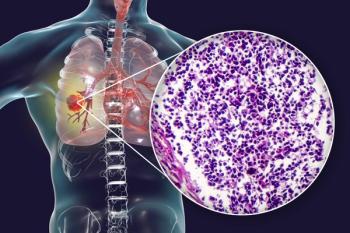
Medical oncologists, clinical pharmacists, and oncologic nurse practitioners share the presentation topics to look out for at WCLC 2026.
The FDA has granted accelerated approval to sevabertinib for metastatic non-squamous NSCLC with HER2 TKD activating mutations based on results from the SOHO-01 trial.
Ruben Mesa, MD, discusses the FDA approval of ropeginterferon alfa-2b-njft, the first new essential thrombocythemia therapy in nearly 30 years.
Data from a real-world cohort showed that LEMS was diagnosed more frequently by neurologists than by oncologists.
Data from the phase 3 SURPASS ET trial supported the approval of ropeginterferon alfa-2b-njft for those with essential thrombocythemia.
Surbhi Sidana, MD, discusses the first CELMoD and first MRD-based approval, iberdomide, in relapsed/refractory multiple myeloma.

Sunil Singhal, MD, discussed how fluorescence imaging via abenacianine helps surgeons visualize tumors missed during lung cancer surgery.
Two teams of multiple myeloma experts debate the use of early CAR T-cell therapies and bispecific antibodies based on key trial data and various hot topics.
Bispecific antibodies “will form the standard backbone agents for multiple myeloma therapies,” according to Hans Lee, MD.

A nurse practitioner, clinical social worker, and patient discuss navigating treatment-related concerns and psychosocial considerations in multiple myeloma.

Data from the SAFFRON trial may represent a critical advance in the management of EGFR-mutated NSCLC with MET-driven resistance.

Data presented at the 2026 AACR Annual Meeting demonstrated the promise of blood-based lung cancer detection via SimpleScreen Lung.
Data from the phase 3 EXCALIBER-RRMM trial support the FDA accelerated approval of iberdomide plus daratumumab and hyaluronidase and dexamethasone in this multiple myeloma population.

Ajay K. Nooka, MD, MPH, FACP, discusses how results from the MonumenTAL-6 trial build upon prior studies assessing bispecific antibodies in multiple myeloma.
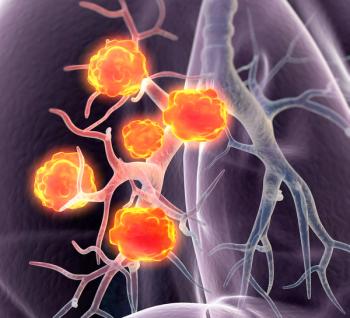
The approval status of lurbinectedin as first-line care for those with small cell lung cancer will not be affected following results from the LAGOON trial.

Phase 1 trial data for cevostamab in multiple myeloma validate fixed-duration therapy as a “good concept,” according to Adam D. Cohen, MD.
Clinicians “still don’t have the answer” on true toxicity thresholds, says Tiba Al Sagheer, PharmD, BCOP, BCACP, on CAR T-cell toxicity management.

Approval of the SimpleScreen CRC test may increase earlier detection of colorectal cancer and improve patient outcomes.
Published: September 14th 2026 | Updated: October 8th 2026

Published: February 3rd 2026 | Updated: July 10th 2026
Published: May 6th 2024 | Updated: May 21st 2024