At the BIG10 CRC Summit, Mingjia Li, MD, outlined how pre-operative hemoglobin may signal treatment response in resectable NSCLC.
A numerical survival improvement was observed with ramucirumab plus pembrolizumab among those with squamous cell carcinoma in a phase 2 study.
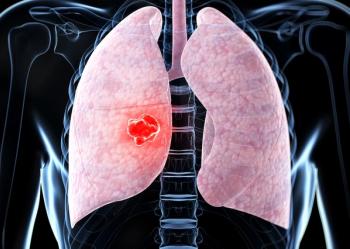
Combining ramucirumab (Cyramza) with pembrolizumab (Keytruda) did not improve overall survival (OS) vs standard of care (SOC) among patients with previously treated stage IV or recurrent non–small cell lung cancer (NSCLC), although the experiential regimen was not detrimental to survival, according to findings from the phase 2 SWOG S2302 PRAGMATICA-LUNG trial (NCT05633602) presented in a poster session at the
Across the overall population, the median OS was 10.1 months (95% CI, 8.7-11.0) with ramucirumab plus pembrolizumab and 10.0 months (95% CI, 9.1-11.2) with investigator’s choice of SOC therapy (HR, 1.04; 95% CI, 0.88-1.22; P = .66). Among those with squamous cell carcinoma histology, data showed a median OS of 10.7 months (95% CI, 7.9-11.6) vs 9.6 months (95% CI, 7.5-11.2) in each respective arm (HR, 0.90; 95% CI, 0.66-1.22; P = .25). Additionally, the median OS was 9.8 months (95% CI, 8.1-11.6) vs 10.6 months (95% CI, 9.1-11.9), respectively, among patients with nonsquamous carcinoma (HR, 1.10; 95% CI, 0.91-1.34; P = .84).
“The pragmatic trial design led to rapid accrual with increased [patient] representativeness. [Ramucirumab/pembrolizumab] did not improve OS overall but was not worse than SOC,” lead study author Karen L. Reckamp, MD, a professor of Medicine and the director of the Division of Medical Oncology at Cedars-Sinai Medical Center, wrote with coauthors in the poster.1 “Of note, for squamous cell carcinoma, the estimated HR is [less than] 1 and the confidence interval is consistent with non-inferiority bounds. We interpret that [ramucirumab/pembrolizumab] for [squamous cell carcinoma] may provide an option equivalent to SOC with better tolerability.”
According to the study investigators, few effective treatment options exist for patients with advanced NSCLC who have previously received frontline immune checkpoint inhibitor (ICI) therapy. Previously, the phase 2 Lung-MAP S1800A study (NCT03971474) demonstrated an OS benefit with ramucirumab/pembrolizumab vs SOC therapy among patients who previously received ICIs for NSCLC (HR, 0.69; 80% CI, 0.51-0.92).2 Additionally, fewer grade 3 or higher treatment-related adverse effects were observed with the ramucirumab regimen (42%) vs SOC therapy (60%).
Investigators subsequently designed PRAGMATICA-LUNG to assess OS while increasing participation in clinical trials. Patients were randomly assigned to receive SOC therapy of investigator’s choice (n = 419) or ramucirumab plus pembrolizumab (n = 419).
The trial’s primary end point was OS. Secondary end points included a comparison of OS between the arms within key patient subgroups, which included those with squamous cell carcinoma. Investigators had an accrual goal of 800 patients based on 90% power for an HR of 0.77 per 1-sided 2.5% level log-rank testing.
Patients 18 years and older with histologically or cytologically confirmed stage IV or recurrent NSCLC, at least 1 line of anti–PD-(L)1 therapy for any stage of disease, and disease progression following their most recent line of therapy were eligible for enrollment on the trial.3 Having a Zubrod performance status of 0 to 2 was another requirement for study entry. Additionally, those with more than 1 prior line of anti–PD-(L)1 treatment for stage IV or recurrent disease or receipt of another investigational therapy during study participation were ineligible for enrollment.
Most patients enrolled on the study were White (78%) followed by Black or African American (13%), Asian (5%), unknown races (2%), more than 1 race (1%), and Native Hawaiian or Other Pacific Islander (1%).