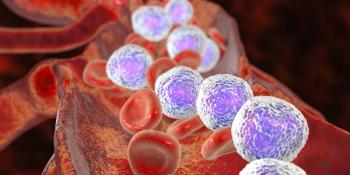
Ponatinib plus blinatumomab may help “a meaningful subset of patients” forego transplant for Ph-positive acute lymphoblastic leukemia.
Ponatinib plus blinatumomab may help “a meaningful subset of patients” forego transplant for Ph-positive acute lymphoblastic leukemia.

Ursula A. Matulonis, MD, discussed how biomarkers, adverse effects, and patient preference guide choices among recent platinum-resistant ovarian cancer approvals.

There is a gap in prospective data for radiation use in multiple myeloma, according to Alexandra Dreyfuss, MD, MS.

In a phase 1 trial of patients with platinum-sensitive high-grade ovarian cancer, a personalized neoantigen vaccine plus nivolumab caused no unexpected safety signals.
The new guidelines include 10 recommendations spanning extended molecular testing, JAK inhibitor use, anemia management, and other areas in myelofibrosis.

Heath Skinner, MD, PhD, discussed the 4 focus areas of the 2026 Radiation Oncology Conference and what it takes to implement new radiation service lines.
The FDA has assigned a Prescription Drug User Fee Act date of March 31, 2027, for tabelecleucel in this indication.
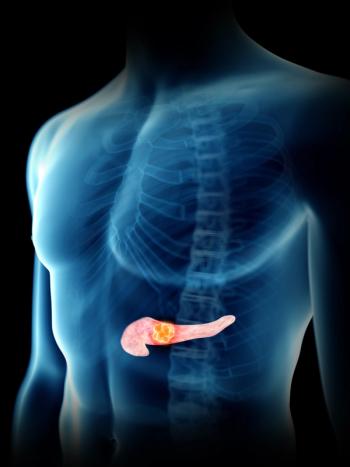
The oral KRAS G12D inhibitor VS-7375 produced responses in pancreatic, colorectal, and lung cancers in the phase 1/2 TARGET-D 101 trial.

"We thought there might be a preventive effect towards the development from CHIP to CCUS to MDS, so it’s a sort of a continuum," said Kirsten Grønbæk, MD, PhD.

Industry payments to oncologists were associated with greater use of the promoted treatment, whether or not it was guideline-preferred for the patient’s cancer.

The phase 2/3 AHEAD-MERIT trial will continue to assess overall survival among patients who received BNT113 plus pembrolizumab for head and neck cancer.

Robot-assisted radical hysterectomy reduced mostly low-grade intraoperative complications vs open surgery in early-stage cervical cancer.

The NCCN published its first guidelines for pediatric bone sarcoma, centering on Ewing sarcoma and other undifferentiated round cell sarcomas in youth for pediatric patients.

Investigators of the phase 3 ACTION-1 trial will continue to follow up with patients to assess overall survival outcomes with RYZ101.

“Those of us who work with NK cells have no doubt that they are incredibly powerful at killing cancer cells,” said Veronika Bachanova, MD, PhD.

Tyler Wilhite, MD, discusses expanding a radiation oncology program to also utilize low-dose radiation therapy for benign diseases.
In the phase 2 RALLY-MF study, selcodebart produced a 55% major response rate among evaluable non–transfusion-dependent patients with myelofibrosis.

Experts in multiple myeloma discussed long-term MAIA and CEPHEUS trial data and their implications for daratumumab-based regimens in newly diagnosed disease.

Adjuvant radiotherapy significantly reduced meningioma recurrence or death vs observation in grade 2 atypical meningioma after complete surgical resection.

VIR-5500, a PSMA-targeted PRO-XTEN dual-masked T-cell engager, showed an 82% PSA50 response rate and 45% ORR at higher doses in heavily pretreated mCRPC.
Experts discuss why the convenience of the all-oral decitabine/cedazuridine plus venetoclax regimen does not reduce the need for close monitoring in AML.

Ravi Patel, MD, PhD, discusses expanding theranostics access, personalized dosing strategies, and translational research in radiation oncology.

“No one should be excluded from any clinical trial,” said Paul G. Rubinstein, MD, regarding patients with HIV-associated cancers in cooperative group studies.

Interim phase 2 data show a median PFS of 17.7 months with carotuximab plus apalutamide vs 2 months with apalutamide alone in metastatic CRPC.
Ahead of a fourth-quarter 2026 FDA decision, TALAPRO-3 investigators outline the testing, monitoring, and sequencing steps needed to adopt the regimen.

Iberdomide plus daratumumab/dexamethasone met the second dual primary end point of the phase 3 EXCALIBER-RRMM trial in relapsed/refractory multiple myeloma.

SurVaxM, a cancer vaccine, missed statistical significance for overall survival in patients with newly diagnosed glioblastoma in the SURVIVE trial.

“What we have here, I believe, is a strong signal that there is a population…who will benefit from chemotherapy,” said Mark D. Hurwitz, MD, FASTRO, FACRO.

PRV111 eliminated planned surgery in 100% of evaluable patients with non-invasive oral cancer or high-grade dysplasia.
The final 3-year OS rate was 72.7% with OST-HER2 vs 45.8% in a combined historical control in a phase 2b trial of pulmonary metastatic osteosarcoma.