

The European Medicines Agency has begun a phased review of daraxonrasib for pancreatic cancer as the FDA nears completion of a rolling new drug application submission.
The European Medicines Agency has begun a phased review of daraxonrasib for pancreatic cancer as the FDA nears completion of a rolling new drug application submission.

Data from a phase 2 trial show the potential of inotuzumab ozogamicin to deepen remissions in patients with B-cell acute lymphoblastic leukemia.

Catch up on key data in colorectal, pancreatic, and hepatocellular cancers presented at the ESMO Gastrointestinal Cancers Congress 2026.

The European Commission approved epcoritamab/R2 for adult patients with relapsed/refractory follicular lymphoma based on the phase 3 EPCORE FL-1 data.

The FDA declined to approve Orviglance for MRI liver imaging in patients with severe kidney impairment, requesting additional clinical data.
Paul G. Richardson, MD; and Muhamed Baljevic, MD, FACP, discussed the mechanism, synergy, tolerability, and sequencing of CELMoDs in multiple myeloma.

A molecular residual disease test identified which patients with resected colorectal liver metastases gained a survival benefit from adjuvant chemotherapy.

The RASolute 302 study of daraxonrasib was “the single biggest study presentation” at ASCO 2026, according to Sivraj Muralikrishnan, MD.
Experts focused on lymphoma cellular therapy convened to discuss CAR T-cell candidacy and practical barriers to access for patients with DLBCL.

Patients with clinically higher-risk disease but favorable GPS results had higher 6-year EFS rates across treatment arms vs those at a lower clinical risk.

FDA breakthrough designation and NCCN inclusion elevate Merlin CP-GEP as a tool to refine SLNB decisions in T1b/T2a melanoma, per MERLIN_001 trial data.

Updated phase 2a data showed durable survival in a small subset of heavily pretreated patients with advanced pancreatic cancer treated with namodenoson.
![“[Epcoritamab/R2] is a good option for [patients] at first relapse or even further, even if they are very high risk,” said Benoit Tessoulin, MD, PhD.](https://cdn.sanity.io/images/0vv8moc6/cancernetwork/d4c175d2fd9b443716f5ad06bfae7bc796a1795a-1200x1200.jpg?w=350&fit=crop&auto=format)
“[Epcoritamab/R2] is a good option for [patients] at first relapse or even further, even if they are very high risk,” said Benoit Tessoulin, MD, PhD.
The safety profile of epcoritamab when added to lenalidomide was consistent with the known profiles of each individual agent among this DLBCL population.

Teclistamab-based induction yielded a 100% overall response rate in transplant-eligible newly diagnosed multiple myeloma in the phase 2 MajesTEC-5 trial.

The CHMP recommended pirtobrutinib in chronic lymphocytic leukemia based on data from the phase 3 BRUIN CLL-313 and BRUIN CLL-314 trials.

Experts map DLBCL CAR‑T from early referral and bridging therapy to managing CRS, ICANS, and survivorship challenges in community practice.

The tentative approval covers enzalutamide tablets in 4 doses—40 mg, 80 mg, 120 mg, and 160 mg—as a generic equivalent to the reference product.
The CHMP’s recommendation for approving teclistamab plus daratumumab in this multiple myeloma population is based on data from the phase 3 MajesTEC-3 study.

Guilherme Fleury Perini, MD, PhD, discussed KEYFORM-008 findings on favezelimab/pembrolizumab vs chemotherapy in PD-1–refractory classic Hodgkin lymphoma.

INELDA-certified death doula Kim Stravers shares a detailed account of supporting a patient with pancreatic cancer and Lynch syndrome.

Preliminary data from the phase 1/2 TARGET-D 101 trial showed a manageable safety profile for VS-7375 across KRAS G12D–mutated solid tumors.
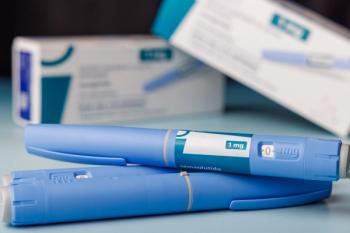
Retrospective data showed that GLP-1 receptor agonist use was associated with a 51% reduction in colorectal cancer odds among patients with inflammatory bowel disease.

Zanzalintinib plus atezolizumab did not elicit a statistically significant overall survival advantage over regorafenib in patients with non–MSI-H mCRC without active liver metastases.

Kim Stravers, an INELDA-certified death doula and educator, explains how end-of-life doulas provide nonmedical emotional, practical, and relational support to patients with cancer and their families.

“I love that our field is taking an ambitious swing at how best to take care of patients who are older and less fit with large cell lymphoma,” said Matthew Matasar, MD, chief in the division of Blood Disorders, Rutgers Cancer Institute/Jack & Sheryl Morris Cancer Center, and professor of medicine at Rutgers Robert Wood Johnson Medical School.
Binimetinib tablets at 45 mg received tentative FDA approval for patients with melanoma and NSCLC.

The European Commission has approved encorafenib plus cetuximab and FOLFOX as the first BRAF-targeted regimen authorized in the EU for first-line BRAF V600E–mutant metastatic colorectal cancer.

TRIDENT failed to show an OS benefit for TTFields started during chemoradiation vs the maintenance-phase approach in newly diagnosed glioblastoma.

New ASCO 2026 data reinforced the importance of multidisciplinary coordination and patient-centered decision-making when considering cystectomy omission.