
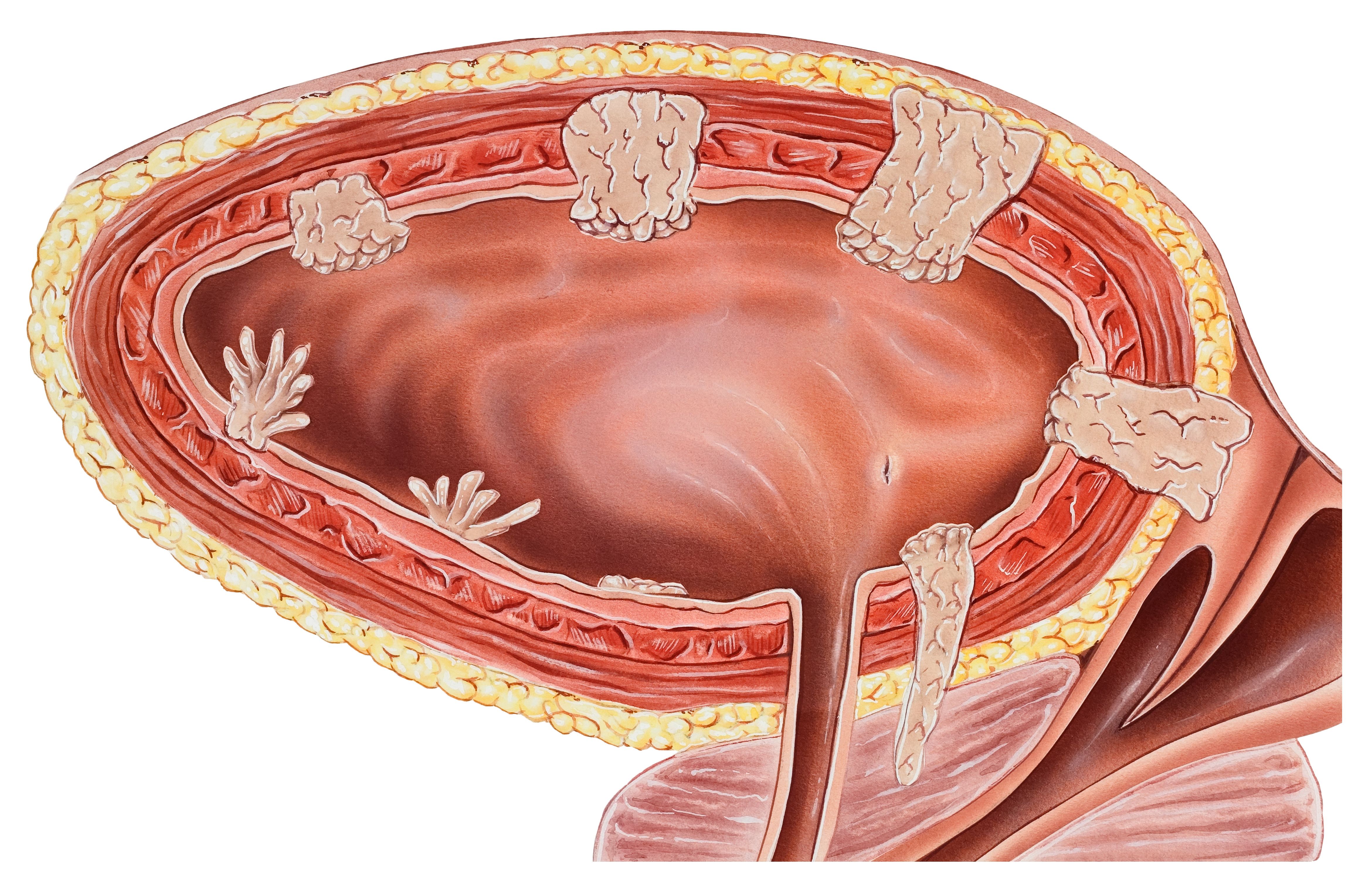





Bladder Cancer
Latest News
Advertisement
Video Series

Latest Videos






Shorts

1:02
Optimizing Treatment Tolerance During Intravesical Therapy for Bladder Cancer
a month ago
by
Goutham Vemana, MD

1:21
How Are BCG Shortages Reshaping Early-Stage Bladder Cancer Workflows?
a month ago
by
Goutham Vemana, MD

0:51
A “Controversial Take” on ctDNA Monitoring in Advanced Bladder Cancer
a month ago
by
Mamta Parikh, MD, MS

1:11
More Data Needed To Validate ctDNA Monitoring in Bladder Cancer Care
a month ago
by
Mamta Parikh, MD, MS
1:28
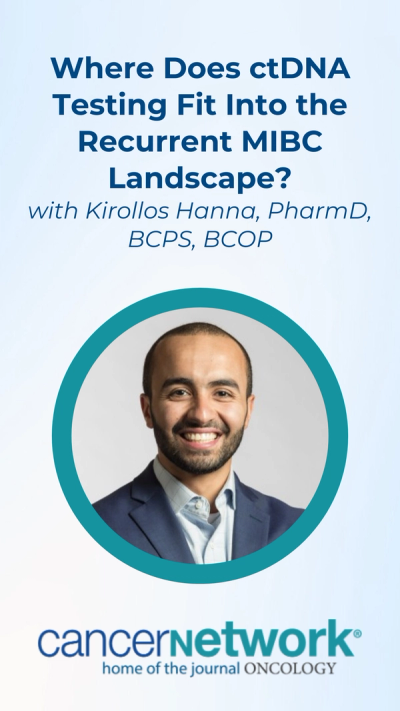
Where Does ctDNA Testing Fit Into the Recurrent MIBC Landscape?
a month ago
by
Kirollos S. Hanna, PharmD, BCPS, BCOP, FACCC

1:30
Who Should Receive Adjuvant Immunotherapy After a Radical Cystectomy?
2 months ago
by
Kirollos S. Hanna, PharmD, BCPS, BCOP, FACCC

1:01
Patient Values Inform Treatment Decision-Making in Urothelial Carcinoma
2 months ago
by
Eric Miller, MD

0:38
Detecting Specific CD44 Types in Bladder Cancer With CAR Macrophage Therapy
4 months ago
by
Hiba Siddiqui, BSc

1:17
Highlighting Bladder Preservation Among Vulnerable MIBC Populations
5 months ago
by
Alexander Z. Wei, MD

1:21
Affirming Enfortumab Vedotin/Pembrolizumab as a Standard Across MIBC Groups
5 months ago
by
Joaquim Bellmunt, MD, PhD
Podcasts




CME Content











































Advertisement
More News
The UAE granted marketing authorization for nogapendekin alfa plus BCG in BCG-unresponsive NMIBC and with checkpoint inhibitors in metastatic NSCLC.

Final phase 3 BOND-003 Cohort C results showed a 75.5% complete response rate with cretostimogene grenadenorepvec in BCG-unresponsive NMIBC.

Adjuvant atezolizumab nearly doubled disease-free survival in patients with ctDNA-positive muscle-invasive bladder cancer in the phase 3 IMvigor011 trial.
Findings from the phase 3 KEYNOTE-B15/EV-304 trial support the approval of pembrolizumab-based treatment in this bladder cancer population.
A phase 1 study evaluating the safety, tolerability, and feasibility of intravesical UGN-501 is expected to begin in the fourth quarter of 2026.
The tentative approval covers enzalutamide tablets in 4 doses—40 mg, 80 mg, 120 mg, and 160 mg—as a generic equivalent to the reference product.
Findings from the phase 3 EV-303 trial evaluating the enfortumab-based regimen vs surgery alone in this MIBC group supported the regulatory decision.
An informed multiplex PCR circulating tumor DNA–based molecular residual disease test could inform adjuvant treatment following cystectomy.

New ASCO 2026 data reinforced the importance of multidisciplinary coordination and patient-centered decision-making when considering cystectomy omission.
The safety of the IMvigor011 regimen among patients with MIBC was consistent with the established profile of atezolizumab monotherapy.
Updated EV-302 data show EV plus pembrolizumab maintained superior OS and doubled CR rates over chemotherapy in first-line urothelial carcinoma.
Data from the phase 3 POTOMAC trial supported the FDA approval of durvalumab plus BCG in this non-muscle invasive bladder cancer population.
Event-free survival, overall survival, and pathologic complete rate data from the phase 3 KEYNOTE-905 trial support the agency’s decision.
The agency set a Prescription Drug User Fee Act target action date for January 6, 2027, for patients with NMIBC with papillary tumors without CIS.
The investigational BCG-containing regimen conferred a weighted anytime CR rate of 69.7% vs 53.4% with nadofaragene firadenovec in this NMIBC group.
Nurses at Johns Hopkins Nursing utilized a checklist for the chemotherapy gel administration via nephrostomy tube in patients with urothelial cancer.
Data from the phase 3 IMvigor011 trial support the approval of adjuvant atezolizumab in this ctDNA MRD-positive MIBC population.
Results from the phase 3 VOLGA trial demonstrate that perioperative durvalumab plus neoadjuvant enfortumab vedotin significantly improved EFS and OS in MIBC.
The 36-month DOR rate was 64.5% among patients who achieved a 3-month CR with mitomycin for low-grade, intermediate-risk non–muscle-invasive bladder cancer.

Hiba Siddiqui, BSc, of Dana-Farber discussed how targeting the CD44-SPP1 axis may overcome therapy resistance in muscle-invasive bladder cancer.
Findings from the phase 3 EV-304 trial support the supplemental biologics license application for enfortumab vedotin/pembrolizumab in patients with MIBC.

CT-P71 is being assessed in patients with locally advanced or metastatic urothelial carcinoma.

Alexander Z. Wei, MD, highlighted key clinical trials presented at ASCO GU and initiated at Columbia University to “move the needle” in bladder cancer.

Phase 2 Cyto-KIK findings showed that a subset of patients with high-risk kidney cancer exhibited responses and underwent monitoring post-cabozantinib.
Phase 3 ENVISION trial data revealed a 72.2% probability of remaining event-free among responders to UGN-102 with non-muscle invasive bladder cancer.
Advertisement
Advertisement
Trending on CancerNetwork
1
Novel Agent Earns FDA Breakthrough Therapy Designation for HPV+ Oropharyngeal Cancer
2
Debating Camizestrant, ctDNA Monitoring, and SERENA-6 in HR+ Breast Cancer
3
Signatera ctDNA Test Shows Superior MRD Assessment in Lymphoma
4
Saturated Fat Intake Linked to Greater Mortality in Nonmetastatic Prostate Cancer
5