




Bladder Cancer
Latest News
Advertisement
Latest Videos


























































Advertisement
More News
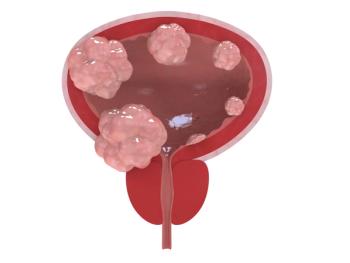
Patients with muscle-invasive bladder cancer with a positive Signatera test displayed a significant improvement in disease-free and overall survival.

Results from the SunRISe-1 trial showed that TAR-200 monotherapy achieved a complete response rate of 82.4% in patients with BCG-unresponsive NMIBC.
Oncology Decoded provides the current management of metastatic bladder cancer, recent advancements in systemic therapy, patient selection, and AE mitigation.

The latest in first- and second-line therapies for bladder cancer, including trial data, AE management, and the role of molecular testing, were discussed in the latest Oncology Decoded podcast.

Patients with cisplatin-ineligible bladder cancer who received enfortumab vedotin plus pembrolizumab and surgery had prolonged survival vs those who received surgery alone.
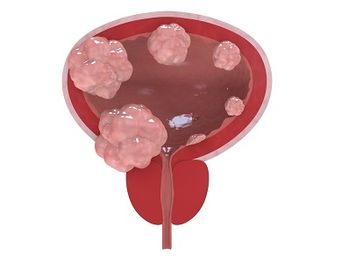
Adverse reactions in the phase 3 ENVISION trial were largely mild to moderate in severity, and serious reactions occurred in 12% of those with NMIBC.
Manojkumar Bupathi, MD, MS, and Benjamin Garmezy, MD, focus on treatment options for patients with urothelial carcinoma.

Phase 2b SunRISe-1 trial findings supported the FDA to grant priority review to TAR-200 in BCG-unresponsive high-risk NMIBC with carcinoma in situ.
The phase 3 UTOPIA trial has enrolled a total of 99 patients with low-grade intermediate-risk NMIBC to receive UGN-103.

Use of the novel artificial intelligence–based test may provide a painless, low-cost alternative in bladder cancer screening.

Detalimogene voraplasmid demonstrated a 71% anytime CR rate in this non–muscle-invasive bladder cancer population in the phase 1/2 LEGEND trial.

Considering which non–muscle-invasive bladder cancer cases may be cured by surgery alone may help mitigate overtreatment in this patient group.
Event-free survival benefit was observed among BCG-naive patients with carcinoma in situ undergoing treatment with sasanlimab plus BCG.

Data from the phase 3 ENVISION trial support the FDA approval of the mitomycin solution for patients with recurrent, low-grade, intermediate-risk NMIBC.

Data from the ENVISION trial may support UGN-102 as a well-tolerated, efficacious treatment in non–muscle-invasive bladder cancer.
A combination of BCG and mitomycin offers a comparable treatment option to BCG monotherapy for NMIBC, potentially lessening the impact of global BCG shortages.
Sasanlimab plus BCG significantly improved event-free survival in BCG-naïve, high-risk NMIBC patients, with notable benefit in carcinoma in situ and T1 tumors.
!["Given the superior efficacy of [chemoimmunotherapy], it holds promise as a first-line neoadjuvant therapy for MIBC, providing greater benefits to patients," according to the study authors.](https://cdn.sanity.io/images/0vv8moc6/cancernetwork/481e483e3d7f2b45988df26b6d358730cc4c7acb-1200x800.jpg?w=350&fit=crop&auto=format)
Real-world data may support chemotherapy plus immune checkpoint blockade as a promising frontline neoadjuvant therapy for muscle-invasive bladder cancer.

ODAC has voted against the use of UGN-102 intravesical solution for patients with advanced bladder cancer.
Treatment with disitamab vedotin and toripalimab improves survival regardless of cisplatin eligibility or HER2 expression level in the phase 3 RC48-C016 trial.

Data from the POTOMAC trial evaluating durvalumab in NMIBC will be presented at a future medical meeting and shared with global regulatory authorities.

A new type of robotic posterior surgery has been shown to be a treatment option for patients with devastated bladder outlets.

Results from cohort 4 of the phase 2 SunRISe-1 trial showed TAR-200 elicited a 6- and 9-month DFS rate of 85.3% and 81.1%, respectively, in BCG-unresponsive NMIBC.
The FDA refuses to file the sBLA for nogapendekin alfa inbakicept plus BCG in BCG-unresponsive NMIBC with papillary disease without carcinoma in situ.

Results from the phase 3 ENVISION trial suggest UGN-102 could be a non-surgical alternative to TURBT for recurrent low-grade intermediate-risk NMIBC.
Advertisement
Advertisement
Trending on CancerNetwork
1
Intismeran Plus Pembrolizumab Reduces Recurrence Risk in Resected Melanoma
2
FDA Approves Pembrolizumab in Metastatic TMB-H Solid Tumors
3
What Pope Leo XIV’s Lung Cancer Diagnosis Could Mean for Stigma & Nihilism
4
Zipalertinib May Introduce Another Option to EGFR Exon 20+ NSCLC
5