


Bladder Cancer
Latest News

Advertisement
Latest Videos




















































Advertisement
More News

A patient with bladder cancer recounts his diagnosis while Rohit Jain, MD, and Anand B. Shah, PharmD, BCOP, review treatment options and the toxicity associated with them.
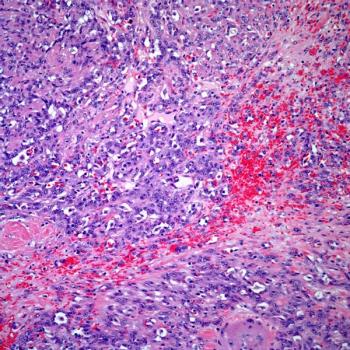
Investigators will continue to assess overall survival in patients treated with pembrolizumab for localized muscle-invasive urothelial carcinoma as part of the phase 3 AMBASSADOR trial.
Combining pembrolizumab with enfortumab vedotin-ejfv significantly improves responses vs chemotherapy among patients with previously untreated locally advanced or metastatic urothelial carcinoma.

Findings from the phase 3 THOR study support the marketing authorization application for erdafitinib as a treatment for those with advanced or metastatic urothelial cancer harboring FGFR3 alterations.

Real-world data suggest that the presence of pelvic lymphadenopathy should not be viewed as a contraindication to trimodality therapy in nonmetastatic clinically node-positive bladder cancer.

Drs Jain and Shah discuss the future of patient care in metastatic bladder cancer, while Mr. and Mrs. Ehas share advice for patients with bladder cancer, advice for caregivers and closing thoughts on their overall journey.
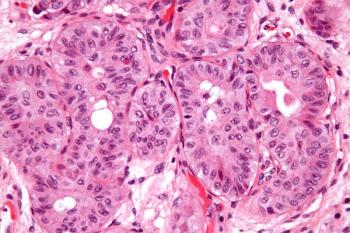
Data from the phase 3 THOR study support the supplemental biologics license application for erdafitinib in previously treated advanced or metastatic urothelial carcinoma with FGFR3 alterations.
Focusing on immunotherapy management for metastatic bladder cancer, Dr Shah shares notable toxicities, relevant real-world data, and emergent data on maintenance therapy.
Dr Jain discusses latest data in frontline and maintenance therapy for metastatic bladder cancer and Mr. Ehas shares his experiences during the course of his treatment.
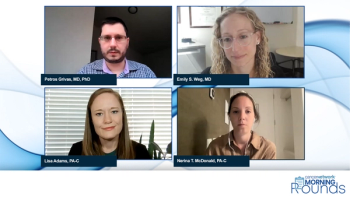
Closing out their panel on advanced bladder cancer management, key opinion leaders share their excitement for future evolutions within the treatment landscape.
Expert perspectives on novel treatment strategies in the second-line treatment setting of advanced bladder cancer.
Mr. Ehas shares his initial treatment experience and response to chemo, while Anand Shah, PharmD, BCOP describes an oncology pharmacists’ role in patient education and adverse event management.
Dr Jain discusses frontline treatment options, cisplatin eligibility criteria, and therapy considerations for metastatic bladder cancer.
During Morning Rounds, Petros Grivas, MD, and his treating team debate the diagnosis of a patient with urothelial carcinoma as it has an unusual presentation.
Leaders in bladder cancer management consider factors that aid in their selection of second-line therapy.
In light of individual patient needs, perspectives are shared on the roles of palliative radiation and treatment breaks in the setting of advanced bladder cancer.
Shared patient perspectives and conversation centered around collaboration in clinical care for metastatic bladder cancer, including the oncology pharmacists’ role in treatment decisions.
Rohit Jain, MD, MPH provides an overview of metastatic bladder cancer, discussing differences in urothelial carcinoma based on location, patient presentations, diagnosis, and staging.
Amid the recent cisplatin shortages across the United States, a pharmacy expert discusses how the treatment of bladder cancer has been affected, especially in the muscle-invasive subtype.
A brief discussion on optimal follow-up practices with patients on therapy for advanced bladder cancer.
Following a patient with bladder cancer who had a partial response to frontline therapy, panelists consider the branching treatment pathway.

Kirollos Hanna, PharmD, BCPS, BCOP, FACCC, discusses what strategies are being used to treat patients with bladder cancer during the chemotherapy shortage.
Among patients with low-grade, non–muscle invasive bladder cancer, intravesical UGN-102 appears to improve outcomes vs standard surgical treatment in two phase 3 trials.
Investigators of a meta-analysis report no significant difference in outcomes when comparing trimodality therapy and radical cystectomy for the treatment of muscle-invasive bladder cancer.
Genitourinary cancer experts share insight on best practices in educating patients on treatment schedules and adverse events when receiving therapy for advanced bladder cancer.
Advertisement
Advertisement
Trending on CancerNetwork
1
Intismeran Plus Pembrolizumab Reduces Recurrence Risk in Resected Melanoma
2
FDA Approves Pembrolizumab in Metastatic TMB-H Solid Tumors
3
What Pope Leo XIV’s Lung Cancer Diagnosis Could Mean for Stigma & Nihilism
4
Zipalertinib May Introduce Another Option to EGFR Exon 20+ NSCLC
5