
Matthew Matasar, MD, reflected on how quickly oncology has moved from skepticism to nimble adoption of AI, and what he expects from the field going forward.
Matthew Matasar, MD, reflected on how quickly oncology has moved from skepticism to nimble adoption of AI, and what he expects from the field going forward.
Matthew Matasar, MD, weighed the optimism and uncertainty surrounding AI’s expanding role in cancer drug discovery and clinical practice.
Matthew Matasar, MD, discussed an AI-embedded deterioration index study, Epic’s patient-facing chatbot, and how AI is already absorbing routine documentation work.
Matthew Matasar, MD, outlined his wish list for AI in oncology, and detailed AI-bolstered tools already active across his 14-hospital health system.
Matthew Matasar, MD, explained why AI-assisted digital pathology may meaningfully improve diagnostic precision in hematologic malignancies.
Matthew Matasar, MD, provided practical advice for oncologists who want to start testing generative AI and RAG tools in their own practice.
Matthew Matasar, MD, detailed how retrieval-augmented generation tools are already informing real tumor board decisions in hematologic malignancies.
Matthew Matasar, MD, discussed his role leading the division of blood disorders at Rutgers Cancer Institute amid a transformative era in immunotherapy.
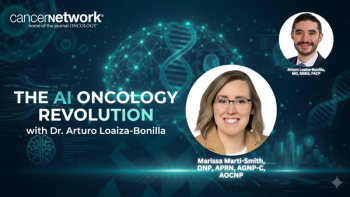
This episode of The AI Oncology Revolution highlighted the nursing and APP teams and how they are leading the charge in AI implementation.
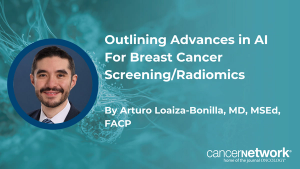
The implementation of AI into radiomics may help predict the likelihood of response to therapies among patients undergoing breast cancer treatment.

Loaiza-Bonilla anticipates that AI-assisted EKG models could be cleared for use in risk stratification for receipt of surgery or drug use.
Artificial intelligence may be used in CT scans to help detect early-stage disease in at-risk patients undergoing screening for cancer.
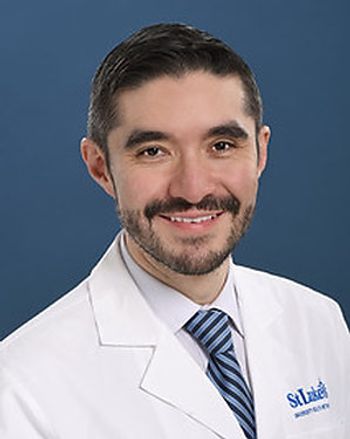
AI-powered pathology imaging enables a more comprehensive assessment of tumor microenvironments than humans alone could perceive.
AI-powered tools may help alleviate doctor burnout and give clinicians more time to directly engage with patients.
Artificial intelligence may act as a force multiplier, with the automation of menial tasks enabling more time for clinicians to engage with patients.
Artificial intelligence may have the potential to enrich pathology practices to help identify aspects of tumor biology not seen with the human eye.
Efficacy results from the MASAI trial preceded the creation of the UK-funded EDITH trial, assessing 5 AI platforms in 700,000 women undergoing mammography.
An AI-based system may reduce the time needed to match patients with cancer to suitable clinical trials.
February 6th 2026
