




Colorectal Cancer
Latest News

Maintenance Therapy Panitumumab Plus 5-FU/Leucovorin Improves Survival in RAS Wild-Type Metastatic CRC
By Kristi Rosa
Advertisement
Latest Videos





CME Content































Advertisement
More News

Data extrapolated from healthy lifestyle scores and polygenic risk scores found that healthy lifestyle changes were associated with a greater reduction in the risk in developing colorectal cancer for patients with a high genetic risk of disease development.

Recommendations published in JAMA are set to change colorectal cancer screening guidance for all individuals in the United States.

Holowatyj detailed the benefits of a conference like that of the American Association for Cancer Research Annual Meeting 2021, which presents opportunities for thought leaders to come together.
FOLFIRINOX initiated before standard therapy may offer better disease-free survival for patients with rectal cancer.
Holowatyj spoke about the molecular differences of early-onset colorectal cancer by race, while maintaining that race is a social construct, leading to a multitude of options for future research.
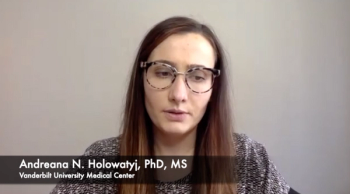
The lead author from a study presented at the American Association for Cancer Research Annual Meeting 2021 explained the main findings regarding potential differences in tumor mutation burden by race in patients with early-onset colorectal cancer.
Holowatyj touched on the need to learn more about the biological factors contributing to disparities in early-onset colorectal cancer and the associated burden of the disease.
A phase 3 trial found that pembrolizumab for patients with microsatellite instability–high or mismatch repair–deficient metastatic colorectal cancer significantly improved health-related quality of life compared with chemotherapy.
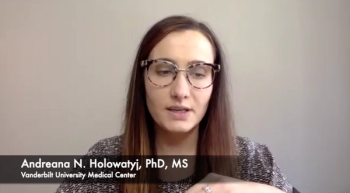
The lead author spoke about the rising incidence of early-onset colorectal cancer, which was the focal point of her research presented at the American Association for Cancer Research Annual Meeting 2021.

Early safety data from the RELARC trial showed complete mesocolic excision doesn’t increase intraoperative and postoperative complications of laparoscopic right hemicolectomy compared with D2 dissection when done by an experienced surgeon.

A new imaging technique that pairs acoustic resolution photoacoustic microscopy co-registered with ultrasound and an artificial intelligence neural network was proven feasible for use in detecting residual tumor tissue in patients with rectal cancer.

Christopher Lieu, MD, discusses the standard of care for genomic profiling in early stage CRC.
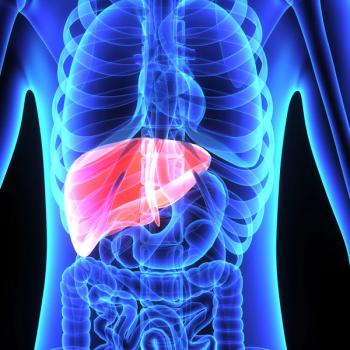
Based on a single-institution study, investigators were able to correlate outcomes for unresectable colorectal liver metastases with the addition of hepatic arterial infusion pump therapy to systemic therapy to the presence of a mutation in KRAS.

During Colorectal Cancer Awareness month, CancerNetwork® sat down with Dorothy Dulko, PhD, to discuss social determinants of cancer.

Phyllis Morgan, PhD, sat down with CancerNetwork® to discuss health disparities during Colorectal Cancer Awareness Month.
“Emerging evidence supports a possible role for overall dietary patterns that, in totality, emphasize habitually consuming fruits, vegetables, grains, and low-fat dairy and reducing red meat and alcohol intake,” wrote the study authors.

A pooled analysis of 2 cohort studies suggested that individuals who began using aspirin before age 70 years and continued using the agent later in life had a reduced risk of colorectal cancer.
“As the current work is the largest ever published on adjuvant [fluoropyrimidine; FP] for patients with MSI stage III [colon cancer], it suggests that FP alone should not be recommended as adjuvant treatment for these patients,” wrote the study authors, who were led by Romain Cohen, MD, PhD.
Investigators suggested that findings across different clinics can help inform future implementation of the Colorectal Cancer Control Program (CRCCP).
Research published in JAMA Network Open found that total neoadjuvant therapy enhanced pathological complete response rates for patients with locally advanced rectal cancer.
TAS-102 Plus Bevacizumab Leads to Improved OS in Patients With mCRC Ineligible for Intensive Therapy
When compared with standard capecitabine and bevacizumab therapy, patients with unresectable metastatic colorectal cancer saw an increase in overall and progression-free survival.
Data presented at the 2021 ASCO Gastrointestinal Cancers Symposium found that health-related quality of life among younger survivors of colorectal cancer is poor and social and functional well-being are also suffering as treatment durations increase.
When compared with chemotherapy, patients with microsatellite-instability high/mismatch repair deficient metastatic colorectal cancer saw significant improvement in progression-free survival with the frontline use of pembrolizumab monotherapy, while demonstrating superior safety.
The phase 2 study presented at the 2021 American Society of Clinical Oncology (ASCO) Gastrointestinal Cancer Symposium reported a total of 2 responses at the interim analysis, meeting criteria to continue accrual.
SWOG S1406 evaluated the use of irinotecan and cetuximab (Erbitux) with or without vemurafenib (Zelboraf) in patients with BRAF V600E-mutated metastatic colorectal cancer who had been previously treated with 1 or 2 regimens.
Advertisement
Advertisement
Trending on CancerNetwork
1
Modifiable Risk Factors Suggest Potential for Improving Cancer Prevention
2
2026 Tandem Meetings: What’s the Latest Research in Multiple Myeloma?
3
Dato-DXd Receives Priority Review in Unresectable/Metastatic TNBC
4
Barriers to CAR T-Cell Referral and Center Access in Multiple Myeloma
5