




Colorectal Cancer
Latest News
Advertisement
Latest Videos





CME Content

































Advertisement
More News

Drs Cohen and Lewis review the GALAXY enrollment strategy and describe the various colorectal cancer patient cohorts in the study.
Stacey A. Cohen, MD, and Mark Lewis, MD, introduce the 2022 ASCO GI abstract, “Association of Circulating Tumor DNA Dynamics With Clinical Outcomes in the Adjuvant Setting for Patients With Colorectal Cancer From an Observational GALAXY Study in CIRCULATE-Japan.”

Patients with KRAS G12C-mutated colorectal cancer treated with sotorasib showed modest anti-tumor activity during a phase 2 trial.

Liliana Bustamante, MD, and Richard Kim, MD, discuss circulating tumor DNA as a potential prognostic biomarker for patients with colorectal cancer.

In an interview with CancerNetwork® during National Colorectal Cancer Awareness Month, Rachel Pearlman, MS, LGC, highlights recent updates in genetic testing in colorectal cancer and where the field needs to head to provide individuals with better options.

Tanios Bekaii-Saab, MD; Kristen Ciombor, MD, MSCI; and John Strickler, MD, detail key developments and needs in the gastrointestinal cancers landscape.

A clinical hold has been placed on the phase 1b CYAD-101-002 trial, examining pembrolizumab after treatment with CYAD-101 and folinic acid, fluorouracil, and oxaliplatin preconditioning in metastatic colorectal cancer.
This review article written by Nikia R. McFadden, MD, MAS, et al, discusses which therapies are best to treat unresectable colorectal liver metastases.
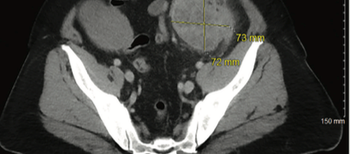
This case presents a patient with locally advanced, unresectable, mismatch repair–deficient sigmoid colon cancer who was treated with neoadjuvant chemoimmunotherapy followed by surgical resection leading to a complete pathologic response after preoperative systemic chemoimmunotherapy.

Treatment with trifluridine/tipiracil plus bevacizumab trended towards favorability despite not demonstrating statistically significant superiority in patients with metastatic colorectal cancer.
According to a study conducted at a single cancer center in Southern Maryland, patients who survived breast or prostate cancer were less likely to receive a colorectal cancer screening.

The CheckMate 9X8 trial did not hit the primary end point of progression-free survival superiority with nivolumab plus standard of care vs standard of care alone in metastatic colorectal cancer.

The observational GALAXY study found that use of a ctDNA assay could help determine which patients with colorectal cancer stand to benefit the most by receipt of adjuvant chemotherapy.

Treatment with trastuzumab deruxtecan produced promising efficacy results for patients with HER2-positive metastatic colorectal cancer.
Results from a phase 1/2 study showed that a combination of encorafenib, cetuximab, and nivolumab was well tolerated and yielded promising responses in patients with microsatellite stable BRAFV600E metastatic colorectal cancer.

Regorafenib Plus Pembrolizumab Combo Misses PFS End Point, Shows Strong OS for MSS Colorectal Cancer
Although the combination of regorafenib and pembrolizumab failed to meet significance for progression-free survival, an improvement in overall survival and disease control were observed for patients with microsatellite stable colorectal cancer.

Pembrolizumab, binimetinib , and bevacizumab led to deep and durable responses for patients with microsatellite-stable, treatment-refractory metastatic colorectal cancer.
Patients with KRAS-mutant metastatic colorectal cancer who were treated with a combination containing onvansertib had a tolerable safety profile.

Richard Kim, MD, and Lilliana Bustamante, MD, discuss the potnetial for using ctDNA to treat patients with oligometastatic colorectal cancer.
Phase 3 data indicated that primary tumor resection followed by systemic treatment produced higher 60-day mortality vs systemic treatment alone for patients with metastatic colorectal cancer.
Patients with advanced rectal cancer who were treated with up-front chemoradiotherapy plus consolidation chemotherapy experienced an improvement in pathological complete response without impacting disease-free survival.

Arfolitixorin was granted a fast track designation by the FDA for advanced colorectal cancer based on its potential to address unmet medical needs.

Drs Liliana Bustamante and Richard Kim react to limitations surrounding biomarkers used in colorectal cancer and consider how to best study the role of ctDNA moving forward.
Patients with microsatellite instability-high/mismatch repair deficient metastatic colorectal cancer treated with first-line nivolumab plus low-dose ipilimumab experienced a durable clinical benefit.
The potential impact that conclusions highlighted in a recent paper on postoperative MRD analysis in colorectal cancer may have on the management of patients with GI cancers.
Advertisement
Advertisement
Trending on CancerNetwork
1
Modifiable Risk Factors Suggest Potential for Improving Cancer Prevention
2
2026 Tandem Meetings: What’s the Latest Research in Multiple Myeloma?
3
Dato-DXd Receives Priority Review in Unresectable/Metastatic TNBC
4
ASCO President Elect Talks Advancing Patient-Centered Care and Team-Based Innovation
5