


Multiple Myeloma
Latest News

Second-Line Cilta-Cel Yields Strong Responses and Encouraging MRD Negativity for Early Relapse Myeloma
By Chris Ryan
Advertisement
Latest Videos



CME Content






























Advertisement
More News
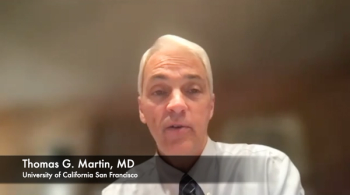
Thomas G. Martin, MD, spoke about the updated results of the CARTITUDE-1 study examining ciltacabtagene autoleucel in relapsed or refractory multiple myeloma.

Induction and consolidation with daratumumab, ixazomib, lenalidomide, and dexamethasone was able to induce minimal residual disease in a subset of patients with transplant-eligible newly diagnosed multiple myeloma and standard-risk disease.

Among patients with newly diagnosed multiple myeloma, 80% of a study cohort reached MRD negativity following treatment with daratumumab, carfilzomib, lenalidomide, and dexamethasone.
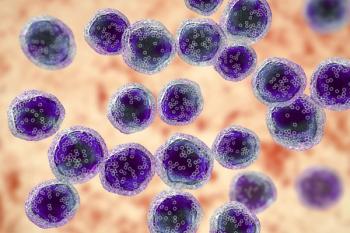
Weekly selinexor combined with bortezomib and dexamethasone appears to be a promising option in patients with high-risk multiple myeloma.

A population of patients with relapsed/refractory multiple myeloma appeared to benefit from treatment with selinexor plus daratumumab, bortezomib, and dexamethasone

Adding isatuximab to lenalidomide, bortezomib, and dexamethasone demonstrated a superior minimal residual disease rate in patients with transplant-eligible newly diagnosed multiple myeloma.

The combination of daratumumab with bortezomib, cyclophosphamide, and dexamethasone continued to improve hematologic and organ responses after 18 months of follow-up.
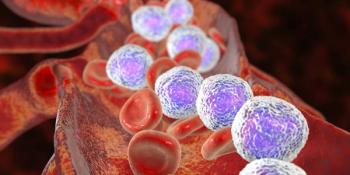
Findings from the phase 1b TRIMM-2 study indicated that patients with relapsed/refractory multiple myeloma experienced manageable toxicities and promising responses to treatment with talquetamab and daratumumab.
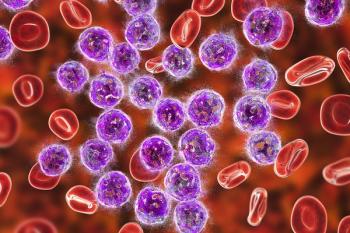
Research presented at the 63rd ASH Annual Meeting and Exposition found significantly higher MRD-negativity and sustained MRD-negativity rates among patients with transplant-eligible newly diagnosed multiple myeloma receiving D-VTd over VTd alone.
Patients with newly diagnosed multiple myeloma who are non-transplant eligible and intermediate-fit and who received a less toxic regimen of ixazomib, daratumumab, and low-dose dexamethasone demonstrated higher rates of objective response.

A phase 2 trial shows promise of the daratumumab/ixazomib combination in frail and elderly patients with multiple myeloma who are treated in the relapsed setting when given without dexamethasone.
Patients receiving daratumumab, lenalidomide, and dexamethasone in the first line saw better overall survival than those who waited and received second-line daratumumab-based regimens for transplant-ineligible newly diagnosed multiple myeloma.
Luciano Costa, MD, PhD, spoke about which abstracts he wants to see most at ASH 2021.
Thomas G. Martin, MD, spoke about the previously reported results of the CARTITUDE-1 study in patients with relapsed or refractory myeloma ahead of the 2021 ASH Annual Meeting.
Thomas G. Martin, MD, spoke about the abstracts regarding B-cell maturation antigen–targeted treatments he’s excited to see presented at ASH 2021.

Nina Shah, MD, touched on important abstracts being presented at the 2021 American Society of Hematology Annual Meeting.
Thomas G. Martin, MD, spoke about different abstracts to be presented at ASH 2021.
Nina Shah, MD, highlights some of the major takeaways in multiple myeloma from the 2021 European Hematology Association Congress.
Nina Shah, MD, discusses breakthroughs in the treatment of multiple myeloma throughout the preceding year.
Panobinostat, which received accelerated approval by the FDA in February 2015 for patients with previously treated multiple myeloma, has had its indication withdrawn in the United States.

A combination of daratumumab, hyaluronidase-fihj, carfilzomib, and dexamethasone has been approved by the FDA for the treatment of relapsed/refractory multiple myeloma.

Concluding their discussion on newly diagnosed multiple myeloma, expert panelists consider treatment options for patients with high-risk disease.
Shared insight on the evolving treatment landscape of transplant-ineligible newly diagnosed multiple myeloma.
Patients with relapsed/refractory myeloma continued to experience durable and efficacious responses after treatment with ciltacabtagene autoleucel.
Following discussion with the FDA, INN melphalan flufenamide has been withdrawn from market in the United States based on data from the phase 3 OCEAN study.
Advertisement
Advertisement
Trending on CancerNetwork
1
Modifiable Risk Factors Suggest Potential for Improving Cancer Prevention
2
2026 Tandem Meetings: What’s the Latest Research in Multiple Myeloma?
3
Dato-DXd Receives Priority Review in Unresectable/Metastatic TNBC
4
Barriers to CAR T-Cell Referral and Center Access in Multiple Myeloma
5