





Non-Small Cell Lung Cancer (NSCLC)
Latest News
Advertisement
Latest Videos
CME Content































Advertisement
More News

Higher, durable rates of response to frontline therapy are needed to potentially improve long-term survival among patients with non–small cell lung cancer.

HERTHENA-Lung02 investigators will present further data from the trial at a future medical meeting.

A median EFS of 40.1 months was noted in patients resectable NSCLC given perioperative nivolumab vs placebo.

Superior efficacy outcomes were noted when adagrasib was used to treat patients with KRAS G12C NSCLC and among those with brain metastases.
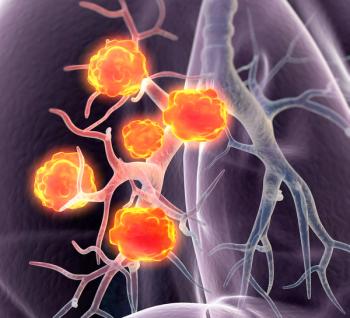
The safety profile of nivolumab/relatlimab/chemotherapy in RELATIVITY-104 was comparable with prior reports of each individual agent.

Amivantamab plus chemotherapy also improved time to symptomatic progression among patients enrolled on the MARIPOSA-2 trial.
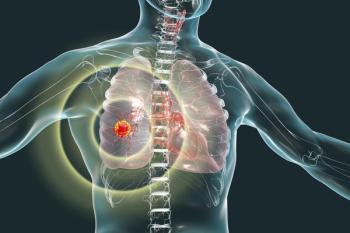
Data from the GALAXIES-Lung 201 trial found efficacy improvement in patients with advanced NSCLC.
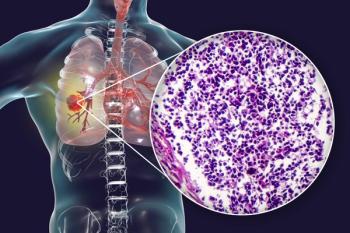
Patients with NSCLC across various subgroups did not see a disease-free survival benefit with adjuvant durvalumab compared with placebo.

Updated findings from the AEGEAN trial support perioperative durvalumab as a new therapy option for those with resectable non–small cell lung cancer.

Phase 2 data show meaningful efficacy with taletrectinib regardless of whether patients with ROS1-positive NSCLC previously received tyrosine kinase inhibitors.

Developers anticipate releasing full efficacy results from the phase 2 THIO-101 trial in late 2024.
Confirmed partial responses with firmonertinib occurred across a range of EGFR PACC mutations among patients with NSCLC in the phase 1b FURTHER trial.

Patients with EGFR-mutated NSCLC had sustained HRQOL when treated with amivantamab plus lazertinib vs osimertinib.
Data from the HARMONi-2 trial support the potential superiority of frontline ivonescimab vs pembrolizumab in non–small cell lung cancer.

In particular, dato-DXd plus durvalumab and chemotherapy produced the highest pCR and mPR rates in the phase 2 NeoCOAST-2 trial.

Phase 1b data also show encouraging preliminary intracranial activity with zongertinib among patients with HER2-mutant non–small cell lung cancer.

BAY 2927088 showed substantial response rates for patients with pretreated HER2-mutant non–small cell lung cancer.
Amivantamab/lazertinib also reduces the risk of second progression or death compared with osimertinib in the phase 3 MARIPOSA trial.

Surgeons, radiation oncologists, and medical oncologists gathered to discuss treatment options and approaches for NSCLC.

Data from the phase 2 PHAROS trial support the European Commission’s approval of encorafenib/binimetinib in NSCLC harboring a BRAF V600E mutation.

Favorable recurrence-free survival and overall survival outcomes were not observed in the overall patient cohort receiving adjuvant chemotherapy for advanced NSCLC.
Regardless of T790M status, lazertinib hindered the progression of intracranial metastases after unsuccessful EGFR TKI treatment in patients with EGFR-mutated NSCLC.
Trials assessing NSCLC and cutaneous squamous cell carcinoma were discontinued due to no benefit observed or improvement noted with the primary end points.

The EGFR-MET bispecific antibody amivantamab in combination with chemotherapy yielded a survival benefit compared with chemotherapy alone for EGFR-mutated NSCLC.
Findings from the phase 3 MARIPOSA-2 trial were the subject of a recent discussion of ambivantamab plus chemotherapy with or without lazertinib in EGFR-mutated NSCLC.
Advertisement
Advertisement
Trending on CancerNetwork
1
Modifiable Risk Factors Suggest Potential for Improving Cancer Prevention
2
2026 Tandem Meetings: What’s the Latest Research in Multiple Myeloma?
3
Dato-DXd Receives Priority Review in Unresectable/Metastatic TNBC
4
Barriers to CAR T-Cell Referral and Center Access in Multiple Myeloma
5