




Non-Small Cell Lung Cancer (NSCLC)
Latest News
Advertisement
Latest Videos


CME Content

































Advertisement
More News

This video segment discusses the efficacy and safety profile of adagrasib for KRAS-positive metastatic NSCLC, drawing insights from the KRYSTAL-1 trial data to inform treatment sequencing decisions.
A 58-year-old retired teacher treated with adagrasib for KRAS+ metastatic NSCLC.

Dr. Kim provides an overview of the clinical evidence supporting lorlatinib as a first-line therapy for ALK+ metastatic NSCLC, focusing on the key efficacy outcomes from the phase 3 CROWN trial.
Dr. Garon discusses the factors that make a patient a strong candidate for ALK inhibitor therapy in ALK+ NSCLC, the importance of biomarker testing in guiding treatment selection, and his approach to testing along with challenges encountered, especially in community settings.

Experts from Washington University in St. Louis discuss trial results and infusion-related reaction management for amivantamab in EGFR-mutated NSCLC.

Alexander Spira, MD, and Julia Lazo, RN, spoke with Melinda Reubens, who was diagnosed with EGFR-mutant NSCLC, and her husband Justin.
This video segment explores emerging investigational agents for the management of metastatic ALK-positive NSCLC, highlighting promising advancements in the treatment landscape.
This video segment examines therapeutic strategies for managing disease progression on lorlatinib in ALK-positive metastatic NSCLC, including decision-making considerations and scenarios where switching to lorlatinib from another ALK inhibitor may be beneficial.

“We have huge amounts of work to do to maximize the efficacy of immunotherapy,” Christine Bestvina, MD, said during an interview with CancerNetwork.
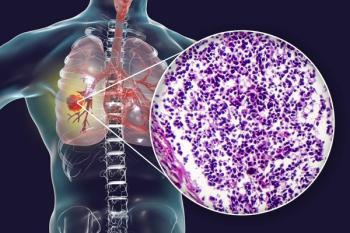
Radiotherapy plus camrelizumab and platinum-doublet chemotherapy showed manageable toxicity in untreated non–small cell lung cancer with brain metastases.

6-thio-2’-deoxyguanosine sequenced plus cemiplimab elicited an OS of 16.9 months in the third-line setting for patients with advanced non–small cell lung cancer.

Adagrasib elicited higher efficacy in combination with mTOR inhibitors vs alone when treating patients with KRASG12C-mutant non–small cell lung cancer.

Full results from the phase 1/2 REZILIENT1 trial evaluating zipalertinib in NSCLC will be shared at a future medical conference.

Postoperative pulmonary complications were reduced with enhanced recovery after surgery vs control in elderly patients with non–small cell lung cancer.

A single-arm phase 2 study assessed local consolidative therapy regimens in patients with oligometastatic stage IV non–small cell lung carcinoma.

Doxycycline/minocycline, clindamycin, chlorhexidine, and a ceramides-based noncomedogenic moisturizer reduced skin- and nail-related AEs in NSCLC.

Results from a Chinese phase 1 trial reveal that anlotinib plus EGFR-TKIs demonstrated manageable toxicity in NSCLC pre-treated with EGFR-TKIs.

A panel of experts met to discuss the best treatment options for patients with EGFR or TP53-mutated non–small cell lung cancer.

As part of a Satellite Sessions program focused on the Cleveland Clinic and surrounding institutions, CancerNetwork hosted a panel discussion on treatment options for patients with EGFR-mutated NSCLC.

The discussion on NSCLC narrowed in on findings from recent clinical trials, particularly involving a combination regimen of amivantamab plus lazertinib vs osimertinib and chemotherapy.

Referring to the NCCN guidelines for the treatment of EGFR-mutated NSCLC will help clinicians determine which treatments are best recommended.
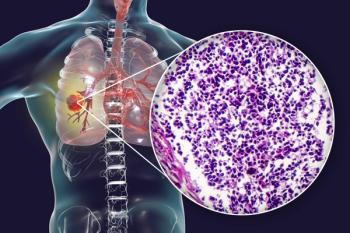
The combination of amivantamab plus lazertinib has emerged as a potential treatment option for patients with EGFR-mutated NSCLC and has shown sufficient efficacy responses.
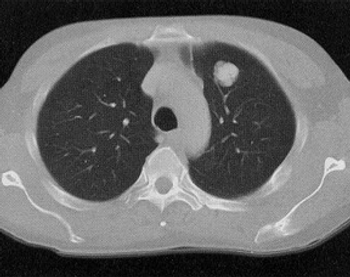
The NeXT Personal platform identified minuscule amounts of ctDNA that were found to be predictive of OS and RFS outcomes in patients with lung adenocarcinoma.

The FDA accepted a BLA for Dato-DXd based on data from the TROPION-Lung05, TROPION-Lung01, and TROPION-PanTumor01 trials.
Advertisement
Advertisement
Trending on CancerNetwork
1
Modifiable Risk Factors Suggest Potential for Improving Cancer Prevention
2
2026 Tandem Meetings: What’s the Latest Research in Multiple Myeloma?
3
Dato-DXd Receives Priority Review in Unresectable/Metastatic TNBC
4
Barriers to CAR T-Cell Referral and Center Access in Multiple Myeloma
5