





Prostate Cancer
Latest News
Advertisement
Latest Videos





CME Content

































Advertisement
More News

In a final overall survival analysis of the phase 3 PROpel study, abiraterone actetate/olaparib demonstrates a sustained trend toward overall survival for metastatic castration-resistant prostate cancer vs standard-of-care abiraterone.

Findings from the phase 3 ARASENS trial indicate that darolutamide plus androgen-deprivation therapy and docetaxel should be considered a new standard of care for metastatic hormone-sensitive prostate cancer.

Treatment with talazoparib and enzalutamide appears to yield a statistically significant and clinically meaningful radiographic progression-free survival benefit compared with placebo/enzalutamide in frontline metastatic castration-resistant prostate cancer regardless of homologous recombination repair status.

Expert perspectives on strategies to optimize communication, both between healthcare professionals and with patients who present with prostate cancer.

Cardiologist Anees A. Daud, MD, breaks down the typical patient with prostate cancer seen at his practice.

Urologist David Morris, MD, FACS, defines the typical patient with prostate cancer treated at his practice.
Oncologist Joelle Hamilton, MD, shares her perspective on the typical patient with prostate cancer seen at her institution.

Centering focus on a patient case of cardiovascular risk and prostate cancer, experts share their perspective on management strategies.

Comprehensive insight regarding strategies to mitigate cardiovascular risk in patients on therapy for prostate cancer.

Treatment with 177Lu-PSMA-617 results in similar survival benefit regardless of when it was administered after radium-223 in patients with metastatic castration-resistant prostate cancer, according to an expert from University Hospital of Münster in Germany.
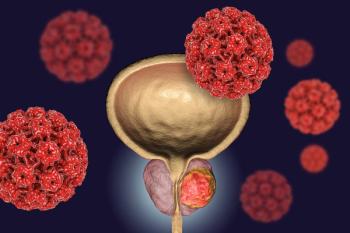
Darolutamide produces a lower rate of discontinuation compared with enzalutamide or apalutamide among patients with non-metastatic, castration-resistant prostate cancer.

During the 2022 Society for Urologic Oncology (SUO) Annual Meeting, an expert from the Baylor College of Medicine, discussed how perceptions around the use of testosterone therapy have evolved for patients with metastatic prostate cancer.

Adding the investigational oral drug BXCL701 to pembrolizumab appears effective in small cell neuroendocrine metastatic castration-resistant prostate cancer, a rare and aggressive disease.
Patients with metastatic prostate cancer and dysphagia or difficulty swallowing may benefit from TAVT-45 compared with abiraterone acetate tablets.

18F-sodium fluoride PET-CT appeared to be a more accurate identifier of bone metastases in patients with breast and prostate cancer than the standard SPECT method.
Olaparib in combination with abiraterone and prednisone or prednisolone alone has been approved as treatment for metastatic castration-resistant prostate cancer in the European Union.

177Lu vipivotide tetraxetan becomes first targeted radioligand treatment approved by the European Commission for prostate-specific membrane antigen–positive metastatic castration-resistant prostate cancer.

At a median follow-up of 17.4 months, half of the enrolled patients with metastatic castration-resistant prostate cancer experienced a decrease in PSA level from baseline following treatment with tazemetostat in combination with abiraterone acetate or enzalutamide.

All patients with chemo-naïve metastatic castration-resistant prostate cancer experienced PSA decline, and half the cohort experienced a PSA decline greater than 50% after treatment with a novel PSMA-targeted radionuclide therapy.

Patients with newly diagnosed prostate cancer benefitted from 18F-rHPSMA-7.3 PET when used prior to surgery.
“With more potent agents, can we actually cure patients [with prostate cancer]? I'm not so sure about that…because of heterogeneity,” said an expert from NewYork-Presbyterian – Weill Cornell Medical Center in New York City. “So we'll see. But I think with combinations, maybe someday we're going to be able to get there.”

Theranostics may fill an unmet need for a group of patients with high-risk localized prostate cancer, but more research is needed to identify how oncology providers can integrate it with the standard treatments, according to an expert from the University of Texas MD Anderson Cancer Center.

Patients with advanced prostate cancer benefitted from relugolix vs leuprolide regardless of baseline testosterone level.
Rezvilutamide with androgen-deprivation therapy yielded improved overall survival and radiographic progression-free survival compared with bicalutamide and androgen-deprivation therapy in patients with high-volume metastatic hormone-sensitive prostate cancer.

From shortening treatment duration without compromising efficacy in breast and prostate cancer to improving quality of life, experts share the main takeaways from the 2022 ASTRO Annual Meeting.
Advertisement
Advertisement
Trending on CancerNetwork
1
Modifiable Risk Factors Suggest Potential for Improving Cancer Prevention
2
2026 Tandem Meetings: What’s the Latest Research in Multiple Myeloma?
3
Dato-DXd Receives Priority Review in Unresectable/Metastatic TNBC
4
Barriers to CAR T-Cell Referral and Center Access in Multiple Myeloma
5