





Prostate Cancer
Latest News
Advertisement
Latest Videos




CME Content































Advertisement
More News

Patients with high-risk prostate cancer appeared to derive benefit from androgen deprivation therapy given for a minimal duration of over 18 months plus external beam radiotherapy.
Treatment with 177Lu-PSMA-617 resulted in poor outcomes for patients with metastatic castration-resistant prostate cancer whose tumors had little to no prostate-specific membrane antigen expression.

Data from the SPOTLIGHT trial indicate agreement among trained PET readers was highly concordant with use of 18F-rhPSMA-7.3 imaging for recurrent prostate cancer.
The radiotherapy schedules used in the ATLAS trial reflect recent evidence and guideline changes for its usage in patients with high-risk localized or locally advanced prostate cancer.
Results from the phase 3 SPOTLIGHT trial showed 18F-rhPSMA-7.3 increased post-scan disease upstaging in recurrent prostate cancer.

Metastatic progression pattern with darolutamide appears to be unaltered in nonmetastatic castration-resistant prostate cancer, despite the agent resulting in better survival outcomes.

A post-hoc analysis of the phase 3 TITAN trial revealed potential biomarkers that may predict overall survival in patients with metastatic castration-resistant prostate cancer receiving apalutamide plus androgen deprivation therapy.
Unlike with enzalutamide, it appears darolutamide does not affect systemic exposure of cabazitaxel in patients with metastatic castration-resistant prostate cancer.
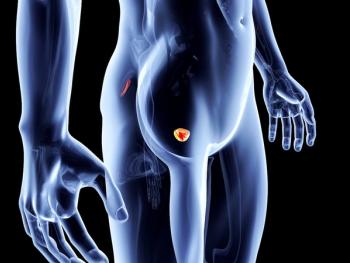
Data presented at 2022 ASCO reveals PET-imaging characteristics linked with 177Lu-PSMA-617 efficacy in metastatic castration-resistant prostate cancer.
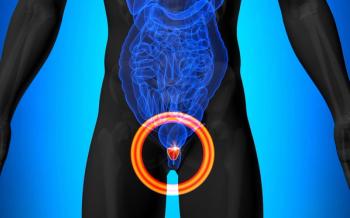
Results of the ENZAMET trial presented at 2022 ASCO continue to support use of enzalutamide in patients with metastatic hormone-sensitive prostate cancer.
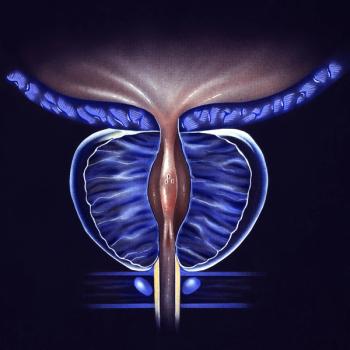
Similar overall survival, better patient-reported outcomes, and fewer adverse effects were observed when patients were treated with 177Lu-PSMA-617 vs cabazitaxel in metastatic castration-resistant prostate cancer.

Adverse effects were found to be similar between patients with metastatic hormone-sensitive prostate cancer who were treated with darolutamide plus androgen deprivation therapy and docetaxel vs androgen deprivation therapy and docetaxel alone.

Judd W. Moul, MD, spoke with CancerNetwork® about the latest research from the journal ONCOLOGY® on the treatment of a patients with evidence of prostate cancer despite multiple negative prognostic tests.
Three year follow-up findings from a post hoc analysis of the phase 3 ARAMIS trial indicated that darolutamide maintained a survival benefit regardless of prior local therapy for patients with nonmetastatic castration-resistant prostate cancer.
Adding niraparib to abiraterone acetate and prednisone improved efficacy and yielded tolerable safety for patients with metastatic castration-resistant prostate cancer with homologous recombination repair gene alterations.

Expert panelists center discussion around two patient cases to review use of newer anti-androgen deprivation therapy in the management of prostate cancer.
Findings from the phase 3 ARCHES trial highlighted a long-lasting survival improvement for patients with metastatic hormone-sensitive prostate cancer who were treated with enzalutamide plus androgen deprivation therapy regardless of whether they received prior local therapy.
Results from a phase 3 trial indicated that olaparib yielded better-preserved health-related quality of life and reduced pain burden vs the control for patients with homologous recombination repair gene–altered metastatic castration-resistant prostate cancer who progressed following a prior next-generation hormonal drug.
Superior post-scan disease upstaging in patients with recurrent prostate cancer was observed with 18F-rhPSMA-7.3 compared with conventional baseline imaging.
Patients with metastatic castration-resistant prostate and DNA repair gene defects cancer treated with niraparib were found to experience significant anti-tumor activity.
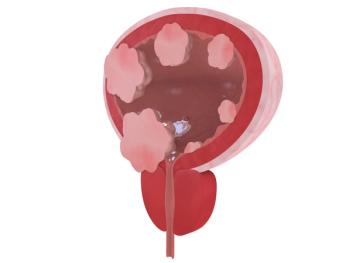
The FDA granted priority review to a supplemental new drug application for darolutamide plus docetaxel for the treatment of metastatic hormone-sensitive prostate cancer.

Muhammad Rafay Khan Niazi, MD, and Alexander Bershadskiy, MD, spoke with CancerNetwork® about the latest research from the journal ONCOLOGY® on the use of PARP inhibitors as maintenance therapy for certain patients with metastatic castration-resistant prostate cancer.

Scott T. Tagawa, MD, spoke about potential approvals in the coming year for prostate cancer.

Phillip S. Low, PhD, spoke about what the future holds for treatments like 177Lu-PSMA-617 being developed for patients with prostate cancer.

Shared insight on the selection of specific androgen receptor inhibitors for patients with nonmetastatic castration-resistant prostate cancer.
Advertisement
Advertisement
Trending on CancerNetwork
1
Modifiable Risk Factors Suggest Potential for Improving Cancer Prevention
2
2026 Tandem Meetings: What’s the Latest Research in Multiple Myeloma?
3
Dato-DXd Receives Priority Review in Unresectable/Metastatic TNBC
4
Barriers to CAR T-Cell Referral and Center Access in Multiple Myeloma
5