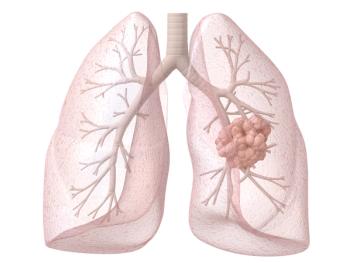
Several factors should be taken into consideration when making decisions about rheumatoid arthritis therapy in patients with a history of cancer. The baseline risk of recurrence varies depending on how aggressive the original cancer was. Moreover, although the risk of recurrence decreases over time, for some cancer types, such as breast cancer, there is a risk even decades later. No study has examined the likelihood of cancer recurrence for specific rheumatoid arthritis therapies. However, most of the concerns have centered on TNF inhibitors, primarily because of their mode of action and limited evidence showing an increase in the risk of lymphoma, melanoma, and nonmelanoma skin cancers with these agents.
Because this patient has failed to respond to therapy with combination DMARDs, it is appropriate to initiate treatment with a biologic agent, but TNF inhibitors would not be the best choice. An appropriate alternative would be rituximab, which is an effective therapy for rheumatoid arthritis, and which has been used for many years in the treatment of lymphoma, with no evidence of increased recurrence in patients with prior solid tumors. Other biologic agents and JAK inhibitors have not been sufficiently evaluated in this setting to offer a recommendation.
Case 3
A 56-year-old woman with a history of stage IA lung adenocarcinoma was treated with right upper lobectomy and lymph node dissection 7 years ago. She is doing well, with no evidence of disease. Two years ago, she developed rheumatoid arthritis, which was initially well controlled with NSAIDs, weekly oral methotrexate, and daily hydroxychloroquine. Six months ago, she developed progressively worsening polyarthritis involving the knees, wrists, metacarpophalangeal joints, and proximal interphalangeal joints; this arthritis has proven refractory to therapy, including a trial of corticosteroids. Her pain is now limiting her ability to work as a hairdresser. She has heard about biologic therapies for rheumatoid arthritis, and she is eager to start a new treatment.
According to ACR guidelines, this patient is a candidate for biologic DMARDs.[16] As reviewed previously, most observational studies evaluating the use of biologic therapy in patients with rheumatoid arthritis and a history of a solid tumor diagnosed and treated several years earlier do not show an increased risk of recurrence.[17-20] Based on the available data, and primarily on consensus expert opinion, the ACR recommendations suggest that in patients in whom solid malignancies have been treated with curative intent and who presently have no evidence of disease, any agents, including TNF inhibitors, can be used.[16] The patient in this case has established rheumatoid arthritis with high disease activity, which is worsening despite treatment with nonbiologic DMARDs. Because it has been 7 years since her cancer treatment and she has had no recurrences, it would be reasonable to treat her rheumatoid arthritis with biologic therapy.
However, even for patients with a history of successfully treated cancer, one must take into consideration tumor type, biology, stage, treatment received, and prognosis. A woman with an early diagnosis of stage I lung cancer will have a worse prognosis, with a higher recurrence rate, than a woman with an early-stage estrogen receptor–positive breast cancer, even if both are treated with curative intent.
In this case, it would be appropriate to present the patient with the various available options and the associated uncertainties. Since no biologic agent for rheumatoid arthritis is substantially better than the rest, any choice could be appropriate.
Case 4
A 56-year-old man in whom rheumatoid arthritis was diagnosed 4 years ago has been receiving methotrexate and etanercept (a TNF inhibitor), with an excellent response and no evidence of active arthritis. He presents with new back pain and weight loss. MRI of the lumbar spine reveals lesions suspicious for metastasis. Subsequent scans reveal a pancreatic mass encasing the superior mesenteric artery, and numerous hepatic lesions. Histopathology confirms metastatic pancreatic adenocarcinoma. His rheumatoid arthritis treatment is discontinued, and he starts palliative chemotherapy with gemcitabine. Within 2 months, he develops significant exacerbation of his rheumatoid arthritis, with painful synovitis of several joints that is affecting his quality of life and ability to perform activities of daily living. He starts treatment with oral prednisone but reports only mild improvement. He would like to restart his last rheumatoid arthritis treatment that worked so well for him.
Current ACR guidelines include recommendations for managing rheumatoid arthritis in patients with previously treated malignancies; however, no specific recommendations exist for patients with active cancer.[16] Because some DMARDs and all biologic agents can suppress the immune system to varying degrees, there is a theoretical risk that they may hinder cancer treatment. In patients with active malignancy who are undergoing chemotherapy, potentiated immunosuppression may result in increased toxicity, especially cytopenias, and worsened outcomes. In addition, there is a concern that tumor progression will be accelerated. The general consensus has been that treatment with all biologics should be held in patients with active malignancy who are undergoing chemotherapy.[16] Nevertheless, a patient’s stage of disease, overall prognosis, concomitant cancer therapy, and individual preferences should be taken into consideration. In patients with metastatic disease, the goal of treatment is not curative but palliative. Therefore, the risk associated with rheumatoid arthritis treatment should be weighed against its potential benefit, since undertreating rheumatoid arthritis can significantly diminish quality of life. For a patient such as the one presented here, whose rheumatoid arthritis was previously well controlled, who is receiving palliative therapy, and whose life expectancy is short, it is reasonable to resume rheumatoid arthritis treatment, after carefully presenting him with the potential benefits and risks.
KEY POINTS
- Therapeutic decisions in cancer patients with concomitant rheumatoid arthritis need to consider risk-benefit ratios of different therapies with respect to cancer prognosis, quality of life, and patient preferences.
- Some antirrheumatic biologic therapies may impair immune-mediated antitumor responses and therefore require careful consideration when their use is contemplated in patients with active cancer.
- For patients with a history of cancer and no recurrences, antirrheumatic therapy appears to be safe, with no evidence that it increases recurrence rates.
- Data are limited on the use of immune checkpoint inhibitors in cancer patients with pre-existing rheumatoid arthritis; in about half of the cases reported, patients had a disease flare.
- Comanagement by oncologists and rheumatologists can reduce the risk of complications and improve symptom control and quality of life in patients with active arthritis.
It is worth noting that many patients with rheumataoid arthritis and cancer may notice improvement of their arthritis during chemotherapy, especially with the use of immunosuppressant agents, such as cyclophosphamide (which is also used to treat autoimmune disorders). In some instances, this could influence the choice of a specific anticancer drug. In patients with active rheumatoid arthritis who are starting chemotherapy, it is advisable to wait for a few weeks before considering antirrheumatic treatment, since their joint symptoms may improve with cancer therapy.
Case 5
A 67-year-old woman has a history of melanoma resected from her left thigh 3 years ago. The patient has a history of rheumatoid arthritis, and her disease is well controlled with methotrexate and oral prednisone. She presents for follow-up with right upper quadrant abdominal pain. Imaging reveals multiple liver lesions; biopsy confirms metastatic melanoma. Her rheumatoid arthritis treatment is discontinued. Her oncologist is considering therapy with an immune checkpoint inhibitor but is concerned about her history of rheumatoid arthritis.
Immune checkpoint inhibitor therapy is associated with myriad immune-related adverse events (irAEs) that can affect different organs, can be serious, and can occasionally be fatal.[21] There have been concerns regarding the use of these agents in patients with pre-existing autoimmune disease, who have typically been excluded from clinical trials out of fear of increased or more severe irAEs, or disease flare.[22] There are few reports of patients with rheumatoid arthritis receiving checkpoint inhibitors. Overall, approximately 50% of patients with rheumatoid arthritis who received checkpoint inhibitor therapy and for whom results have been reported experienced flares or had irAEs.[22,23] Management of rheumatoid arthritis flares during cancer immunotherapy also poses a challenge because immunosuppression could potentially counteract the tumor therapeutic effects of checkpoint inhibitors.
For this patient it would be important to consider whether there are alternative therapies for her melanoma. If checkpoint inhibitors are the best option, and given that her comorbid rheumatoid arthritis would typically not be life-threatening, a consideration of the risks and benefits should be presented to her, including a careful explanation of the potential efficacy of immunotherapy in melanoma. Before starting immunotherapy, it is recommended that prednisone be discontinued, possibly tapering it over a couple of weeks to avoid concomitant immunosuppression during the initial courses of therapy; the patient’s rheumatoid arthritis can be managed instead with NSAIDs and pain control. There are no evidence-based recommendations for patients who may experience a rheumatoid arthritis flare during checkpoint inhibitor therapy, given the scarcity of data. However, an approach similar to that used to manage irAEs can be implemented, with initial treatment with glucocorticoids, which can be adjusted according to the severity of symptoms and response. Discontinuation of the checkpoint inhibitor is recommended for severe arthritis that limits activities of daily living. For patients who do not respond to glucocorticoids or who are unable to taper their dose, therapy with conventional DMARDs, or biologics, might be indicated.
Summary
Patients with cancer and concomitant rheumatoid arthritis pose special challenges. Many therapies for rheumatoid arthritis can increase the risk of adverse events during cancer therapy because they are immunosuppressive. Moreover, the effects of these drugs on tumor progression and recurrence is uncertain. Lastly, cancer immunotherapy has revolutionized the treatment of various cancers; however, it poses a dilemma when considered for use in patients with autoimmune diseases such as rheumatoid arthritis, because of the potential for increased toxicity or disease flare. Moreover, concomitant immunosuppressive treatment of the underlying disorder could blunt the potential anticancer benefits of immunotherapy. Given the many factors that must be weighed when making therapeutic decisions in patients with rheumatoid arthritis and cancer at different stages of their oncologic disease, careful consideration needs to be given to risk stratification, potential risk-benefit ratios, and individual patient preferences.
Financial Disclosure:Dr. Suarez-Almazor participated in an Advisory Board for Bristol-Myers Squibb on the use of immune checkpoint inhibitors to treat patients with cancer and concomitant autoimmune disease. The other authors have no significant financial interest in or other relationship with the manufacturer of any product or provider of any service mentioned in this article.
References:
1. Elandt K, Aletaha D. Treating rheumatic patients with a malignancy. Arthritis Res Ther. 2011;13:223.
2. Smitten AL, Simon TA, Hochberg MC, Suissa S. A meta-analysis of the incidence of malignancy in adult patients with rheumatoid arthritis. Arthritis Res Ther. 2008;10:R45.
3. Lopez-Olivo MA, Tayar JH, Martinez-Lopez JA, et al. Risk of malignancies in patients with rheumatoid arthritis treated with biologic therapy: a meta-analysis. JAMA. 2012;308:898-908.â©
4. Wolfe F, Michaud K. Biologic treatment of rheumatoid arthritis and the risk of malignancy: analyses from a large US observational study. Arthritis Rheum. 2007;56:2886-95.
5. Lamberts SW, Bruining HA, de Jong FH. Corticosteroid therapy in severe illness. N Engl J Med. 1997;337:1285-92.
6. Escalante A, Beardmore TD. Risk factors for early wound complications after orthopedic surgery for rheumatoid arthritis. J Rheumatol. 1995;22:1844-51.
7. Bibbo C, Goldberg JW. Infectious and healing complications after elective orthopaedic foot and ankle surgery during tumor necrosis factor-alpha inhibition therapy. Foot Ankle Int. 2004;25:331-5.
8. Grennan DM, Gray J, Loudon J, Fear S. Methotrexate and early postoperative complications in patients with rheumatoid arthritis undergoing elective orthopaedic surgery. Ann Rheum Dis. 2001;60:214-7.
9. Perhala RS, Wilke WS, Clough JD, Segal AM. Local infectious complications following large joint replacement in rheumatoid arthritis patients treated with methotrexate versus those not treated with methotrexate. Arthritis Rheum. 1991;34:146-52.
10. den Broeder AA, Creemers MC, Fransen J, et al. Risk factors for surgical site infections and other complications in elective surgery in patients with rheumatoid arthritis with special attention for anti-tumor necrosis factor: a large retrospective study. J Rheumatol. 2007;34:689-95.
11. Pieringer H, Stuby U, Biesenbach G. Patients with rheumatoid arthritis undergoing surgery: how should we deal with antirheumatic treatment? Semin Arthritis Rheum. 2007;36:278-86.
12. Tanaka N, Sakahashi H, Sato E, et al. Examination of the risk of continuous leflunomide treatment on the incidence of infectious complications after joint arthroplasty in patients with rheumatoid arthritis. J Clin Rheumatol. 2003;9:115-8.
13. Dilaveri CA, Sandhu NP, Neal L, et al. Medical factors influencing decision making regarding radiation therapy for breast cancer. Int J Womens Health. 2014;6:945-54.
14. Giaj-Levra N, Sciascia S, Fiorentino A, et al. Radiotherapy in patients with connective tissue diseases. Lancet Oncol. 2016;17:e109-e117.
15. Morris MM, Powell SN. Irradiation in the setting of collagen vascular disease: acute and late complications. J Clin Oncol. 1997;15:2728-35.
16. Singh JA, Saag KG, Bridges SL Jr, et al. 2015 American College of Rheumatology guideline for the treatment of rheumatoid arthritis. Arthritis Rheumatol. 2016;68:1-26.
17. Dixon WG, Watson KD, Lunt M, et al. Influence of anti-tumor necrosis factor therapy on cancer incidence in patients with rheumatoid arthritis who have had a prior malignancy: results from the British Society for Rheumatology Biologics Register. Arthritis Care Res (Hoboken). 2010; 62:755-63.
18. Strangfeld A, Hierse F, Rau R, et al. Risk of incident or recurrent malignancies among patients with rheumatoid arthritis exposed to biologic therapy in the German biologics register RABBIT. Arthritis Res Ther. 2010;12:R5.
19. Bae SH, Ahn SM, Lim DH, et al. Safety of tumor necrosis factor inhibitor therapy in patients with a prior malignancy. Int J Rheum Dis. 2016;19:961-7.
20. Raaschou P, Frisell T, Askling J. TNF inhibitor therapy and risk of breast cancer recurrence in patients with rheumatoid arthritis: a nationwide cohort study. Ann Rheum Dis. 2015;74:2137-43.
21. Suarez-Almazor ME, Kim ST, Abdel-Wahab N, Diab A. Immune-related adverse events with use of checkpoint inhibitors for immunotherapy of cancer. Arthritis Rheumatol. 2017;69:687-99.
22. Johnson DB, Sullivan RJ, Ott PA, et al. Ipilimumab therapy in patients with advanced melanoma and preexisting autoimmune disorders. JAMA Oncol. 2016;2:234-40.
23. Lee B, Wong A, Kee D, et al. The use of ipilimumab in patients with rheumatoid arthritis and metastatic melanoma. Ann Oncol. 2016; 27:1174-7.