
Opinion|Videos|November 19, 2024
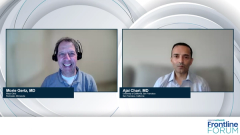
Insights of MAIA, BENEFIT, and IMROZ Trials on Frontline Treatment for Transplant Not-Preferred NDMM
Panelists discuss how recent clinical trials have demonstrated improved outcomes with antibody-containing regimens and biomarker-driven approaches in patients with transplant not-preferred newly diagnosed multiple myeloma (NDMM).
Advertisement
Episodes in this series
Video content above is prompted by the following:
- What are your perspectives on the data from the MAIA, BENEFIT, and IMROZ trials?
- How does the data impact frontline treatment for patients with NDMM who are not transplant-preferred?
Advertisement
Related to this article

“If it is successful, you should be able to access this combination wherever you are,” said Natalie S. Callander, MD, of the UW Carbone Cancer Center.

Data from the phase 3 CERVINO trial support the application for etentamig as a treatment for adults with relapsed or refractory multiple myeloma.
The MagnetisMM-32 trial may support elranatamab as an important option for those whose disease has progressed following anti-CD38 therapy and lenalidomide.

In the phase 1/2 Bela-DRd study, over 90% of patients responded to belantamab mafodotin plus daratumumab, lenalidomide, and dexamethasone.

Matthew J. Frigault, MD, and Adam D. Cohen, MD, discuss guidelines, 5-year data, sequencing, and referral practice for cellular therapy in multiple myeloma.
Advertisement
Advertisement
Trending on CancerNetwork
1
Predicting Severe Immune-Related Toxicities in Lung Cancer Immunotherapy
2
Sacituzumab Govitecan PFS Benefit Holds Across Subgroups in Untreated mTNBC
3
Can a Selinexor Quadruplet Treat Myeloma After T-Cell Redirecting Therapy?
4
EU Approves T-DXd for HER2+ Early Breast Cancer With Residual Disease
5