

Career Center
Trending on CancerNetwork
1
INTerpath-001 Data Detail Survival, Subgroup, and Safety Findings in Melanoma
2
Tarlatamab Maintenance Combo Extends Survival in Extensive-Stage SCLC
3
Apalutamide/ADT Improves EFS vs Surgery Alone in High-Risk Prostate Cancer
4
Belantamab Mafodotin Combo Yields High MRD Negativity in NDMM
5
Top Takeaways for Renal Cell Carcinoma From The 2026 ESMO Congress
Latest News








Advertisement
Shorts

1:05
Addressing Metabolic Dysregulation to Reduce Breast Cancer Disparities
a day ago
by
Patricia Robinson, MD
1:13
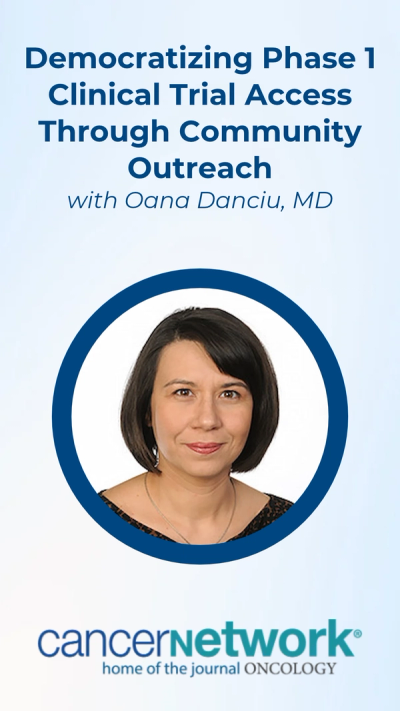
Democratizing Phase 1 Clinical Trial Access Through Community Outreach
2 days ago
by
Oana Danciu, MD

1:24
When Should FRα, HER2, and PD-L1 Be Retested in Ovarian Cancer?
3 days ago
by
Ursula A. Matulonis, MD
1:08
Every Patient With Ovarian Cancer Should Have a Shot at a Topo-1 Payload ADC
4 days ago
by
Ursula A. Matulonis, MD

1:11
Could Lower Hemoglobin Predict Lung Cancer Survival?
4 days ago
by
Mingjia Li, MD

0:35
I-SABR Trial Demands “Serious Attention” in Early-Stage NSCLC
5 days ago
by
Brandon Mancini, MD, MBA, FACRO

0:50
How Does PACE-A Shift the Conversation for Localized Prostate Cancer Care?
6 days ago
by
Brandon Mancini, MD, MBA, FACRO

1:25
Addressing the Challenges of VEGF Inhibition in Tumor Vasculature
7 days ago
by
Jan Kitajewski, PhD
1:09
Advancing HIV-Associated Lymphoma Care Through Multi-Institutional Collaboration
15 days ago
by
Paul Rubinstein, MD

1:08
Can Robotic Systems Limit Ergonomic Injury for Interventional Radiologists?
17 days ago
by
Zachary L. Bercu, MD, RPVI, FSIR








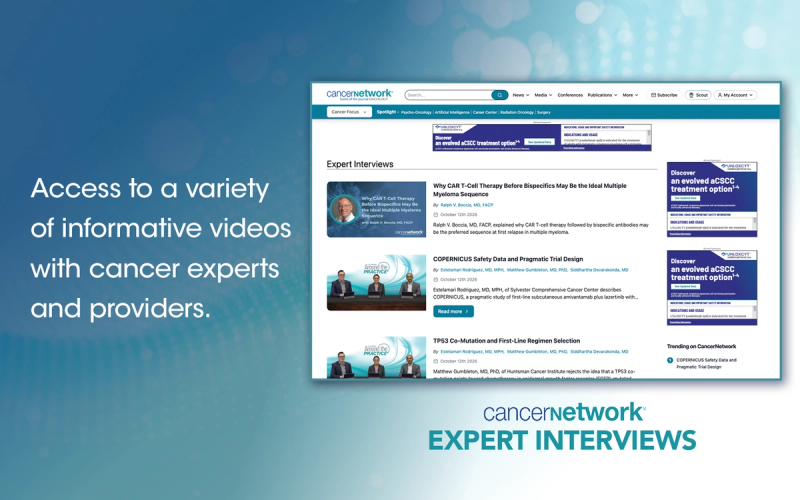
Videos



September ONCOLOGY Publication
The September issue of ONCOLOGY features a rare case study on glioblastoma, discussions on end-of-life care, and insights into the field of pediatric oncology.

ONCOLOGY On The Go Podcast
Listen to our latest episode of ONCOLOGY on The Go with insights from expert multidisciplinary professionals across the oncology space.

Find Us On YouTube
CancerNetwork in now on YouTube! We'll be discussing in-depth topics, and speaking with top leaders in the oncology space.

CancerNetwork® Oncology Career Center
Your next job in oncology is just a click away! Explore positions across the cancer care industry with CancerNetwork® Oncology Career Center.

Subscribe to Our eNewsletter Today!
Get comprehensive coverage for the multidisciplinary oncology community with accurate, credible, and timely news and expert insights.





















































Advertisement
All News
Advertisement

Long-term PEACE-1 data showed that adding abiraterone acetate plus prednisone to standard of care extended median OS by 1.5 years in de novo metastatic CSPC.
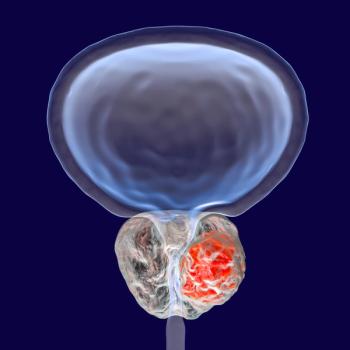
Adding perioperative apalutamide and ADT to radical prostatectomy reduced the risk of an oncologic event or death by 62% in high-risk prostate cancer.
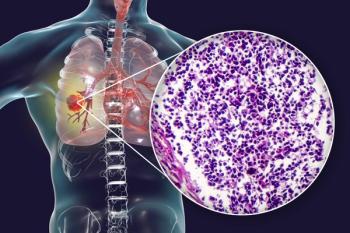
The phase 3 DeLLphi-305 trial may support tarlatamab plus durvalumab as a new standard-of-care frontline maintenance option in extensive-stage SCLC.

Full INTerpath-001 data at ESMO 2026 detail OS, subgroup, and safety results with intismeran plus pembrolizumab in resected stage IIB to IV melanoma.

In the phase 1/2 Bela-DRd study, over 90% of patients responded to belantamab mafodotin plus daratumumab, lenalidomide, and dexamethasone.

“The more representation, the more people we have participating in clinical trials, the more applicable the data,” said Patricia A. Robinson, MD.

In the phase 3 TANGENT trial, an 8-week course of emactuzumab improved objective response rate vs placebo in patients with tenosynovial giant cell tumor.

In an exploratory KEYNOTE-B15 analysis, ctDNA clearance was higher with enfortumab vedotin plus pembrolizumab than with cisplatin and gemcitabine.

Subgroup analyses of the phase 3 RASolute 302 trial showed overall survival favored daraxonrasib over chemotherapy in metastatic pancreatic cancer.
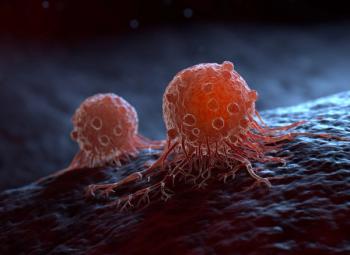
Adding pembrolizumab to carboplatin and etoposide improved response rates and OS vs chemotherapy alone in metastatic NEPC in KEYNOTE-365 cohort I.
Advertisement

Posters covered a companion diagnostic for niraparib plus AAP, response biomarkers for radioligand therapy, and genomic profile differences in metastatic CRPC.

Six-year NATALEE data show ribociclib plus an NSAI reduced the risk of death by 19% vs NSAI alone in HR+/HER2- early breast cancer.

Final NSABP B-42 data show 5 additional years of letrozole improved DFS, BCFI, and distant recurrence vs placebo at 15 years, with no OS difference.

Perioperative pembrolizumab plus neoadjuvant cisplatin and gemcitabine did not significantly improve EFS vs placebo in cisplatin-eligible MIBC in KEYNOTE-866.

Hope S. Rugo, MD, FASCO, and Irene M. Kang, MD, discussed ASCENT-03, -04, and TROPION-Breast02 data, sequencing, and toxicity in metastatic TNBC.

Pope Leo XIV’s lung adenocarcinoma diagnosis may increase awareness and combat stigma surrounding lung cancer screening.
Helena A. Yu, MD, discusses the background of REZILIENT3 and her key takeaways on zipalertinib in EGFR exon 20-mutated NSCLC.
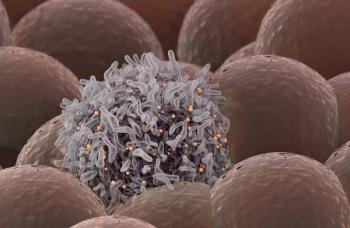
Intismeran autogene plus pembrolizumab cut the risk of recurrence or death by 42% vs pembrolizumab alone in resected stage IIB-IV melanoma.

Oana Danciu, MD, explained why phase 1 breast cancer trials are moving earlier in the treatment course and how disease stability guides patient selection.
The FDA based its approval of pembrolizumab on findings from the phase 2 KEYNOTE-158 trial.

Matthew J. Frigault, MD, and Adam D. Cohen, MD, discuss guidelines, 5-year data, sequencing, and referral practice for cellular therapy in multiple myeloma.

ESMO Congress 2026 will feature updated findings on KRAS inhibitors, bispecific T-cell engagers, and other key modalities in the lung cancer field.

The acoustic coupling fluid is under substantive FDA review after a pivotal study of 44 patients reported improved ultrasound image quality during glioma surgery.
In the phase 2 TRUCE-04 trial, disitamab vedotin/tislelizumab produced a 73.1% complete response rate in high-risk, ERBB2-positive NMIBC.

Adults in the US with previously treated locally advanced or metastatic NSCLC harboring EGFR exon 20 insertion mutations can now access sunvozertinib.

“What has changed is that we are bringing the phase 1 trials earlier in the course of treatment for our patients,” said Oana Danciu, MD.

Experts preview 6 breast cancer trials to watch at ESMO 2026, including KEYNOTE-B49, evERA, DESTINY-Breast11, SWITCH, PANKU-Breast01, and VIKTORIA-1.

An expert highlights OrigAMI-4, iza-bren plus pembrolizumab, GORTEC IDEAL, and HexAgon-HN ahead of the ESMO Congress 2026.

Lisa Carter-Bawa, PhD, APRN, discusses policy barriers, arts-based outreach, AI, and stigma in lung cancer screening.

Experts highlight updated findings from CARTITUDE-2, how to mitigate late toxicities, and other key considerations in the modern multiple myeloma landscape.

Immune checkpoint inhibitors have reshaped treatment for extensive-stage small cell lung cancer, though their role in limited-stage disease remains uncertain.

Cosibelimab is now a preferred, category 2A NCCN option for locally advanced CSCC when curative surgery or radiation is not feasible.

Sofetabart mipitecan produced responses in heavily pretreated high-grade ovarian cancer regardless of folate receptor α expression or prior mirvetuximab soravtansine.
Advertisement
Advertisement