
Panelists discuss how keeping management of dermatologic adverse effects “in-house” with oncology teams is often preferable to referring patients to dermatologists, though some patients occasionally benefit from specialized care for nail issues.
Panelists discuss how keeping management of dermatologic adverse effects “in-house” with oncology teams is often preferable to referring patients to dermatologists, though some patients occasionally benefit from specialized care for nail issues.
Panelists discuss how regular monitoring, patient education about reporting symptoms promptly, and visual assessment during biweekly visits are essential for effectively managing dermatologic adverse events.

Jennifer Moliterno, MD, FAANS, discusses current neurosurgical strategies for maximizing safe resection in newly diagnosed high-grade gliomas.
Oncology clinicians can effectively collaborate with neuroradiologists using advanced techniques to improve brain tumor characterization.

Treatment with lorlatinib might be effective regardless of the presence of central nervous system metastases, according to Misako Nagasaka, MD, PhD.
Nicholas Blondin, MD, discusses the latest advancements in immunotherapy for brain cancer as well as emerging strategies, including CAR T-cell therapy.
Most central nervous system events with lorlatinib were grade 1 or 2 in the phase 3 CROWN trial.
Panelists discuss how shared decision-making in treatment selection involves considering factors such as treatment convenience, efficacy duration, toxicity profile, access to care, and financial impact, ensuring that the chosen approach aligns with the patient’s preferences, lifestyle, and overall well-being.
Panelists discuss how selecting CAR T therapies or bispecific antibodies for relapsed/refractory follicular lymphoma (R/R FL) depends on factors such as disease characteristics, prior treatment responses, performance status, CD20 expression, and overall patient health, emphasizing the importance of a personalized approach to treatment decisions.
Treatment with lorlatinib did not increase cardiovascular events among patients with ALK-positive non–small cell lung cancer in the CROWN trial.
Having all the necessary staff together, from medical oncologists to pharmacists, helps deliver the best possible outcomes to patients with cancer.
At 5 years, 60% of patients who received lorlatinib in the phase 3 CROWN study achieved progression-free survival.
Joseph C. Landolfi, DO, CPE, and Michele Morrison, MPH, BSHA, RN, discuss how they can use their leadership roles to improve cancer care.
Findings from prior studies, such as the phase 3 VISION trial, may support the notion of combining radiopharmaceuticals with best supportive care.
Panelists discuss how conventional chemotherapy remains a key frontline treatment for advanced or metastatic epithelioid sarcoma (ES), while emerging targeted therapies, guided by molecular profiling and biomarkers like INI1 loss, offer personalized treatment options for patients with specific molecular alterations.
Leaders of a new cancer center, which is part of JFK University Medical Center, discuss how they can support frontline clinicians.
Panelists discuss how a multimodal frontline treatment approach for epithelioid sarcoma (ES)—combining surgery, radiation, and systemic therapies—should be tailored to tumor resectability, disease stage, and patient-specific factors such as molecular characteristics and overall health.

CAR T-cell therapy initially developed for mantle cell lymphoma was subsequently assessed in marginal zone lymphoma.

Panelists discuss how optimizing tarlatamab administration requires effective multidisciplinary team collaboration, with oncology, pharmacy, neurology, and nursing coordinating on treatment plans, patient monitoring, and adverse event management to ensure consistent, comprehensive care.
Panelists discuss how the administration of tarlatamab requires thorough pretreatment screening, staff training, and close monitoring for immune-related adverse effects such as cytokine release syndrome, emphasizing the importance of patient education, rapid intervention, and specialized infrastructure for safe and effective treatment.
The efficacy of the BOVen regimen in chronic lymphocytic leukemia facilitated its evaluation in patients with mantle cell lymphoma.
Panelists discuss how the standardized COCOON regimen offers clear guidance for managing dermatologic adverse effects, with specific components such as clindamycin lotion for the scalp and chlorhexidine wash for nails showing effectiveness.
Panelists discuss how patients have been receptive to the proactive management approach that effectively reduces dermatologic adverse effects, despite initial concerns about adding multiple prophylactic interventions.
Beta emitters such as lutetium Lu 177 rosopatamab may offer built-in PSMA imaging during the treatment of patients with metastatic castration-resistant prostate cancer.
Results from cohort 4 of the phase 2 SunRISe-1 trial showed TAR-200 elicited a 6- and 9-month DFS rate of 85.3% and 81.1%, respectively, in BCG-unresponsive NMIBC.
Ongoing ctDNA analysis may elucidate outcomes associated with divarasib plus migoprotafib for those with KRAS G12C–positive NSCLC.
Panelists discuss how evaluating zanubrutinib in combination with obinutuzumab involves considering patient comorbidities, disease characteristics, and previous treatments, with a focus on tolerability, adverse-effect profiles, and patient preferences to guide optimal treatment choices.
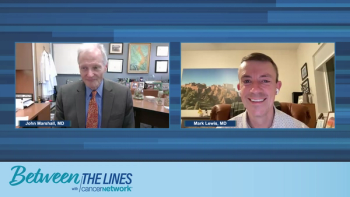
Panelists discuss how research on circulating tumor DNA (ctDNA) testing in colorectal cancer requires careful consideration of standardized collection protocols, analytical validation, clinical utility assessment, integration with existing biomarkers, and longitudinal monitoring to establish its role in personalized treatment decision-making.
Panelists discuss how the updated NCCN Guidelines now recommend tazemetostat for the treatment of advanced epithelioid sarcoma, regardless of EZH2 mutation status, based on clinical trial data showing significant clinical benefits and improved progression-free survival in patients with both mutated and non-mutated disease.
Panelists discuss how circulating tumor DNA (ctDNA) testing serves as a complementary tool to traditional imaging in challenging colorectal cancer cases, offering molecular-level insights that can detect disease recurrence earlier, resolve ambiguous radiographic findings, and inform treatment decisions when conventional assessment methods yield inconclusive results.