William A. Hall, MD, reviews resection rates, surgical complications, and SBRT target volumes from the SOFT Preop study in pancreatic cancer.
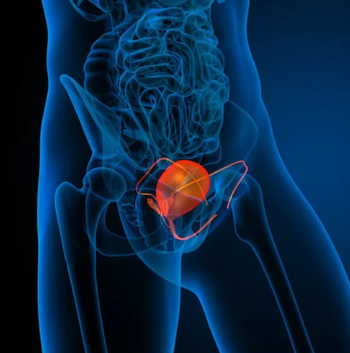
Marcio A. Fagundes, MD, discussed disease control by risk group among 404 patients with prostate cancer treated with intensity-modulated proton therapy.
In an interview with CancerNetwork®, at the
The study included 404 patients with prostate cancer treated with IMPT at the institution between 2018 and December 2023. With a median follow-up of more than 4 years, recurrences were rare among patients with intermediate-risk disease and somewhat more frequent among those with high- and very high–risk disease. Most patients in the high- and very high–risk groups also received pelvic nodal irradiation.
Transcript:
Fagundes: When we talk about biochemical disease control, we are talking about patients with prostate cancer whom we treat and whose [prostate-specific antigen (PSA)] goes down and does not come back up. Biochemical recurrence is defined as a rise in PSA that may be caused by recurrence of cancer. In a patient who is treated successfully, we expect the PSA to remain low. In patients with favorable intermediate- or unfavorable intermediate-risk [disease], the results are generally better, with a better than 90% chance of remaining free of disease recurrence. In patients with high-risk or very high–risk disease, the recurrence risk may be in the range of 10% to 20%.
This is not a comparative study [against patients who did not receive protons]. This study reports on WCI’s experience treating patients with prostate cancer with proton therapy between 2018 and December 2023. This is the first report of the initial 404 patients, all of whom were treated with proton therapy.
What is interesting is that in patients with high-risk and very high–risk [disease], a substantial number, the majority, also received pelvic nodal radiation as part of their treatment. That is because these patients have an increased risk of cancer spreading to the lymph nodes. Proton therapy can treat the pelvic lymph nodes without increasing the risk of [adverse] effects like diarrhea. The treatment is safer in that sense, and we are giving the same effective dose as you would with conventional radiation, which is intensity-modulated photon radiation.
Fagundes MA, Hassan H, Rodrigues M-A, et al. Intensity modulated proton therapy (IMPT) for localized prostate cancer: disease control outcomes in intermediate to very-high risk patients. Presented at: 2026 ASTRO Annual Meeting; September 26-30, 2026; Boston, MA. Abstract PQA 06.