

Logo Image
News
Global BulletinAll NewsFDA Approval AlertWomen in Oncology
Watch
Expert ConversationsShows & PodcastsNews & Analysis
Conferences
Publications
All JournalsEditorial BoardFor AuthorsYear in Review
More
Events
Frontline ForumSatellite Sessions
CME/CE
Resources
Awareness MonthThe Bispecifics NetworkNurse Practitioners/Physician's AssistantsPartnersSponsoredSponsored Media
Career Center

Subscribe

  • News
  • Watch
  • Conferences
  • Publications
  • Events
  • CME/CE
  • Resources
  • Career Center
  • Subscribe
  • Adverse Effects
  • Artificial Intelligence
  • Brain Cancer
  • Breast Cancer
    • HER2-Positive Breast Cancer
    • Triple-Negative Breast Cancer
  • Gastrointestinal Cancer
    • Colorectal Cancer
    • Esophageal Cancer
    • Pancreatic Cancer
    • Gastric Cancer
    • Liver Cancer
  • Genitourinary Cancers
    • Kidney Cancer
    • Bladder Cancer
    • Prostate Cancer
  • Gynecologic Cancers
    • Endometrial Cancer
    • Ovarian Cancer
    • Cervical Cancer
  • Head & Neck Cancer
  • Hematologic Oncology
    • Multiple Myeloma
    • Myelodysplastic Syndromes
    • Myeloproliferative Neoplasms
  • Infection
    • Vaccines
  • Leukemia
  • Lung Cancer
    • Small Cell Lung Cancer (SCLC)
    • Non-Small Cell Lung Cancer (NSCLC)
  • Lymphoma
  • Neuroendocrine Tumors
  • Oncology
  • Pediatric Cancers
  • Psycho-Oncology
  • Radiation Oncology
  • Sarcoma
  • Screening
  • Skin Cancer & Melanoma
  • Surgery
  • Thyroid Cancer
Spotlight -
Psycho-Oncology|
Artificial Intelligence|
Career Center|
Radiation Oncology|
Surgery
Advertisement

Catherine R. Lewis, MD, PhD

Advertisement

Articles by Catherine R. Lewis, MD, PhD

Granulosa cell tumors exhibit late recurrence and rare hepatic metastasis, emphasizing the need for lifelong surveillance in affected patients.
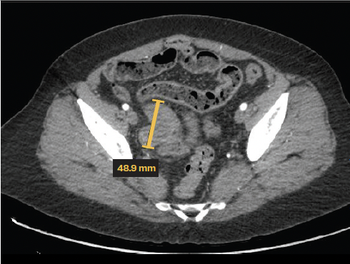
Late Hepatic Recurrence From Granulosa Cell Tumor: A Case Report

ByProsper Akankwasa, MBBS,Jackson Kakooza, MBBS,Aisha Abdullahi Ahmed, MBBS,Catherine R. Lewis, MD, PhD
October 28th 2025

Granulosa cell tumors exhibit late recurrence and rare hepatic metastasis, emphasizing the need for lifelong surveillance in affected patients.

Synchronous Well-Differentiated Papillary Mesothelioma and Endometrioid Adenocarcinoma Arising From Endometriosis

ByCatherine R. Lewis, MD, PhD,Jocelyn Uchic-Boccella, DO,Jenna Zimmerman, MD,Eirwen Miller, MD,Sharon Liang, MD,Patrick L. Wagner, MD, MPH
May 16th 2024

Learn more about a 56-year-old woman diagnosed with well-differentiated papillary mesothelioma, and how she was diagnosed and properly treated.

Advertisement

Latest Updated Articles

  • Synchronous Well-Differentiated Papillary Mesothelioma and Endometrioid Adenocarcinoma Arising From Endometriosis
    Synchronous Well-Differentiated Papillary Mesothelioma and Endometrioid Adenocarcinoma Arising From Endometriosis

    May 16th 2024

  • Granulosa cell tumors exhibit late recurrence and rare hepatic metastasis, emphasizing the need for lifelong surveillance in affected patients.
    Late Hepatic Recurrence From Granulosa Cell Tumor: A Case Report

    October 28th 2025


Advertisement
Advertisement

Trending on CancerNetwork

1

Real-World Teclistamab Shows Deep Responses in R/R Multiple Myeloma Cohort

2

ArteraAI Prostate Test Added to NCCN Guidelines for BCR After Prostatectomy

3

Adding Pembrolizumab to SBRT Does Not Improve EFS in Early-Stage NSCLC

4

Virtuoso Robotic System Earns FDA De Novo Nod for En Bloc Bladder Resection

5

Identifying Which Patients With HCC Need Immunotherapy Before Liver Transplant

  • About
  • Advertise
  • CureToday.com
  • OncLive.com
  • OncNursingNews.com
  • TargetedOnc.com
  • Editorial
  • Contact
  • Terms and Conditions
  • Privacy
  • Do Not Sell My Personal Information
Contact Info

259 Prospect Plains Rd, Bldg H
Cranbury, NJ 08512

Brand Logo

© 2026 MJH Life Sciences®

All rights reserved.

Home
About Us
News
Contact Us