
No doubt you’ve already been struck by how different the cover of this issue of ONCOLOGY looks. We hope you like our new look! More importantly, we hope you’ll like the new features we've added.
No doubt you’ve already been struck by how different the cover of this issue of ONCOLOGY looks. We hope you like our new look! More importantly, we hope you’ll like the new features we've added.

Now is a critical moment for all involved in caring for cancer patients to engage in this national policy debate; numerous cancer advocacy organizations have already joined the effort to oppose the sequester cuts to oncology drugs.
Remarkably, within 2 years of the introduction of ipilimumab and vemurafenib into the clinic, major new advances have been reported in both the immune checkpoint blockade and small-molecule kinase inhibition arenas.
We will absolutely need to continue our endeavors to evaluate reliable predictive biomarkers for both targeted drugs and immunotherapeutic agents to achieve a truly personalized melanoma therapy with the maximal clinical benefit.
A number of drugs have been approved that result in significant tumor responses. While many of these new drugs are associated with improved clinical outcomes, much more work in this area is essential, as most patients have tumors without such molecular features.
If we are to provide new options for the large numbers of NSCLC patients with no actionable mutation, we must focus on identifying new mutations through tissue acquisition. In the meantime, these patients are ideal candidates for the large number of available immunotherapy trials.
Drugs targeting different metabolic pathways induced in tumors may be used in combination with one another to induce synthetic lethality in cancer cells, while preserving the survival of normally proliferating cells.
Since Otto Warburg first formulated his theory on the importance of metabolism in cancer, our knowledge of this process and of its complexity has expanded, as has our ability to target many metabolic pathways that are undoubtedly necessary for cancer proliferation.

I looked after one of my partner’s patients who is approaching death from advanced, refractory ovarian cancer. She asked me not to talk about anything negative with her. We can’t really make any decisions without discussing negative things. Should I just remain silent about them at her request?
The majority of patients with systemic prostate cancer treated with androgen deprivation therapy (ADT) will develop castration-resistant prostate cancer (CRPC).
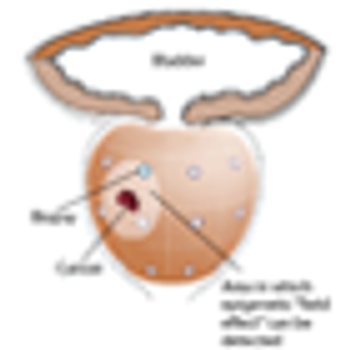
A 46-year-old man sought consultation for an abnormal prostate-specific antigen (PSA) level of 9 ng/mL and one prior negative biopsy. Five months ago, while traveling, he had presented to an urgent care facility with a 24-hour history of fever, chills, nausea, and vomiting.
Within the relatively short time that ipilimumab and vemurafenib have been commercially available, phase II data for the investigational agents nivolumab and MK-3475, for the combination of dabrafenib and trametinib, and for adoptive cell therapy strongly suggest even further improvements in treatment outcomes.
This review will describe the well-known use of VEGF antibodies; the current uses of EGFR and ALK tyrosine kinase inhibitors; newer agents being used against MET, FGFR, and other intracellular targets; insights regarding the field of immunotherapy in lung cancer; and finally, newer developments in chemotherapy.
Highlights from the 2013 AACR Meeting.
Until better evidence is available for the effects of soy on women from non–soy-consuming countries, it seems reasonable to limit consumption to soyfoods, and to avoid high-dose supplements of processed soy components.
Soyfoods are consumed by many because of cultural factors, for potentialThere are strongly conflicting data regarding soy intake and breast cancer. As such, if women (with or without breast cancer) enjoyed partaking of soy products, then it seems quite reasonable for them to partake of them. As with most things, moderation in intake is probably wise. beneficial effects on overall health, and for the unproven hope that they will ease menopausal symptoms in women.[1]

Recently published research questions the need for the advised restriction against the use of soyfoods by women with a history of breast cancer.
Ongoing studies are attempting to understand the reasons that tumor cells engage in aerobic glycolysis in lieu of oxidative phosphorylation. In this review, we discuss known benefits to tumor cells from this metabolic switch, and we highlight key enzymes that play a role in aerobic glycolysis. We also describe novel therapeutic options targeting glucose metabolism.
If systemic treatment is effective enough to reliably control not only microscopic but also bulky disease, there will be little role for radiotherapy. And if systemic treatment cannot even reliably control microscopic disease, let alone macroscopic disease, there will be little role for radiotherapy, either. However, there are patients who fall into neither of these categories, and in them radiotherapy may well have a role.
DLBCL of any stage remains a systemic disease with early hematogenous spread. Thus, arguments advocating the role of IFRT do not truly address disease biology, and all future efforts to cure patients will require improved systemic therapy.