
Shorts

At the Big Ten Cancer Research Consortium Summit, Jan Kitajewski, PhD, detailed the therapeutic limitations of relying on systemic VEGF inhibitors to target tumor blood vessels.
1:25
Addressing the Challenges of VEGF Inhibition in Tumor Vasculature
19 hours ago
by
Jan Kitajewski, PhD
Paul Rubinstein, MD, highlighted the critical role multi-institutional networks play in advancing clinical research for rare cancer populations, particularly patients living with both HIV and cancer.
1:09
Advancing HIV-Associated Lymphoma Care Through Multi-Institutional Collaboration
9 days ago
by
Paul Rubinstein, MD
Zachary L. Bercu, MD, RPVI, FSIR, discussed how ergonomic strain from wearing lead in the angio suite, rather than radiation exposure itself, is the leading source of disability among interventional radiologists.
1:08
Can Robotic Systems Limit Ergonomic Injury for Interventional Radiologists?
11 days ago
by
Zachary L. Bercu, MD, RPVI, FSIR
Do Video Game Players Adapt Faster to Endovascular Robotics?
1:07
Do Video Game Players Adapt Faster to Endovascular Robotics?
12 days ago
by
Zachary L. Bercu, MD, RPVI, FSIR
How Does the PEDRA Portable Endovascular Robot Work?
1:21
How Does the PEDRA Portable Endovascular Robot Work?
13 days ago
by
Zachary L. Bercu, MD, RPVI, FSIR
Neeraj Agarwal, MD, FASCO, explained why delaying the onset of castration-resistant prostate cancer is crucial for preventing pain, fractures, and suffering in metastatic castration-sensitive disease.
1:18
TALAPRO-3 Data Show Striking 52% Reduction in CRPC Progression Risk
19 days ago
by
Neeraj Agarwal, MD
Neeraj Agarwal, MD, FASCO, explains why moving highly effective combination therapies upfront in metastatic castration-sensitive prostate cancer maximizes outcomes and prevents patient attrition.
1:15
Why Frontline Talazoparib/Enzalutamide Therapy Is Critical in Metastatic CSPC
19 days ago
by
Neeraj Agarwal, MD

Jason Konner, MD, highlighted the importance of expanding provider education to better guide post-journey patient conversations.
1:19
How Can Health Systems Foster Psychedelic Literacy in Oncology?
21 days ago
by
Jason Konner, MD
Elizabeth Thompson, MD, discussed why long-term toxicity plays a larger role in treatment decisions for pediatric patients with cancer compared with adults.
1:13
Why Long-Term Toxicity Weighs More Heavily in Pediatric Cancer Treatment Decisions
22 days ago
by
Elizabeth Thompson, MD

Elizabeth Thompson, MD, explained why smaller, retrospective studies often carry more influence in pediatric oncology than they would in adult oncology.
1:26
What Makes a Strong Pediatric Oncology Manuscript?
23 days ago
by
Elizabeth Thompson, MD

Faisal Mehmud, MD, MRCP, discussed the cardiovascular risks of androgen deprivation therapy for prostate cancer.
1:22
How Do GnRH Agents Impact Cardiovascular Risk in Prostate Cancer?
24 days ago
by
Faisal Mehmud, MD, MRCP
For patients achieving deep, sustained minimal residual disease–negative responses, multiple myeloma should no longer automatically be considered an incurable disease, according to Meletios Dimopoulos, MD.
1:18
Defining Cure and Long-Term MRD Negativity in Multiple Myeloma
25 days ago
by
Meletios A. Dimopoulos, MD
In a conversation with CancerNetwork®, Misako Nagasaka, MD, PhD, spoke about what findings from the phase 2 PALOMA-2 trial (NCT05498428), which evaluated subcutaneous amivantamab (Rybrevant Faspro) plus lazertinib (Lazcluze), means for the treatment of patients with EGFR-mutated non–small cell lung cancer (NSCLC).
0:57
Subcutaneous Amivantamab Combo is Emerging, Convenient Standard in NSCLC
a month ago
by
Misako Nagasaka, MD, PhD
Julie M. Vose, MD, MBA, broke down 3-year PFS data from the CLL 17 trial, showing approximately 80% PFS across continuous ibrutinib, fixed-duration venetoclax-obinutuzumab, and venetoclax-ibrutinib arms.
0:32
CLL 17 Data: Equivalent 3-Year PFS Across Arms, Long-Term Questions Remain
a month ago
by
Julie M. Vose, MD, MBA
What presentations are shaking up to be the biggest updates at the IASLC 2026 World Conference on Lung Cancer (WCLC)?
0:59
WCLC 2026: The Big Sessions to Watch Across SCLC and NSCLC
a month ago
by
Benjamin Herzberg, MD
Following the FDA accelerated approval of iberdomide (Zenbexus) plus daratumumab and hyaluronidase-fihj (Darzalex Faspro) and dexamethasone for patients with relapsed/refractory multiple myeloma, Surbhi Sidana, MD, discussed what clinicians should expect when it comes to administering the novel CELMoD.
0:53
CELMoD Approval Brings “Familiar” Dosing Protocols to Multiple Myeloma
2 months ago
by
Surbhi Sidana, MD
Nevine Hanna, MD, MPH, FACRO, DABR, expressed that true AI-driven progress in cancer care hinges on seamlessly integrating disjointed data streams while maintaining rigorous privacy standards.
1:26
How Can Solving Data Fragmentation Help Unlock AI's Potential in Oncology?
2 months ago
by
Nevine Hanna, MD, MPH, FACRO, DABR
According to Nicholas Hornstein, MD, PhD, daraxonrasib is now an option for patients who are simply not “up” for systemic chemotherapy.
1:29
Daraxonrasib’s Approval is for All Comers with Pancreatic Cancer
2 months ago
by
Nicholas James Hornstein, MD, PhD
Nevine Hanna, MD, MPH, FACRO, DABR, emphasized that AI in oncology isn't replacing clinical judgment but eliminating systemic friction to give physicians time back with their patients.
0:49
How Can AI Preserve the Human Connection in Cancer Care?
2 months ago
by
Nevine Hanna, MD, MPH, FACRO, DABR
Speaking with CancerNetwork®, Barbara Burtness, MD, highlighted how subcutaneous administration could simplify delivery, while noting that managing associated adverse effects will remain vital across care settings.
1:20
Streamlining Subcutaneous Amivantamab Administration in HNSCC Workflows
2 months ago
by
Barbara Burtness, MD
In a conversation with CancerNetwork®, Barbara Burtness, MD, explained how co-targeting EGFR and MET addresses key pathways involved in epithelial-to-mesenchymal transition (EMT) and treatment resistance.
1:32
Targeting EGFR and MET Resistance Pathways in HPV-Independent HNSCC
2 months ago
by
Barbara Burtness, MD
Multidisciplinary Care Key to Success in Robotic Whipple Pancreatic Surgery
0:51
Multidisciplinary Care Key to Success in Robotic Whipple Pancreatic Surgery
2 months ago
by
Mohamed Adam, MD
Yu-Wei Chen, MD, MS, of the University of California San Diego, highlighted promising therapeutic avenues from the 2026 Kidney Cancer Research Summit poised to shape the treatment landscape.
0:54
Emerging RCC Therapies: Casdatifan & PD-1/VEGF Bispecifics Signal Progress
2 months ago
by
Yu-Wei Chen, MD, MS
Yu-Wei Chen, MD, MS, shared insights on balancing efficacy and safety when considering novel combinations in the evolving adjuvant immunotherapy landscape for localized RCC.
1:24
Navigating Adjuvant Immunotherapy Selection in Localized RCC
2 months ago
by
Yu-Wei Chen, MD, MS
Edward S. Kim, MD, MBA, highlighted City of Hope's “just-in-time” trial activation protocol, which can open a specific clinical trial at a regional or community site in approximately 10 business days when a patient presents with a rare mutation.
1:14
How Can Health Networks Bring Clinical Trials Directly to Patients?
2 months ago
by
Edward S. Kim, MD, MBA
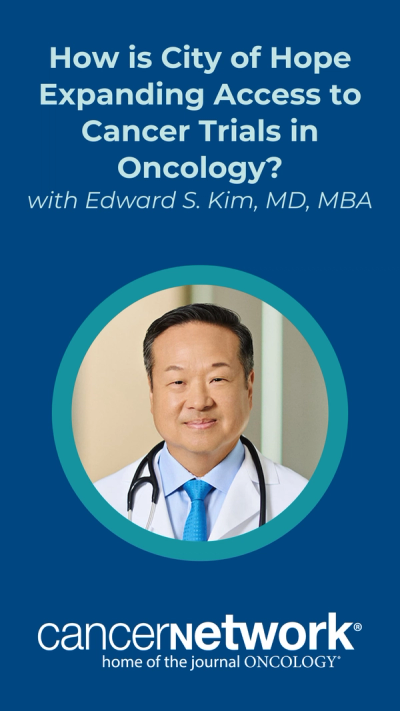
Edward S. Kim, MD, MBA, highlights City of Hope’s commitment to ensuring every patient has the opportunity to participate in clinical trials.
0:47
How is City of Hope Expanding Access to Cancer Trials in Oncology?
2 months ago
by
Edward S. Kim, MD, MBA
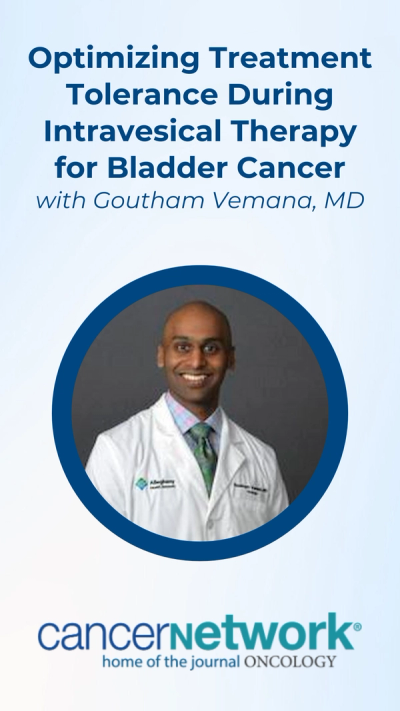
According to Goutham Vemana, MD, chair of the Department of Urology at Allegheny Health Network, proactive patient education and upfront symptom management are crucial for keeping patients on track with indwelling drug delivery devices.
1:02
Optimizing Treatment Tolerance During Intravesical Therapy for Bladder Cancer
2 months ago
by
Goutham Vemana, MD
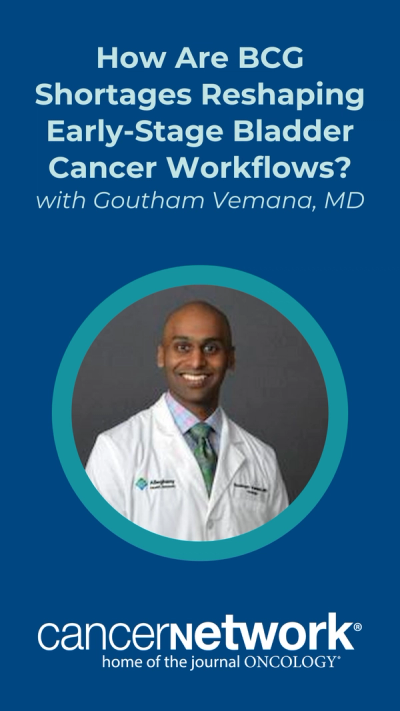
According to Goutham Vemana, MD, ongoing Bacillus Calmette-Guérin shortages across the US are driving patient anxiety and altering typical treatment sequences.
1:21
How Are BCG Shortages Reshaping Early-Stage Bladder Cancer Workflows?
2 months ago
by
Goutham Vemana, MD
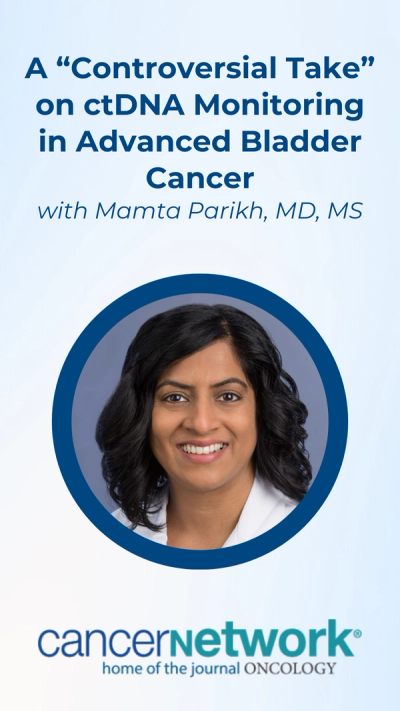
According to Mamta Parikh, MD, MS, patients who experience primary progressive disease within 6 months of starting this combination regimen often have highly aggressive, overt progression that serial ctDNA monitoring may not catch any earlier.
0:51
A “Controversial Take” on ctDNA Monitoring in Advanced Bladder Cancer
2 months ago
by
Mamta Parikh, MD, MS
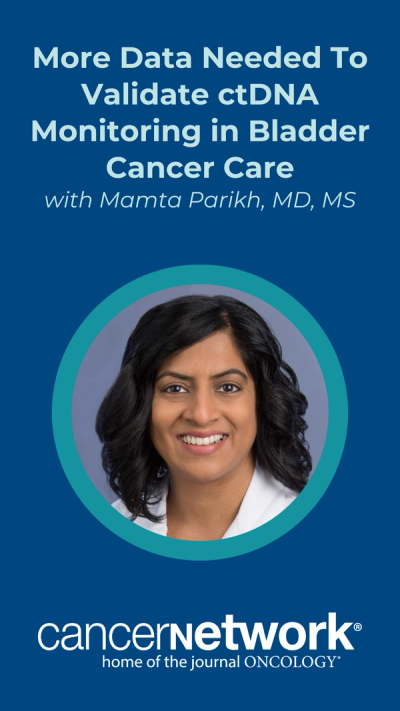
Mamta Parikh, MD, MS, cautioned that a current lack of robust prospective data makes interpreting and acting on results for ctDNA MRD monitoring  challenging for clinicians.
1:11
More Data Needed To Validate ctDNA Monitoring in Bladder Cancer Care
2 months ago
by
Mamta Parikh, MD, MS