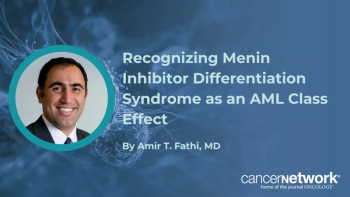
Amir T. Fathi, MD, outlines what menin inhibitors must show for frontline approval and how to manage differentiation syndrome.
Several pivotal trials reported meaningful improvements in survival at the 2026 ESMO Congress, offering new therapeutic opportunities for patients with historically difficult-to-treat cancers.
The European Society for Medical Oncology (ESMO) 2026 Congress in Madrid highlighted an extraordinary period of progress in cancer therapeutics. Across multiple malignancies, advances in immunotherapy, antibody-drug conjugates (ADCs), targeted therapies, and personalized cancer vaccines demonstrated the growing ability to translate our understanding of cancer biology into more effective treatments. Several pivotal trials reported meaningful improvements in survival, offering new therapeutic opportunities for patients with historically difficult-to-treat cancers.
One of the most exciting developments was the phase 3 INTerpath-001 trial (NCT05933577), which evaluated the individualized neoantigen vaccine
intismeran autogene plus pembrolizumab (Keytruda) for patients with completely resected stage IIB to IV melanoma.1 The addition of the personalized mRNA-based vaccine reduced the risk of recurrence or death by 42% compared with pembrolizumab alone (HR, 0.58). At 24 months, recurrence-free survival was 82.2% vs 70.0%, respectively. These findings demonstrate that individualized targeting of tumor-specific neoantigens enhances the effectiveness of established immunotherapy. Although overall survival (OS)data remain immature, the results provide compelling evidence supporting a therapeutic approach that may eventually extend across multiple malignancies.
Another major theme was the continued evolution of immunotherapy beyond conventional immune checkpoint inhibition. In extensive-stage small cell lung cancer, the phase 3 DeLLphi-305 trial (NCT06211036) demonstrated a substantial survival benefit with the addition of tarlatamab-dlle (Imdelltra), a DLL3-directed bispecific T-cell engager, to maintenance durvalumab (Imfinzi) following first-line chemotherapy and immunotherapy.2 Median OS improved from 12.7 to 21.1 months (HR, 0.42), representing a particularly meaningful advance in a disease characterized by aggressive biology and limited durable treatment options. These findings illustrate the potential for bispecific antibodies to redirect immune responses against tumors and expand the therapeutic impact of immunotherapy.
Similarly, the phase 3 VOLGA trial (NCT04960709) demonstrated the benefit of combining targeted drug delivery with immunotherapy in muscle-invasive bladder cancer.3 Among patients who were ineligible for or declined cisplatin-based chemotherapy, neoadjuvant enfortumab vedotin-ejfv (Padcev) plus durvalumab followed by adjuvant durvalumab significantly improved event-free survival (HR, 0.51) and OS (HR, 0.58) compared with radical cystectomy alone. These results further support the movement of highly active systemic therapies into earlier disease settings, where the potential for long-term disease control and cure may be greatest.
In breast cancer, the 6-year follow-up of the phase 3 NATALEE trial (NCT03701334) provided particularly important evidence supporting the integration of CDK4/6 inhibition into adjuvant treatment. In a prespecified descriptive analysis, ribociclib (Kisqali) plus endocrine therapy demonstrated an OS benefit vs endocrine therapy alone in patients with hormone receptor–positive, HER2-negative early-stage breast cancer (HR, 0.809).4 The absolute improvement in OS at 6 years was 2.1%, accompanied by a 5.3% improvement in invasive disease-free survival. Albeit descriptive rather than definitive, these findings are meaningful because they demonstrate that reductions in recurrence risk with CDK4/6 inhibition can translate into improved survival. They also reinforce the importance of selecting patients according to recurrence risk and anticipated absolute benefit when considering treatment intensification in the curative setting.
ADCs were another defining feature of ESMO 2026, with important advances reported across breast, gastrointestinal, gynecologic, and lung cancers. In HER2-low advanced breast cancer, the phase 3 HORIZON-Breast06 trial (NCT05814354) demonstrated that trastuzumab rezetecan significantly improved median progression-free survival (PFS) compared with physician’s choice of chemotherapy (16.4 vs 6.8 months; HR, 0.27).5 Similarly, the CLARITY-
Gastric01 trial (NCT06346392) demonstrated an OS benefit with the claudin 18.2–directed ADC sonesitatug vedotin in previously treated advanced gastroesophageal cancer,6 while the TroFuse-005 trial (NCT06132958) reported improved survival with sacituzumab tirumotecan in advanced or recurrent endometrial cancer.7 Collectively, these studies illustrate how ADCs are evolving into a versatile therapeutic platform with activity across multiple tumor types.
However, the increasing availability of effective therapies also introduces new challenges. As ADCs proliferate, understanding mechanisms of resistance, optimal sequencing, and overlapping toxicities will become increasingly important. Likewise, advances in adjuvant therapy raise questions regarding treatment duration, patient selection, and the balance between absolute clinical benefit and long-term toxicity. Improvements in PFS do not always translate into longer OS or better quality of life, underscoring the importance of evaluating outcomes that matter to patients.
For practicing oncologists, the central challenge is therefore shifting. We are no longer simply asking whether a new therapy is effective. Increasingly, we must determine which patients should receive it, when it should be introduced, how it should be sequenced with existing treatments, and whether its benefits justify the associated risks and burdens.
Perhaps the most important lesson from the ESMO 2026 Congress is that the future of cancer treatment will not be defined by any single therapeutic modality. Instead, progress will increasingly emerge from the integration of complementary approaches, including precision targeting, immune modulation, and novel drug-delivery technologies. The success of personalized cancer vaccines, bispecific antibodies, and next-generation ADCs suggests that strategies once considered experimental are beginning to demonstrate meaningful clinical benefits in randomized trials. ESMO 2026 offered an encouraging glimpse of that future. The challenge now is to translate this extraordinary scientific momentum into durable, meaningful benefits for patients across the cancer continuum.