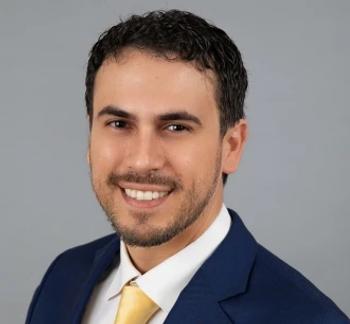
Brandon Mancini, MD, MBA, FACRO, discusses the presentations from ASTRO 2026 that may impact the future of prostate cancer, lung cancer, and other diseases.
Daniel C. McFarland, DO, and Xiomara Rocha-Cadman, MD, discussed why oncologist well-being depends on reflection, mentorship, and peer connection.
Wellness and burnout are often treated as 2 ends of the same seesaw: add enough yoga, sleep, and time off, and the scale tips back toward balance. In this conversation, Daniel C. McFarland, DO, and Xiomara Rocha-Cadman, MD, argue that this framing misses what actually drives distress in oncology. Drawing on years of clinical and mentorship experience tracing back to Memorial Sloan Kettering Cancer Center, the 2 physicians distinguish wellness, an active, ongoing practice, from well-being, the broader emotional and psychological state it supports.
They contend that oncology-specific stressors, repeated exposure to uncertainty, suffering, and death within close patient relationships, are qualitatively different from generalized workplace burnout and do not respond well to generic stress-reduction advice alone. Both describe personal experiences in which psychological defenses masked their own accumulating grief until it surfaced unexpectedly: Rocha-Cadman’s composure gave way after a patient’s death near the holidays, and McFarland noticed an uncharacteristic uptick in humor during his first year as an attending. Their shared conclusion is that engagement with patients, not emotional withdrawal, is the more durable protection against burnout.
The discussion also touches on mentorship, including Rocha-Cadman’s influence on McFarland’s own career, the difficulty of sustaining reflective practices like Balint-style process groups without institutional buy-in, lingering stigma around physicians seeking mental health care, and the value of peer awareness and stable interdisciplinary care teams. They point to a well-documented but under-discussed pattern in which rates of burnout run higher among physicians than in many comparable professions, often because clinicians hesitate to ask each other the same sensitive questions they would ask patients. Both physicians close by framing compassion for colleagues as inseparable from compassion for patients, arguing that clinicians must look out for one another because no institution or government will do it for them.
McFarland is the director of the Psycho-Oncology Program at Wilmot Cancer Center and a medical oncologist who specializes in head, neck, and lung cancer, in addition to being the psycho-oncology editorial advisory board member for the journal ONCOLOGY®. Rocha-Cadman is associate professor and chief of the Division of Psychiatry in the Department of Supportive Care Medicine at City of Hope.