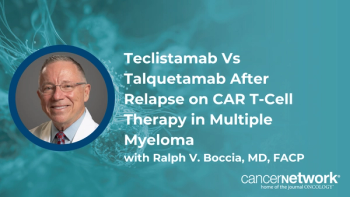
Ralph V. Boccia, MD, FACP, compared MRD data with Tec-Dara and Tal-Dara and explained how sustained MRD negativity is reshaping myeloma care.
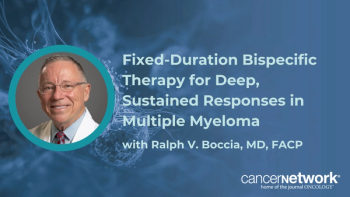
Ralph V. Boccia, MD, FACP, explained how community practices can build the workflow and capacity to deliver bispecific step-up dosing in an outpatient setting.
Ralph V. Boccia, MD, FACP, founder of The Center for Cancer and Blood Disorders, clinical associate professor at MedStar Georgetown University Hospital, and medical director of the International Oncology Network Clinical Research Program, described how community oncology practices can set up an outpatient program for bispecific antibody step-up dosing. Drawing on his experience administering T-cell–engaging therapies exclusively in the outpatient setting, both on clinical trials and with commercial products, Boccia noted that many trials initially required hospitalization but have since shown that step-up dosing can be delivered safely as an outpatient. He acknowledged that clinicians without hands-on experience may hesitate because of reported adverse events, and he suggested learning from peers or observing step-up dosing at an academic center. Most importantly, he emphasized building a workflow and a team that extends from the front desk through infusion and into posttreatment monitoring before starting bispecifics. As these agents move into earlier lines, he added, clinics will need to make room for them, including hiring additional staff.
This is a real challenge for people who don’t have the experience of having done some of these things themselves. I have the experience and the benefit of having done 4 bispecific trials and 4 CAR T trials, as an outpatient. All of my T-cell–engaging therapies have only ever been given exclusively in the outpatient setting. That’s my clinical trials, and since the drugs have been approved, the commercial use of those as standard of care.
What we initially had was the guidelines, or the roadmap, from the clinical trials. The clinical trials give you very defined lanes in which to practice and manage those patients. Many of the clinical trials that were originally hospital-observed or hospital-treated have since moved to the outpatient setting. Many of them initially enrolled hospitalized patients, and when we realized it was not necessary to admit them, we started doing clinical trials as an outpatient. Now we’ve done both: we have the original approval data and the follow-up studies that were done all as an outpatient. The data are out there that this can be done as an outpatient.
The problem is with colleagues who have never touched some of these agents in clinical trials. All they hear about are the adverse events, and without any experience, it’s hard to generate real confidence. If you work with peers who have done it, or if you’ve sent patients to a hospital or an academic center and watched how those patients got their step-up dosing, realized how little toxicity they had, and seen how the field is moving to all outpatient care, then it’s easy to get over that hurdle. Then you have to understand, from an organizational standpoint, how to develop a workflow that builds a team of people all the way from the front desk through the infusion area, including the health care providers in between, and then monitors patients afterward. Then it is something that can be done as an outpatient. That workflow and that organization are critical to set up before you start giving bispecifics.
The majority of clinics have some capacity. This is a new therapy that has taken over the hematologic malignancies, at least, and is now moving into solid tumors as well, as best available care and cutting-edge care. Clinics have to learn, and they have to make room for it. You may have to hire up to do some of these things. We’re all struggling a bit, of course, with hiring health care providers at all levels, but these therapies are here to stay, and we just have to figure out how to do it.