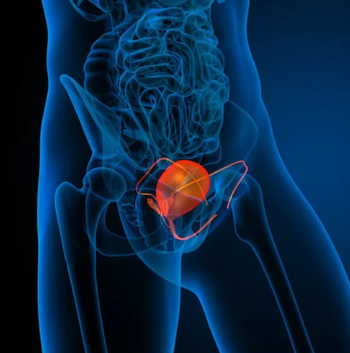
Marcio A. Fagundes, MD, explained how proton therapy and rectal spacers can reduce radiation exposure to the rectum, bowel, and bladder in prostate cancer.
At the 2026 ASTRO Annual Meeting, Marcio A. Fagundes, MD, discussed when proton therapy is most justified over photon approaches in prostate cancer.
In an interview with CancerNetwork®, at the
In Fagundes’ institutional study of 404 patients treated with intensity-modulated proton therapy between 2018 and December 2023, most patients with high- and very high–risk disease received pelvic nodal irradiation. He noted that his group is planning a multi-institutional study to define which end points best capture the difference between proton therapy and conventional radiation when pelvic lymph nodes are treated. Candidate end points include chronic diarrhea, bowel urgency, and other changes in quality of life.
Fagundes is vice chair of Radiation Oncology, director of International Outreach, and a radiation oncologist at Baptist Health Herbert Wertheim Cancer Institute (WCI) in Miami, Florida.
Transcript:
Fagundes: Prioritizing proton therapy is most justified, or easiest to demonstrate, when we are treating the pelvic lymph nodes. Current practice guidelines determine that we have to include the lymph nodes up to the iliac bifurcation, which is usually at the L4 [or] L5 level. That includes a significant extent of the pelvis; virtually the entire pelvic nodal chain is included. Proton therapy will decrease [dosage] to the bowel and minimize adverse effects. That is the justification for using it.
SBRT, or stereotactic body radiotherapy, involves only 5 sessions, given every other day, for example. It is primarily recommended for low- and intermediate-risk prostate cancer, not for patients in whom we are treating the pelvic nodes. When you are treating pelvic nodes, doing 5 fractions is still a developing paradigm. We are primarily treating [patients with] low- and intermediate-risk disease in 5 sessions, not those who need pelvic lymph node treatment.
Fagundes MA, Hassan H, Rodrigues M-A, et al. Intensity modulated proton therapy (IMPT) for localized prostate cancer: disease control outcomes in intermediate to very-high risk patients. Presented at: 2026 ASTRO Annual Meeting; September 26-30, 2026; Boston, MA. Abstract PQA 06.