





























































The FDA has expanded the approval of lenalidomide to include its use as maintenance therapy for patients with multiple myeloma following autologous stem cell transplant.
The FDA has expanded the approval of lenalidomide to include its use as maintenance therapy for patients with multiple myeloma following autologous stem cell transplant.

In this interview we discuss the latest therapy developments in the treatment of multiple myeloma.

The emergence of ibrutinib-resistant chronic lymphocytic leukemia (CLL) can be detected prior to clinical relapse, according to an analysis of patients from four ibrutinib trials.
A handful of novel antibody-based therapies may soon emerge for the treatment of acute myeloid leukemia, according to a presentation at the 21st Annual International Congress on Hematologic Malignancies.
Cessation of second-generation TKIs yielded good treatment-free remission rates in patients with chronic myeloid leukemia who had sustained deep molecular responses.

Significant progress has been made in the treatment of chronic lymphocytic leukemia with the addition of options such as the tyrosine kinase inhibitor ibrutinib, the monoclonal antibody obinutuzumab, and the BCL2 inhibitor venetoclax.
Smoking is linked to mortality and to disease progression among patients with chronic myeloid leukemia.
Three courses of clofarabine combined with cytarabine may improve relapse-free survival in patients with acute myeloid leukemia in first remission.

In this interview we discuss clinical developments in essential thrombocythemia, polycythemia vera, and myelofibrosis, as well as the latest treatment options.
New treatment options are now available for light-chain amyloidosis, with additional ones on the way, according to a presentation at the 21st Annual International Congress on Hematologic Malignancies.
Adolescents and young adults with leukemia experienced inferior outcomes compared with children, especially if they were treated outside of a specialized cancer center.
Patients with chronic lymphocytic leukemia who discontinue treatment with ibrutinib due to disease progression or transformation had significantly worse survival compared with patients who discontinued therapy because of intolerance.
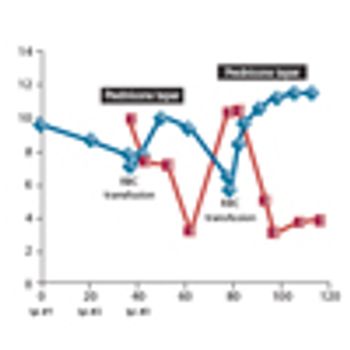
A 60-year-old man with a history of coronary artery disease and JAK2 V617F–positive polycythemia vera presented to our bone marrow transplantation clinic with progressive fatigue, splenomegaly, and cytopenias.
This article reviews newly approved drugs for hematologic malignancies: their indications, mechanisms of action, accompanying pivotal trial data, pertinent toxicities, use in special populations, and appropriate clinical context.
Genetic profiling combined with clinical factors may help guide clinicians on how to better manage patients with myelodysplastic syndrome.
There was no association between conventional response outcomes, such as complete response or very good partial response, and survival in patients with newly diagnosed multiple myeloma.
Despite significant toxicities, idelalisib improved time to progression for patients with treatment-resistant chronic lymphocytic leukemia.
Upfront treatment with melphalan and ASCT should be the standard treatment approach for younger patients with newly diagnosed multiple myeloma.
The use of the thrombopoietin receptor agonist eltrombopag was clinically effective at raising platelet counts in patients with lower-risk myelodysplastic syndromes with severe thrombocytopenia.
Combined miniCHOP and treatment with the fully-human anti-CD20 monoclonal antibody ofatumumab is associated with improved overall survival among elderly patients diagnosed with diffuse large B-cell lymphoma.
Stem cells that give rise to acute myeloid leukemia (AML) and myelodysplastic syndrome (MDS) express higher levels of the CD99 cell surface protein-sugar molecule than normal stem cells.

This video examines the evolution in treatment and survival outcomes for patients with follicular lymphoma and highlights trials testing newer agents such as immunotherapies in this population.
The FDA recently approved the oral BTK inhibitor ibrutinib for the treatment of patients with relapsed or refractory marginal zone lymphoma who require systemic therapy and have had at least one prior anti-CD20 therapy.
CML patients who have high expression of the T-cell inhibitory receptor (CTLA-4)-ligand CD86 on plasmacytoid dendritic cells have a higher risk of relapsing after discontinuing therapy with a tyrosine kinase inhibitor.

This video examines a phase I/II study of ibrutinib in patients with chronic GVHD who failed corticosteroids.