
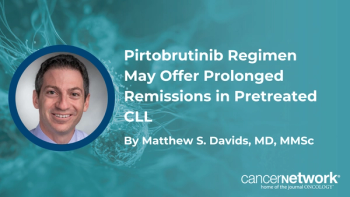
Combining pirtobrutinib with venetoclax/rituximab yielded high MRD clearance among those with CLL/SLL in the phase 3 BRUIN CLL-322 trial.
Combining pirtobrutinib with venetoclax/rituximab yielded high MRD clearance among those with CLL/SLL in the phase 3 BRUIN CLL-322 trial.
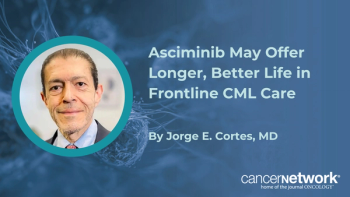
Updated data from the ASC4FIRST trial affirm asciminib as the treatment of choice for many patients with chronic myeloid leukemia in chronic phase.
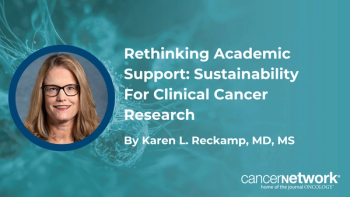
Karen Reckamp, MD, MS, analyzed the shifting funding models in academic oncology and the necessity of philanthropy to support clinical trial infrastructure.
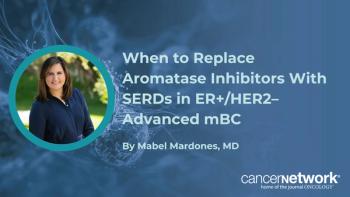
Although the results from persevERA were not statistically significant, they may support using oral SERDs for patients with ER+/HER2– breast cancer.
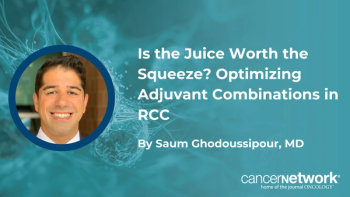
Considering the toxicity burden of dual checkpoint inhibition for adjuvant RCC, Saum Ghodoussipour, MD, posited potential alternatives in the space.
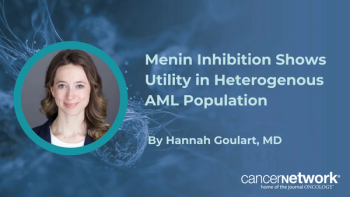
The safe administration of revumenib among pediatric patients broadens the applicability of results seen with the menin inhibitor.

Data from the phase 3 SENOMAC trial showed that omitting completion ALND led to non-inferior 5-year OS and lower arm morbidity for patients with breast cancer.
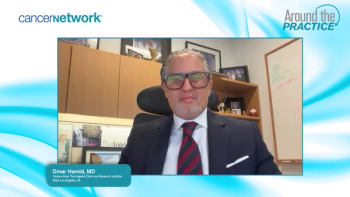
In this teaser for Around the Practice, Omid Hamid, MD, of Cedars-Sinai The Angeles Clinic and Research Institute, introduces an upcoming multidisciplinary roundtable focused on cutaneous squamous cell carcinoma (cSCC).

Timothy F. Cloughesy, MD, spoke with CancerNetwork after presenting data from the INDIGO trial, evaluating vorasidenib in IDH1/2-mutant glioma.
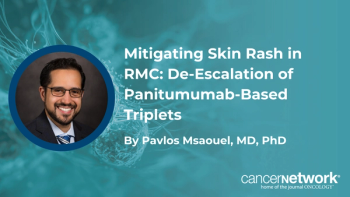
Proactive management of EGFR-mediated toxicities can help to prevent the escalation of grade 1/2 skin toxicities to higher-grade events.
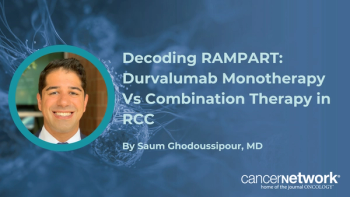
Saum Ghodoussipour, MD, PhD, dissected the contrasting outcomes between adjuvant durvalumab plus tremelimumab compared with durvalumab alone in RCC.
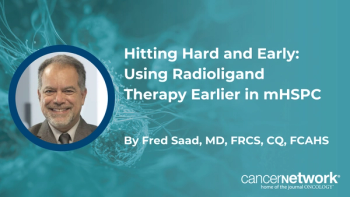
Fred Saad, MD, FRCS, CQ, FCAHS, discussed the clinical benefits of introducing lutetium Lu 177-PSMA-617 earlier to delay progression to mCRPC.
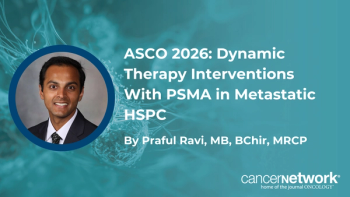
Leveraging 6-month PSA and PSMA-PET metrics may guide therapy escalation or de-escalation in metastatic hormone-sensitive prostate cancer.
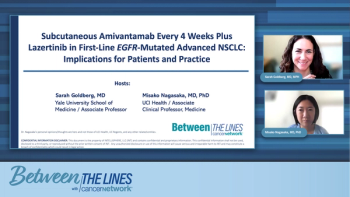
Clinicians share practical tips to prevent amivantamab-lazertinib rash, streamline orders, manage edema, and use short-term DOAC prophylaxis.
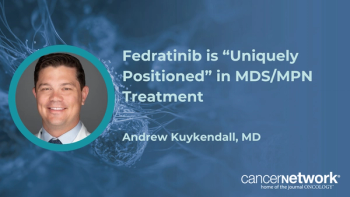
Fedratinib may target various proliferative pathways in MDS/MPN that other current standards of care miss, according to Andrew Kuykendall, MD.
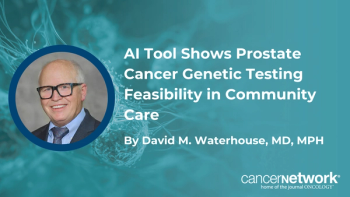
Findings from a study exploring how AI-driven NCCN guideline interpretation can optimize genetic testing and reduce clinician burden in prostate cancer.
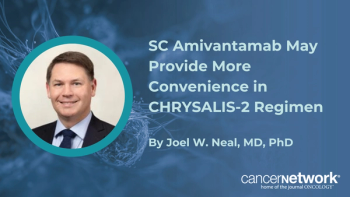
The subcutaneous formulation of amivantamab may avoid infusion-related reactions reported with the agent’s intravenous form, said Joel W. Neal, MD, PhD.
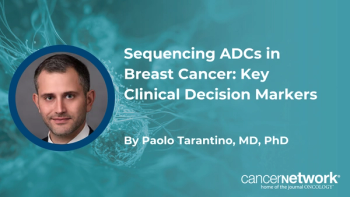
Paolo Tarantino, MD, PhD, discussed how clinical aggressiveness, toxicity, and progression patterns guide the sequencing of ADCs in breast cancer care.

Nathan Goodyear, MD, MDH, broke down how findings from the CHALLENGE and OPTIMUS studies show that structured exercise may turn cold tumors hot.
Maurie Markman, MD, joins The Moonlight Shift to discuss precision medicine's real-world limits, oncology's cost crisis, CAR-T in solid tumors, and the decision support gap costing patients.

Nathan Goodyear, MD, outlined how exercise and nutrition can counter treatment-induced immunosenescence and improve long-term oncology outcomes.
Learn how proactive prophylaxis makes subcutaneous amivantamab plus lazertinib more tolerable, cutting severe rash, nail issues and clot risk.
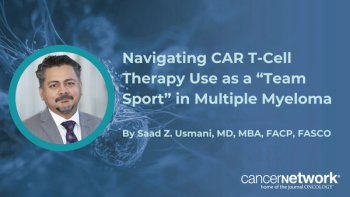
Identifying patients early is key for getting them into the CAR T-cell therapy pipeline, according to Saad Z. Usmani, MD, MBA, FACP, FASCO.
Learn how monthly subcutaneous amivantamab cuts clinic time, eases infusion capacity, and supports dose tweaks without sacrificing outcomes.
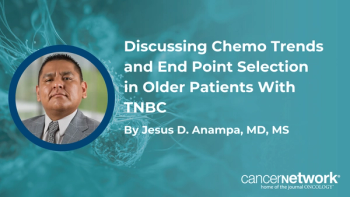
Jesus D. Anampa, MD, MS, discussed SEER database trends in chemotherapy use for older women with TBNC and explained the rationale for using breast cancer–free survival vs OS.
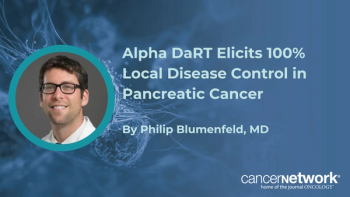
Philip Blumenfeld, MD, reviewed efficacy signals from a pooled analysis of Alpha DaRT in pancreatic cancer.
Philip Blumenfeld, MD, discussed the biological rationale and distinct mechanism of action of EUS-guided radium 224 Alpha DaRT in pancreatic adenocarcinoma.
The extended-release tablet formulation may help improve patient adherence to treatment, possibly representing a more convenient, patient-friendly dosing schedule, according to Naveen Pemmaraju, MD.

At ONS 2026, an oncology nurse specialist discussed the timing and pharmacy coordination required to administer a time-sensitive mitomycin gel.

This episode of The AI Oncology Revolution highlighted the nursing and APP teams and how they are leading the charge in AI implementation.