

Hydration and a healthy, well-balanced diet may mitigate fatigue among patients undergoing treatment for cancer.
Hydration and a healthy, well-balanced diet may mitigate fatigue among patients undergoing treatment for cancer.
The medical characteristics of a patient may heavily factor into the selection of tyrosine kinase inhibition for the treatment of chronic myeloid leukemia.
Bland foods, such as crackers and chicken noodle soup, as well as fluids with electrolytes may help stave off treatment-related nausea.
The toxicity profile of interferon and the limited availability of transplantation established a need for TKI development for chronic myeloid leukemia.
The approach to treating patients with multiple myeloma will change for physicians, pharmaceutical companies, and even patients themselves.
Predictors of response have a significant effect on clinical decision-making because they may help oncologists select the best treatment for specific patients.
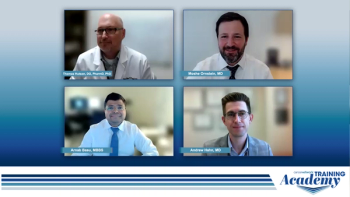
Panelists discuss the challenges of managing intermediate-risk metastatic clear cell renal cell carcinoma (ccRCC) after progression on first-line immunotherapy (IO)/tyrosine kinase inhibitor (TKI) therapy, emphasizing cabozantinib’s role, individualized dosing strategies, proactive toxicity management, and the importance of patient-centered care to optimize long-term disease control and quality of life.
According to Denise B. Reynolds, RD, patients eating well should not be experiencing nutritional deficiencies during cancer treatment.
Panelists discuss evolving second-line treatment strategies for clear cell renal cell carcinoma (ccRCC), emphasizing the impact of first-line regimens, the growing role of tyrosine kinase inhibitors (TKIs) and emerging combinations, and the need for clinical judgment in sequencing therapies to balance disease control, symptom management, and patient quality of life.
Delaying treatment with ruxolitinib by more than a year leads to decreased response rates and overall survival in patients with myelofibrosis.
Experts discuss the critical role of clear pathology communication and risk assessment after colorectal cancer surgery, highlighting how surgical quality, pathologic staging, and timely ctDNA testing guide personalized adjuvant therapy decisions and coordinated long-term surveillance to optimize patient outcomes.

Panelists discuss how future directions in multiple myeloma include exciting developments like bispecific T-cell engagers (BiTEs) targeting B-cell maturation antigen (BCMA) and GPRC5D, dual-target chimeric antigen receptor (CAR) T therapies, and revolutionary in vivo CAR T approaches, while emphasizing the importance of nurse education and advocacy, compassionate patient-centered care, and a collaborative community approach where academic centers support community oncologists through accessible communication and shared care, ultimately working toward the goal of curing more patients, as evidenced by one-third of ciltacabtagene autoleucel (cilta-cel) recipients remaining in remission 5 years later without additional therapy.
Panelists discuss how comprehensive post–chimeric antigen receptor (CAR) T follow-up care includes proactive immune system support through IVIG (intravenous immunoglobulin) therapy that rapidly improves immune function within days, resulting in patients achieving complete remission with undetectable light chains, eliminated M spike, negative bone marrow for plasma cells, and minimal residual disease (MRD)-negative status, representing the deepest possible remission, while patients report significantly improved quality of life with better stamina, ability to work in their yards, and freedom from daily chemotherapy compared with traditional treatments, with many describing CAR T as “a walk in the park” compared with stem cell transplant and emphasizing their desire to be healed rather than continuously harmed by ongoing chemotherapy regimens.
Experts discuss the expanding role of ctDNA as a prognostic and predictive tool in colorectal cancer management, emphasizing its ability to personalize postoperative surveillance and treatment decisions—particularly in ambiguous clinical scenarios—while highlighting the need for sensitive assays and thoughtful communication around emotionally challenging results.
The most common toxicity associated with TAS-102 was neutropenia, with grade 3 events occurring in 73.3% of patients with colorectal cancer.

Blood-based markers of note in kidney cancer prognosis include circulating tumor DNA and proteomic markers, according to Michael B. Atkins, MD.
“…I like TAS-102 as an agent, but we need better drugs than we have right now to clear ctDNA and cure patients,” said Hornstein, MD, PhD.
An expert highlights that outpatient step-up dosing of bispecific antibody therapy in multiple myeloma is feasible and beneficial for selected patients—with criteria like caregiver support, proximity to care, and low disease burden—supported by prophylactic measures and close monitoring to ensure safety while improving patient comfort and reducing health care costs.
The phase 2 INTERCEPT-TT trial showed that TAS-102 induced ctDNA clearance following adjuvant chemotherapy in patients with colorectal cancer.
Clinical trials still have a role in improving outcomes with immunotherapy among those with kidney cancer.

Panelists discuss how the CheckMate 214 study demonstrated durable overall survival benefits with ipilimumab plus nivolumab vs sunitinib, with 9-year follow-up showing improved outcomes even in favorable-risk patients and nearly half of responders remaining in remission.
Panelists discuss how clear cell renal cell carcinoma (RCC) represents the most common kidney cancer subtype, typically affecting men in their 50s and 60s who often present incidentally with metastatic disease, and has limited identifiable risk factors beyond smoking, hypertension, and obesity.
Panelists discuss the shift toward a more personalized approach in metastatic renal cell carcinoma (RCC) management, highlighting the evolving role of risk stratification, the renewed interest in immune checkpoint inhibitors for favorable-risk patients, and the strategic integration of systemic therapy, active surveillance, and surgical interventions to optimize long-term outcomes.
Panelists discuss current strategies for first-line treatment sequencing in renal cell carcinoma (RCC), emphasizing immunotherapy-based combinations tailored to disease burden and patient characteristics, while highlighting the importance of multidisciplinary care, real-world experience, and clinical trial data in guiding personalized, patient-centered decisions.

Panelists discuss how to manage borderline transaminase elevations in a patient benefiting from voracidinib therapy, balancing the risk of mild liver toxicity against continued disease control while investigating potential contributing factors.
Current research initiatives in the kidney cancer field include exploring anti–PD-1, anti–LAG-3, and anti–CTLA-4 combination regimens.

Boris M. Kiselev, MD, provides practical advice for oncology clinicians on how to approach and initiate conversations about a patient’s mental and emotional well-being.
Boris M. Kiselev, MD, explores evidence-based interventions for managing cancer-related anxiety and depression.
Experts discuss how postoperative surveillance after colorectal cancer surgery is increasingly personalized by integrating pathologic staging, surgical quality, and ctDNA testing to adjust monitoring intensity, with higher-risk or uncertain cases receiving more aggressive follow-up to optimize early detection and intervention.