

Despite differences in treatment tolerance across different RCC subgroups, survival outcomes were similar in a retrospective study.
Despite differences in treatment tolerance across different RCC subgroups, survival outcomes were similar in a retrospective study.
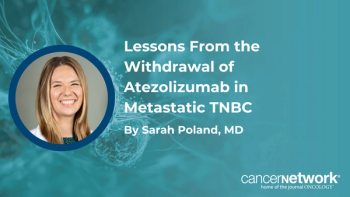
Sarah Poland, MD, discussed the divergence between the IMpassion130 and IMpassion131 trials and the critical role of confirmatory trials in oncology.
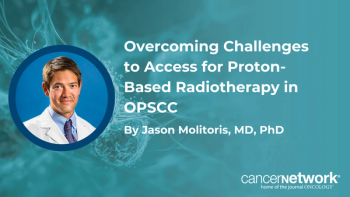
The expansion of clinical trials evaluating proton-based radiotherapy could elucidate its benefits and increase its access across the US.
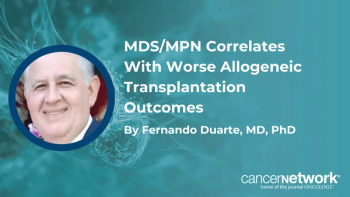
Retrospective data show that relapse-free survival outcomes were worse for patients with MDS/MPN compared with those who had other types of MDS.
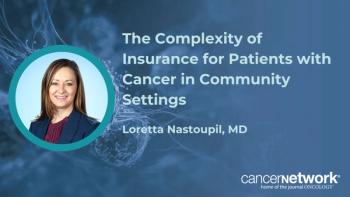
Often, patients in middle-income settings, are the patients who are impacted most by insurance deductibles, according to Loretta Nastoupil, MD.
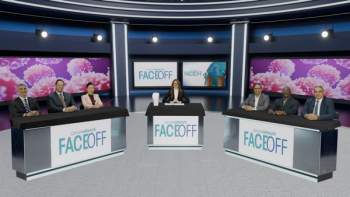
Panelists debate whether high-risk disease biology should accelerate referral for CAR T-cell therapy in second-line DLBCL. Key arguments consider patient-specific sequencing approaches, emphasizing individualized assessments before committing to CAR T. The opposing argument supports early referral for CAR T in biologically high-risk patients. Faculty weigh the balance between urgency and personalization, exploring how disease kinetics, logistical barriers, and real-world practice patterns influence optimal timing of referral.

Panelists discuss how clinicians set expectations for the acute toxicity window and monitoring while also considering how rising disease burden or prior BCMA exposure can influence efficacy and reinforce urgency of referral.
Panelists discuss real-world data from the US ABC Consortium evaluating axicabtagene ciloleucel, tisagenlecleucel, and lisocabtagene maraleucel in relapsed/refractory LBCL. Faculty discuss key differences in manufacturing, review outcomes, and consider toxicity profiles for each of the CAR T products in clinical practice.
Panelists discuss how older patients with cardiac/renal comorbidities may still be appropriate CAR T candidates when conditions are well-managed, and why early evaluation protects eligibility and aligns care with patient goals.
Yan Leyfman, MD, reviewed how toxicity management in hematologic oncology is shifting to phenotype- and mechanism-informed intervention.

Sarah Poland, MD, discussed the transition of breast cancer from an "immunologically cold" tumor to a target for checkpoint inhibitors, highlighting the pivotal role of the KEYNOTE-012 trial.
Irtiza Sheikh, DO, sought to assess the impact of age and clinical setting on liso-cel efficacy in patients with large B-cell lymphoma.
The willingness-to-pay metric is a tool that varies by individual country, which is used to determine how much a patient might pay for their treatment.
Hematologic adverse effects with KTX-1001 among patients with relapsed/refractory multiple myeloma were “very well expected” in a phase 1 trial.
Based on the ability for select TILs to confer antitumor activity, Mauro Cives, MD, began his research assessing TCR-based therapies in pancreatic NETs.
Though durvalumab was priced higher than most willingness-to-pay thresholds, an initiative out of Singapore demonstrated that difference can be managed.
Data from the phase 3 Precision-T trial show improvements in overall survival and relapse-free survival with the use of Orca-T.
A phase 2 trial in mixed phenotype acute leukemia shows that “big things” can happen regardless of where patients live or the rarity of their diseases.
According to Charlotte Rivers, MD, it’s important for patients with CNS cancers to meet with all involved doctors so they can make an informed decision regarding their care.

J. Isabelle Choi, MD, shared her specific fractionation preferences and prophylactic strategies to combat adverse effects associated with radiation.
Yan Leyfman, MD, shared key clinical and practice-shaping insights related to cellular therapy from the 2026 Tandem Meetings.
Seth M. Pollack, MD, discussed how the ECOG-ACRIN EA7222 trial could establish doxorubicin/pembrolizumab as the new frontline standard for undifferentiated pleomorphic sarcoma.
Suzann Duan, PhD, anticipates the release of a paper she coauthored exploring the role of Hedgehog signaling in NETs, as well as within the aging landscape.
Charlotte Ivy Rivers, MD, explored the impact of updated WHO criteria and functional imaging, such as DOTATATE-PET, on the diagnosis and treatment of patients with CNS tumors.
Panelists analyze comparative real-world data from the French DESCAR-T registry evaluating axicabtagene ciloleucel and lisocabtagene maraleucel in second-line relapsed/refractory LBCL. Faculty consider distinctions in toxicity profiles along with selection bias, vein-to-vein time, patient frailty, and whether certain patients may preferentially benefit from one CAR T product over another in routine second-line practice.
Panelists discuss how complete referral information and evolving outpatient pathways (including shortened post-infusion monitoring requirements) can improve coordination, reduce logistical burden, and maintain safe follow-up.

Experts discuss the evolving role of BTK inhibitors and venetoclax in treatment regimens, emphasizing the need for personalized therapy durations.
Panelists discuss how transparent counseling on expected benefits, early-onset toxicities, and practical logistics (travel, caregiver needs, support resources) helps patients make confident decisions about CAR T.
Panelists examine real-world comparative data from the French DESCAR-T registry and REALYSA cohort evaluating second-line axicabtagene ciloleucel versus standard-of-care salvage therapy in early relapsed/refractory DLBCL. The discussion highlights the event-free survival with CAR T-cell therapy (1-year EFS 46% vs 16% in SOC). Faculty also discuss the impact of third-line CAR T use in the SOC arm and what these real-world registry data mean for routine second-line treatment decision-making.
Experts discuss the evolving role of BTK inhibitors and venetoclax in treatment regimens, emphasizing the need for personalized therapy durations.