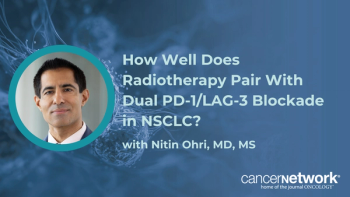
Nitin Ohri, MD, MS, explains the rationale for combining thoracic radiotherapy with dual PD-1 and LAG-3 blockade in locally advanced NSCLC.
Nitin Ohri, MD, MS, discusses how his team manages toxicity and treatment tolerance as combination regimens grow more complex.
As trials like SPRINT (NCT03523702) and TRIPL (NCT06865339) combine thoracic radiotherapy with immune checkpoint inhibitors for locally advanced non-small cell lung cancer (NSCLC), clinicians must balance curative intent against the risk of compounding toxicities, including difficulty swallowing, cardiac events, and breathing problems.1,2 Many patients being treated for lung cancer also carry other medical comorbidities, adding another layer of complexity to treatment planning.
Nitin Ohri, MD, MS, a professor of radiation oncology at Montefiore Einstein Comprehensive Cancer Center in the Bronx, New York, spoke with CancerNetwork® at the
Transcript:
CancerNetwork: As these combination regimens grow more complex, how are you thinking about toxicity management and treatment tolerance?
Ohri: Our patients come to us with a diagnosis of lung cancer, but also often with other medical issues. It’s important that we treat them adequately and cure them of their disease, but it’s also important that we do not overtreat them and cause unnecessary toxicities or risk-causing unnecessary toxicities, so we hope that many or all of our patients eventually are cured of their lung cancer. We are looking to minimize risks of trouble with swallowing, heart issues, and trouble breathing, and we realize radiation in some ways may be immunosuppressive. When we’re combining radiation with immunotherapy, it’s important that we limit our treatment duration, our treatment fields, and when appropriate, our treatment dose.