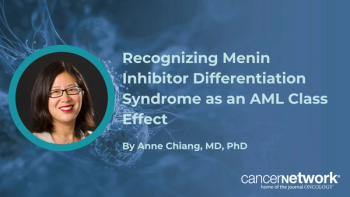
Anne Chiang, MD, PhD, discusses DeLLphi-305 and other leaps forward in small cell lung cancer, along with a setback regarding lurbinectedin.
Neoadjuvant eftilagimod alfa, pembrolizumab, and radiotherapy produced an 81.1% 12-month DFS rate in high-risk, resectable soft tissue sarcoma.
Neoadjuvant eftilagimod alfa (efti) plus pembrolizumab (Keytruda) and radiotherapy produced a 12-month disease-free survival (DFS) rate of 81.1% (95% CI, 69.5%-94.8%) among patients with high-risk, resectable soft tissue sarcoma, according to findings from the phase 2 EFTISARC-NEO trial (NCT06128863) presented at the
At a data cutoff of April 30, 2026, and a median follow-up of 19.1 months from surgery, the 12-month DFS rate was considered mature. The 18-month DFS rate was also 81.1% (95% CI, 69.5%-94.8%), although this estimate remains immature and follow-up is ongoing. Of the 38 patients who underwent surgery and were included in the survival evaluation, 8 had experienced recurrence at the time of the data cutoff, including 2 local and 6 distant recurrences; 29 patients were disease free. Overall survival data were immature.
Additionally, the 12-month local recurrence–free survival rate was 94.1% (95% CI, 86.4%-100.0%), and the 12-month distant metastasis–free survival rate was 86.2% (95% CI, 75.7%-98.2%).
Exploratory analyses suggested that the degree of immune and pathologic response after treatment may be associated with outcomes. Patients with post-treatment CD3-positive tumor-infiltrating lymphocyte (TIL) levels above 310 cells/mm² (n = 20) had a 1-year DFS rate of 95.0% vs 64.9% among those with lower TIL levels (n = 18; HR, 0.12; 95% CI, 0.01-0.94; P = .044). Patients with treatment-related hyalinization/fibrosis above 52% (n = 17) had a 1-year DFS rate of 93.8% compared with 71.4% for those at or below 52% (n = 21), although this difference did not reach statistical significance (HR, 0.21; 95% CI, 0.03-1.67; P = .139).
In contrast, the presence of tertiary lymphoid structures (TLS) after treatment and baseline expression of PD-L1, LAG-3, and TIGIT did not correlate with preliminary survival outcomes. One-year DFS also did not differ significantly by tumor grade (78.3% for grade 2 vs 86.2% for grade 3; P = .96) or by histologic subtype (P = .70). Investigators noted that TLS were frequently observed after treatment, suggesting that neoadjuvant therapy may induce TLS formation.
“These results are highly encouraging for patients with high-risk soft tissue sarcoma, where recurrence remains a major concern despite surgery and radiotherapy. Disease-free survival of approximately 81% maintained through 12 months and on a preliminary basis also at 18 months is an important observation, and the association between a strong immune response in the tumor and better disease-free survival is particularly compelling. Together with the substantial pathological responses previously reported, the findings reinforce the potential of this novel neoadjuvant approach and provide a strong rationale for continued follow-up and further clinical evaluation.” Pawel Sobczuk, MD, PhD, a principal investigator of the trial, said in a press release.
The investigator-initiated, open-label, single-arm, single-center EFTISARC-NEO trial enrolled 40 patients, all of whom started neoadjuvant immunotherapy, with enrollment completed in January 2025. Patients received efti in combination with pembrolizumab and radiotherapy prior to surgical resection.
Eligible patients were 18 years or older with an ECOG performance status of 0 or 1 and a primary or locally recurrent, deep-seated soft tissue sarcoma of the extremity, girdle, or superficial trunk. Tumors had to be FNCLCC grade 2 or 3 and larger than 5 cm if primary, or of any size if locally recurrent, with no distant metastases. Patients with Ewing sarcoma or alveolar or embryonal rhabdomyosarcoma were excluded.
Of the 40 enrolled patients, 38 underwent surgery; 1 patient died of a serious adverse event unrelated to therapy, and 1 refused surgery. Among the 38 patients who had surgery, the median age was 54.5 years (range, 34-77), 42.1% were female, and the median tumor size was 8.8 cm (IQR, 6.7-10.9). Overall, 26.3% had recurrent tumors, and most tumors were located in the lower extremity (71.1%). A total of 23 patients had grade 2 disease and 15 had grade 3 disease. The most common histologies were myxofibrosarcoma (39.5%), undifferentiated pleomorphic sarcoma (26.3%), and myxoid liposarcoma (13.2%).
The trial’s primary end point is pathologic response, measured as the percentage of tumor hyalinization/fibrosis at the time of resection. The trial met its primary end point, with a median hyalinization/fibrosis rate of 51.5% following neoadjuvant treatment with the triplet regimen.
Based on these findings, investigators concluded that the regimen showed promising long-term outcomes that support testing in late-stage neoadjuvant soft tissue sarcoma trials, and that high post-treatment TIL infiltration and hyalinization/fibrosis may be prognostic, although longer follow-up is needed.
Regarding safety, grade 3 or higher adverse events occurred in 20% of patients, with approximately 75% of these events related to postsurgical wound complications.
Efti is a soluble LAG-3 protein and MHC class II agonist designed to activate antigen-presenting cells, which may in turn promote a broader T-cell–mediated antitumor response. The agent has received orphan drug designation from the FDA for soft tissue sarcoma, as well as fast track designations for the frontline treatment of head and neck squamous cell carcinoma and non–small cell lung cancer.
Additional data from EFTISARC-NEO are expected in 2027. Further, the drug’s developer is preparing a registration-directed trial evaluating efti in the neoadjuvant soft tissue sarcoma setting, with initiation targeted for the second half of 2027, subject to regulatory, manufacturing, partnering, and resource considerations.